
Parvo virus (B19) information
Schools have started again in Dubai. The large concentration of children in one place creates conditions for easy transmission of some infectious diseases. In general this is part of our natural exposure to infections that builds up our immune defence.
However there are some infections that if you have them while pregnant can affect your unborn baby. The two most widely known are rubella ( German measles) and chicken pox. Almost all women are checked during their pregnancy regarding their immunity for these diseases so they are alerted and they have a plan of what to do if they are not immune. Another common childhood disease is the “Slapped cheek” or “fifth disease”. Having an infection with Parvo Virus B19 while pregnant can cause complications to your pregnancy. Here are some basic facts;
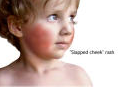 ·Parvo B19 is a DNA virus. It is responsible for the “slapped cheek” or “fifth disease”
·Usually (in European countries) there are spring autumn epidemics that seem to come in four year cycles.
·The incubation period (the time from when you get infected to when you show the first symptoms) is usually 13-18 days while the period of maximum infectivity is during days 7-10. The risk of infection is greater to those that have frequent contact with children; teachers, day care workers, women with school age children.
·Children and adults with normal immune system usually have mild symptoms; rash, arthropathy (joint pains) Infection results in lifelong immunity.
·About 35–45% of women of childbearing age do not possess protective IgG antibodies against B19V and are not immune.
·If the mother is infected the virus can affect the baby. In particular it destroys red cell precursor cells- the cells responsible for the production of red blood cells and it can affect the fetal heart (can affect the heart muscle).
·If a mother gets infected there is a 4% risk for the baby to develop severe anaemia and hydrops. (this is when a baby presents with skin swelling and fluid collection in its chest and abdomen/tummy)
·The most difficult period is that of 8-20 weeks when the baby relies on its liver to produce red blood cells ( risk for hydrops 8% )
·
This is preventable and treatable. Special ultrasound scans at Fetal Medicine Unit can check whether your baby shows signs of anaemia (Doppler studies of the Middle cerebral artery). For those who have already significant symptoms a in utero fetal transfusion can be life saving.
What to do if a mother comes in contact with someone who is known to have parvo virus.
Your doctor should check your antibodies (virology tube).
·If she is IgG positive, IgM negative reassure- evidence of immunity
·If she is IgG positive, IgM positive refer to Fetal Medicine specialist as this is evidence of recent infection.
·If she is IgG negative, IgM positive you have to be referred to a Fetal Medicine Specialist. This is evidence of recent infection but the mother may still be infective, so she will need arrangements for separate scan and to be advised to avoid meeting with other pregnant mums.
·If she is IgG negative and IgM negative she is not immune. Advise to avoid possible contact . Repeat bloods in 7-10 days to exclude very recent infection.
Usually IgM antibodies will develop within 7 days and persist for 2-4 months.
Mothers who are referred to our Fetal Medicine Unit will be followed with serial scans looking for possible evidence of anaemia.
Please be aware that reduced fetal movements are a common manifestation of significant fetal anaemia.
Dr George Michailidis, Obstetrician and Gynecologist
Fetal and Maternal Medicine Consultant


