Pregnancy in Dubai

Advice & information on common pregnancy problems by a Fetal & Maternal Medicine Consultant


1 Comment

Nuchal translucency and screening for Down’s syndrome in Dubai.

What is nuchal translucency ( NT ); The term nuchal translucency is used to describe the sonographic (ultrasound scan) appearances of a specific region of the baby’s neck during the first trimester of pregnancy. It is routinely measured between weeks 11 -13+6 days and used as a screening test for chromosomal abnormalities like Down’s (trisomy 21).
What do you need to know about the nuchal translucency;
The quality of Nuchal translucency measurement (and its prediction accuracy) depends on who is doing it and what equipment is used. If you decide to have the test done ensure it is performed by properly trained and certified operators that use good quality equipment.  One of the well respected certification organisations is The Fetal Medicine Foundation. You will find in this link lists of certified professionals for your country.
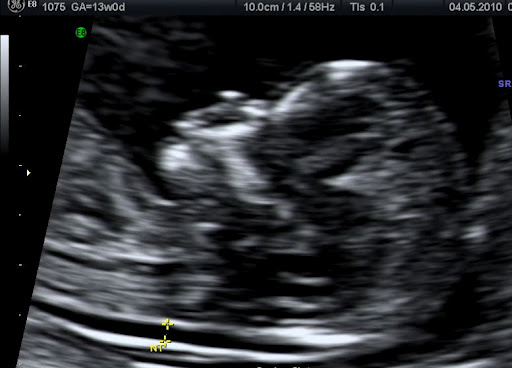
Normal Nuchal Translucency

NT is only a part of the first trimester scan. Although commonly referred as NT scan at the first trimester scan the doctor / sonographer should report on how some basic features of our baby have developed as well. For example the fetal abdomen the baby’s skull and brain, the fetal stomach and bladder the arms and legs should be clearly visible in most cases.

Nuchal translucency is a powerful predictor for problems like Down’s syndrome. It is routinely used in combination with maternal age and biochemical markers (blood test) to give a risk estimate for major chromosomal anomalies (T21, T18, T13).
The size of the nuchal translucency depends on the gestational age (how old the baby is). The upper limit of normal is smaller at 11 weeks and larger at   13 weeks.
Ultrasound scanning measurement of the NT is only a screening and not a diagnostic test. This means that it will provide you with a risk estimate rather than a “Yes – No” answer.
It is best practice to discuss with your obstetrician and understand what is the NT scan beforehand. Make sure you have some quality time with your doctor to understand the purpose of the test, the results you expected to have as well as the limitations it has.


Dr George Michailidis, Obstetrician and Gynecologist 
Fetal and Maternal Medicine Consultant 


Leave a comment

Preconception consultation in Dubai; What to do and discuss with your doctor before you get pregnant.

It would be ideal if every pregnancy was to be thought of and planned in advance. In reality though, what tends to happen is that couples relax their precautions when they feel that a baby would be a welcome event.
There are a number of easy steps that every couple/ woman can take to optimise their chances for a healthy pregnancy.
Preconception medical visit; what to ask your doctor and what a good doctor should ask you before you get pregnant.
It is a good idea to visit your Obstetrician Gynaecologist or your GP and discuss your family planning. A good medical history, obstetric and family history from your Obstetrician should identify possible risk factors. The best practice is to create a plan tailored to your pregnancy and family needs. However, some common recommendations that apply to most are;
1.When was youlast Pap smear? Was it OK? For those that need minor treatments pregnancy may delay interventions and can in occasions cause unnecessary anxieties. Ensure youhave had a recent Pap smear and you have the all clear from your Doctor.
2. Are youimmune against Rubella (German measles) and Varicella (chickenpox)? Both are common children’s diseases. If however you getthem during pregnancy (especially rubella) they can cause problems to the pregnancy.
 For boththere are available vaccines so youcan ensureyou are protectedbefore you get pregnant. For rubellathe vaccine is a live virusvaccine and the adviceis not to get pregnant for three months after the injection. In many European countriesthere are establishedimmunisation programs that aim to reduce the number of susceptibleindividual. In Dubai howeverthere is a mixed populationfrom countries with different health systems. This makes it more likely to havelarger numbers of non immune people which allows the transmission of these contagious diseases.
3. Thalassemia /sickle diseasedepending on your ethnic originsome people are more likely than others to be carriers. For instancethalassemia is common in people from Mediterranean countries and sickle is verycommon in people from Africa. Many of us carrythe defective gene without actually having any significantsymptoms.sure that youknow your statusand if you happen to be a “carrier” make sure your partner is checked as well. If both of youare carriersthen you will need to seea specialist to explain the possible implications for your children.
4. Are youtaking medications for a medical condition?Discuss with your Doctor whether it is safe to continue during pregnancy or changes areneeded. Do not just stop medications without prior consultation with your physician.For some chronic conditions like diabetes, epilepsy careful planning is neededbefore youstart trying for a pregnancy.
5. When was the last time youvisited your dentist?Pregnancy veryoften can cause problems with your gums and teeth. It is a goodto visityour dentist for a check up before your pregnancy.
Contraception; Sometimes when there are coexisting medical conditions that besttreated before pregnancy or medications that have to be altered careful planning is needed. In these cases selectionof an appropriateand safe contraceptive methodis essential.

Healthy lifestyle – general advice

Introduce exerciseto your daily routine. It  will help you controlyour weightand will certainly boostyour energy levels.

Aim for a balanced diet with plenty of fruits and vegetables.

Take your folic acid supplements. 400mcgr is the commondose. Youwill find it in a variety of standalone medications or pregnancy multivitamins.

Do yousmoke ? STOP SMOKING. There is amble evidence of the problems smoking can harm youand your baby. It is not easy, but use the pregnancy as an extra incentive to keep youtrying.It is a uniqueopportunity to get rid of a bad habit. THIS SHOULD BE A FAMILY EFFORT. It will be devilishly difficultfor youto stop smoking if your partner carries on. It will be easier if youcombine your efforts.

Shisha is dangerous as cigarettes are. So do not followthe commonmisconception that it is OK to smoke shisha.

Do youdrink alcohol regularly? In particular binge drinking can be terribly harmfulduring early pregnancy.

Dr George Michailidis, Obstetrician and Gynecologist 
Fetal and Maternal Medicine Consultant 


1 Comment

Pelvic floor exercises after pregnancy and delivery

Pelvic floor exercises should also become part of your daily exercise routine after delivery. Your pelvic floor muscles are affected by pregnancy and vaginal birth. The combination of nerve damage and physical injury during labour with the changes the pregnancy brings to your body can significantly weaken these muscles. This can lead to problems like pelvic organ prolapse or leakage of urine.

Identifying the right muscles; this is very important in getting the exercises to work. You can do this by inserting one or two fingers in your vagina and trying to squeeze the surrounding muscles. You should feel your vagina tighten and your pelvic floor moving up. Another way to try and realize which are the pelvic floor muscles is to try and stop the flow of urine when you urinate. You should only use this manoeuvre infrequently to either test your progress ( for example every 2 weeks) and not make a habit of doing it as it can create problems with proper urination.
You should with time improve your technique and maintain your focus. His is a long term commitment and do not get disappointed if you do not get fast results. Usually you will see a significant difference after 4-6 weeks. 
The following link is an information sheet and pelvic floor muscles training routine from Guy’s & St Thomas Hospital UK. It is comprehensive and should answer most of your questions.


Fetal & Maternal Medicine Specialist
Obstetrician &  Gynaecologist


1 Comment

Advice about exercise after pregnancy.

Exercise after pregnancy and delivery


There are numerous benefits in starting exercising regularly after having your baby. Introducing a regular exercise routine in your daily schedule can greatly help to promote weight loss and help you rebuild your muscles – in particular your tummy muscles. But the benefits do not stop there, exercise will boost your energy levels, it improves your mood and reduces the chances of postpartum depression.


When you should start exercising after pregnancy? If you are generally fit and healthy, you had a normal pregnancy and a normal uncomplicated vaginal delivery you should be able to start within a few days after your delivery.  However if you have had pregnancy complications (like high blood pressure, significant symphysis pubis dysfunction ), a difficult delivery (for example significant vaginal perineal trauma) or a caesarean section you should have a good discussion with your obstetrician before you start.

What about breast feeding and exercise? Moderate exercise is not believed to affect your ability to breast feed or the quality of your milk. You should make sure you stay comfortable and a good idea is to breast feed or express before you start your work out. Make sure you wear a good quality supportive bra. There has been some research that indicates that there might be increased lactic acid concentration in the breast milk after intense exercise. You can avoid this by breast feeding an hour after exercise (or even discarding the milk produced within the first half hour post intense exercise) or simply by sticking with moderate intensity exercise.

Do not try to do too much too early and allow time to condition your body and muscles. 
Contacting a fitness expert that specialises in pregnancy and post partum training and joining a group of friends who like to exercise can provide valuable motivation.

The weather in Dubai is hot all year round so make sure you are well hydrated by drinking plenty before and during exercise.
Combine your exercise routine with regular pelvic floor exercises to have the best results in reclaiming your form after delivery 

Dr George Michailidis, Obstetrician and Gynecologist 
Fetal and Maternal Medicine Consultant