Pregnancy in Dubai

Advice & information on common pregnancy problems by a Fetal & Maternal Medicine Consultant


1 Comment

What is a Chorionic Villus Sampling and how is it done?

Chorionic Villus Sampling (CVS) is an invasive diagnostic procedure performed during pregnancy. It helps to obtain a tiny sample of the placenta (afterbirth) which in turn is used for the diagnosis of certain genetic conditions. We regularly perform CVS procedures at the Fetal Medicine Unit of the American Hospital Dubai. It is best if you read this information and discuss it with your Obstetrician / Gynecologist prior to having a CVS procedure. 

Why should I have a CVS?
A chorionic villus sampling (CVS) is not a routine test. Your obstetrician may offer you a CVS if there are concerns about specific genetic conditions. The following are typical examples;
·The one most widely known genetic problem is Down’s syndrome. A number of screening tests are available to help parents and obstetricians determine the risk of a pregnancy being affected before deciding for an amniocentesis. The best test to date is the combined first trimester screening. This is part of the first trimester scan.
·In some cases, the test is done to exclude known genetic problems that run in the family. Examples important in Dubai – UAE  are sickle cell anemia, thalassaemia b, cystic fibrosis.
·Routine ultrasound scans on occasions pick up certain features of the baby associated with genetic conditions.
·Some parents want to be certain that their baby is not affected by a certain disorder.

How is a Chorionic Villus Sampling (CVS) done?
The procedure is usually done between week 11-14 of your pregnancy. The doctor will fully explain the procedure to you and get to sign an informed consent.


He will check your blood group, your HIV and HepB status. If you are Rh Negative you will need an injection of Anti-D after the procedure. If you are HIV or Hep-B positive having the procedure may increase the risk of passing the infection to the baby.
Usually the doctor will perform, prior to the Chorionic Villus Sampling (CVS) an ultrasound scan to examine the baby and identify the best window for the procedure.
It takes a few minutes to prepare the procedure tray. Then he will clean your tummy with an antiseptic solution. A small amount of local anesthetic will be used to num the skin where the needle is to be inserted. A thin needle is used for the local anesthetic you might find this a bit uncomfortable. Following the local anesthetic and under direct ultrasound guidance the doctor will pass a fine needle through your tummy into your womb and into the afterbirth (placenta). The doctor’s assistant using a syringe will obtain a tiny sample. It takes a few seconds to take the sample. At the end of the procedure the doctor will remove the needle.
Most women find the whole procedure uncomfortable rather than painful. On occasions you might experience mild period like pains. This not uncommon and simple paracetamol is very helpful.

What information will I get from a CVS?
This will depend on the why the test was performed.
In most cases the aim is to examine the baby’s karyotype (genetic information).
The sample taken contains cell from the placenta. Although the placenta is a separate organ from the baby it has the same genetic information. The cells obtained can be cultured in the lab. After they are cultured to increase their number and get most of them to start multiplying, using special techniques, the geneticist will look at these cells under the microscope. The karyotype is a snapshot of the baby’s chromosomes. The geneticist will count their number (they should be 46) and examine their morphology (how they look). Usually, due to the time it takes to culture the cells, this test is ready in 14 days from when it reaches the lab.
Some more specialized genetic tests need to be performed it might take longer. The doctor should be able to let you know of the approximate time before the test is done.
Rapid tests that only look at certain chromosomes in a small number of cell s (FISH- PCR) are available. These tests usually take 48h after the fluid reaches the lab. Our advice to all is to have the full karyotype in addition to the rapid tests. 
These tests in the vast majority of cases will give a definitive answer whether the baby is affected or not from the disorder you were testing for.
Please note the following;
  • The test will give a result for a specific condition. It does NOT guarantee that the baby does not have other genetic disorders.
  • Rarely while the test was performed to exclude one problem it picks up another unexpected one. Your doctor will help you to understand the results and their implications for your baby.
  • Rarely (less that 1/100) the test may not give a clear a result. A repeat test may be necessary.
What are the risks for my pregnancy
Unfortunately a Chorionic Villus Sampling (CVS) is not without risks. It is generally quoted that there is a risk of 1-2% to have a miscarriage as a result of the test.
In a small number of cases (1:1000) a serious infection might develop.
You should carefully consider these risks against the value of the information you seek to get from the test

I hope you find this information useful. For further queries do not hesitate to contact us


Dr George Michailidis, Obstetrician and Gynecologist 
Fetal and Maternal Medicine Consultant 

Leave a comment

Amniocentesis services in Dubai

Amniocentesis is a diagnostic procedure commonly performed at the Fetal Medicine Unit of the American Hospital Dubai. In this post you will find useful information that you should read and is best to discuss with your obstetrician during the preparation for an amniocentesis.

What is an amniocentesis?

Amniocentesis is a diagnostic procedure performed during pregnancy. It helps to obtain a small sample of amniotic fluid (the fluid around the baby) which in turn is usedfor the diagnosisof certain genetic conditions or infections.

Why should I have an amniocentesis?

An amniocentesis is not a routine test. Your doctor may offer youan amniocentesis if there are concerns about specific genetic conditions. The following are typical examples;
  • The one most widely knowngenetic problem is Down’s syndrome. A number of screening tests are available to help parents and obstetricians determine the riskof a pregnancy being affectedbefore deciding for an amniocentesis. The best test to date is the combined first trimester screening. This is part of the first trimester scan.
  • In some cases, the test is doneto excludeknown genetic problems that run in the family.
  • Routine ultrasound scans on occasions pick up certain features of the baby associated with genetic conditions.
  • Some parents wantto be certainthat their babyis not affected by a certain disorder.
  • An amniocentesis may also be offered to check whether an infectionhas passed from mother to the baby.


How is anamniocentesis done?

The procedure is best done after week 15 of your pregnancy. The doctor will fully explain the procedure and get you
to sign an informed consent.

 
He will checkyour blood group, your HIV and HepB status. If youare Rh Negativeyou will need an injectionof Anti-D after the procedure.If youare HIV or Hep-B positive, having the procedure may increase the risk of passing the infectionto the baby.


Usually the doctor will performprior to the amniocentesis an ultrasound scanto examinethe babyand identifythe best window for the procedure.
It takes a few minutes to prepare the proceduretray. Then he will clean your tummywith an antiseptic solution. A small amount of local anaesthetic will be usedto numb the skin where the needle is to be inserted. A thin needle is usedfor the local anaesthetic youmight find this a bit uncomfortable.

Following the local anaesthetic and under direct ultrasound guidance, the doctor will passa fineneedle through your tummyinto your womb and the fluid around the baby. The doctor’s assistantusing a syringe will obtainabout 15mls of this fluid. The babywill not miss this fluidand will replace it in a few hours. As a verythin needle is used, it takes a few seconds to takethe sample. At the end of the procedure, the doctorwillremove the needle.

Most women find the whole procedure uncomfortablerather than painful. On occasions, youmight experience mild period like pains. This not uncommon and simpleparacetamol is very helpful.

In some occasions, not enough fluid is obtainedwith the first attempt. This is usuallydue to the position of the baby. In this case, the doctor may have to reinsert the sampling needle.

What information will Igetfrom an amniocentesis?

This will depend on the why the test was performed.

In most cases, the aim is to examine the baby’s karyotype (genetic information).
Within the fluid withdrawn, there are cells that come off the baby’s skin. These cells (unlike our outer skin cells) are alive and can be cultured in the lab. After they are culturedto increase their number and getmost of them to startmultiplying, using specialtechniques, the geneticist will look at these cells under the microscope. The karyotype is a snapshot of the baby’s chromosomes. The geneticist will counttheir number(they should be 46) and examinetheir morphology (how they look). Usually, due tothe time it takes to culture the cells, this test is readyin 14 days from when it reaches the lab.

If more specialized genetic tests need to be performed it might take longer.Your obstetrician should be able to letyouknow of the approximate time before the testis done.

Rapid tests that only look at certainchromosomes in a small number of cells (FISH- PCR) are available
. These tests usually take48h after the fluid reaches the lab. Ouradvice to all is to have the fullkaryotype in addition to the rapid tests.

These tests in the vast majority of cases will givea definitive answer whether the baby is affectedor not from the disorder youwere testing for.


Pleasenotethe following;

The test will givea resultfor a specific condition.
It does NOT guarantee that the babydoes not have other genetic disorders.

Rarely whilethe test was performedto excludeone problem it picks up another unexpected one. Your Obstetrician, sometimes with the help of a geneticist, will help youto understand the results and their implications for your baby.
Rarely (less that 1/100) the cells do not grow well in the lab and the testcannot givea result.A repeat test may be necessary.

What are the risks for my pregnancy?

Unfortunately, the amniocentesis is not without risks. It is quotedthat there is a risk of 1% having a miscarriage as a result of the test. In ourexperience, this riskhas been much smaller (about 0.5%)

In a small number of cases (1:1000), a serious infectionmight develop.

Youshould carefully consider these risks against the value of the information youseektogetfrom the test.

The team will also explain to you; How you will receive your results.
What if my results areabnormal?

Although in many of the cases, the results will come back as normalthere will be those that are going to be affected by the conditionwe were testing for.


Youshould be aware that a termination of pregnancy is only allowed in exceptional cases at the UAE. Getting authorizationcan be a lengthy process.

We hope youwill find this information useful. If youhave any questions, you can contact either Dr Michailidis or our specialist midwife.

Dr George Michailidis, Obstetrician and Gynecologist 
Fetal and Maternal Medicine Consultant 


1 Comment

High risk pregnancy

A commonly used definition for high risk pregnancy is the following; A pregnancy is characterised as high risk when the likelihood for significant complications is higher than average. How the care of these pregnancies is managed varies around the world. For the purpose of being referred to a Fetal & Maternal specialist in Dubai the following list outlines some of the common scenarios were our input can help the management of your pregnancy (Doctor’s referral form and self referral form);

Risk for
Referral for
Multiple pregnancies (twins dichorionic)
Chromosomal/structural anomalies
Preterm delivery
Growth retardation
First trimester screening for Down’s syndrome
Morphology scans
Growth scans and Doppler studies
Multiple pregnancies
(monochorionic twins)
As above plus the risk for TTTS (1/5)
It is good practice these pregnancies to be managed by a Fetal Medicine specialist.

Suspected Fetal abnormalities
Depends on the anomaly
Morphology scan, counselling 
Fetal surveillance


History of previous pregnancy by a affected congenital anomaly

Re occurrence
Preconception counselling,
First trimester and morphology scans.
Suspected fetal growth retardation

Fetal loss / or unnecessary pregnancy intervention
Serial growth scans
Fetal surveillance
Advanced maternal age

Chromosomal anomalies (like Down’s)
First trimester screening
Particular maternal medical conditions

Pre existing diabetes or GDM on insulin
Risk for congenital anomalies/macrosomia
Consider Full management by the FMU due to the frequency of scans visits it would be easier for these patients to be followed up by the FMU with aid of an endocrinologist

Hypothyroidism (treated Graves)

Risk of fetal hyperthyroidism
Fetal surveillance
Autoimmune disease (lupus , antiphospholipid syndrome, RA etg)

Risk of deterioration of the maternal condition/ growth retardation
Preconception counselling,
Fetal surveillance
Maternal cardiac disease
Risk of deterioration of the maternal condition/ fetal abnormalities
Preconception counselling,
Fetal surveillance,
Maternal surveillance with the aid of a cardiologist

Rh negative with positive antibodies

Risk for fetal anemia  -hydrops
Preconception counselling,
Fetal surveillance


Dr George Michailidis, Obstetrician and Gynecologist 
Fetal and Maternal Medicine Consultant 

1 Comment

Twin pregnancy in Dubai

Twin pregnancies (as well as higher order multiple pregnancies) have been on the rise. Medical interventions , like ovulation drugs and IVF treatment have been the main reasons for the increase in multiple pregnancies the recent decades.  The needs and the care of mothers who are carrying twins are different compared to those of a singleton (one baby ) pregnancy. Furthermore all twin pregnancies are not the same. It is very important to know the type of twins you are carrying as this has major implications in the management and care of the pregnancy.
The best time to determine the type of twins is in early pregnancy (usually 10-13 weeks). What you NEED to know is if your twins are monochorionic or dichorionic. Not so much if they are boys or girl, identical or not. Determining chorionicity is essential for the proper management of your pregnancy. Ask your doctor to make a clear documentation of your babies chorionicity. 

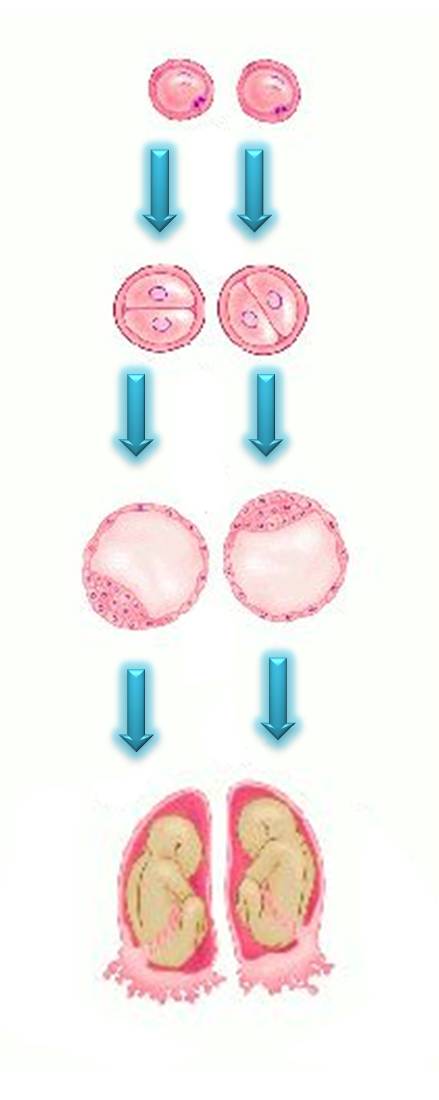
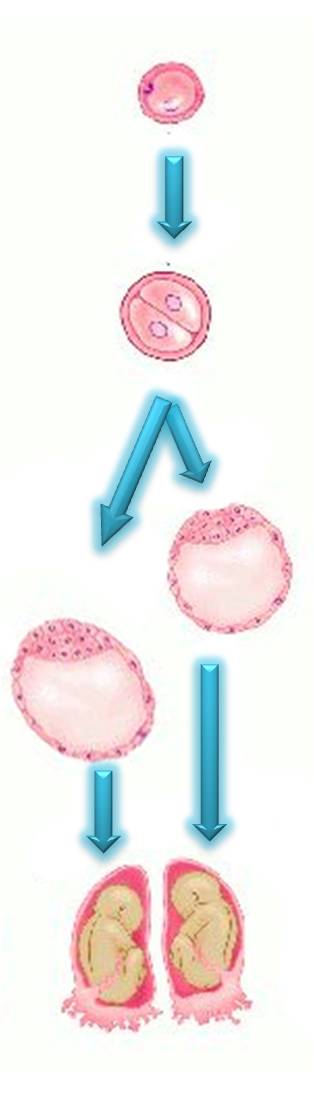
The following diagrams describe the different  type of twins.
Dizygotic (fraternal , not identical ) twins


Dizygotic (fraternal or not identical) twins are the most common type of twins (79%). Two oocytes (eggs) are fertilized by two sperm cells and form two embryos that are like brothers or sisters. These babies although similar (as siblings) are not genetically identical. They can be either the same or different gender. Each baby has each own placenta. Sometimes the two placentas fuse as they develop one next to the other. The two placentas do not communicate between  them.
These are the type of twins you most commonly have after IVF as two fertilised embryos are returned into the womb.  
All dizygotic twins are dichorionic (with few rare exceptions). 


Monozygotic (identical ) monochrionic twins 
Monozygotic dichorionic twins
Monozygotic (identical) twins. Their  frequency is about 4.5 per 1000 pregnancies. In this case one sperm cell fertilizes one oocyte (egg). The embryo that forms subsequently splits in two. These babies are genetically identical and are always the same gender. 
The most common type of identical twins are monochorionic diamniotic twins (70-80%). Imagine one balloon (the chorion) containing two smaller balloons (the amnion) each one with a baby inside. The two placentae communicate between them (blood can go from one baby to the other)

In about 20-25% when the embryo splits early (days 0-3) you have monozygotic dichorionic twins. These twins although they are genetically identical each one has each own placenta and there are no   
                                                                                                                                                       significant communications between 
                                                                                                                                                       them. 
Monozygotic monochorionic monoamniotic twins


A rare type of monozygotic ( identical) twins are those who are in the same sac. They are called monoamiotic. This happens when the embryo splits in two after day 8. Only about 2% of monozygotic twins are monoamniotic. These babies share the same placenta

If the split takes place after day 12 the results are the various type of conjoined twins.   


The reason why it is so important to determine the type of twins you carry is a syndrome called twin to twin transfusion syndrome (TTTS).  Twin to Twin Transfusion syndrome is unique to monochorionic (MC)  multiple pregnancies. It complicates up to 1/5 of MC twin pregnancies. If severe and left untreated it leads to the loss of both babies.  

Your obstetrician in Dubai should let you know from the outset the type of twins you carry and based on that draft a plan for the management of your pregnancy. 

The following are, in my opinion, important parts of the care and in our Fetal Medicine Unit we ensure we spent ample time to discuss them with the parents;
  • Screening for chormosomal anomalies
  • Nutrition and diet.
  • Monitoring for twin to twin transfusion syndrome in monochorionic twin pregnancies.
  • Risks and monitoring for preterm delivery. In Dubai it can be proven very difficult (and costly) to manage very premature babies. This is an important part of you care and should be fully discussed to ensure you reach informed choices about your care.
  • Monitoring for growth  It is good practice each time you have an ultrasound scan to get a typed report that clearly documents the findings and type of twins.
  • Timing and mode of delivery


I hope you find this helpful


Dr George Michailidis MRCOG
Specialist in Fetal & Maternal Medicine
Consultant Obstetrician & Gynaecologist


1 Comment

The value of birth plan, advice how and why you should prepare one.


Birth Plan

Birth plans used to be a terrible nightmare for young trainees in O&G in the UK including myself. We used to associate them with difficult patients, difficult decision making and sometimes conflict when the clinical circumstances forced us to deviate from the printed document. However as with many other things in life as you gain experience you recognise their real value.

As a private practitioner now I encourage my patients to consider preparing a birth plan. Our main focus is not so much the printed document but more so the “journey”  required for its preparation.
Hodnett E.  in an extensive review (Pain and women’s satisfaction with the experience of childbirth: a systematic review) concluded that the main factors influencing maternal satisfaction of their childbirth experience are the following;

1.Personal expectations.
2.Amount of support by the caregivers .
3.Quality of the patient – caregiver relationship.
4.Involvement in decision making.

A birth plan gives the opportunity to explore all of the above.
·It provides a basis for discussion that helps the medical team identify what are the key issues for the mother (personal expectations). From the mother’s perspective it  ensures that these are addressed appropriately.

·It actively involves the mother in decision making

·It provides the means of building and improving the relation between the doctor- midwife and the mother. It highlights the areas of agreement but more importantly indentifies the areas of disagreement. By doing so it  allows time to resolve misconceptions and find a “common ground” reducing the risk of conflict at the time of labour.

The following are some general tips to help you with the preparation of your birth plan.

  • Keep it simple and short. Someone will have to read it most likely in the middle of the night. The more complicated the birth plan the less likely to be followed.
  • Be pragmatic on your expectations and requests. For example dimming the lights at the time an operation may not be a good idea. What you are asking needs to be in line with the what the place you have chosen is able to offer, the hospital policies and procedures.
  • Be flexible and ready to adapt. It is extremely important to recognise that labour is a dynamic process. It is difficult to predict all the possible scenarios. So be ready to change and adapt if the circumstances require it.  The women who are more likely to be happy with the whole experience are those that approached childbirth with an adaptable plan.
  • After you have prepared your birth plan review it with your doctor. If you involve other people in the birth plan make sure they are aware and agree with your requests.
  • Consider the “decision making process” described  in the VBAC post  
The Canadian Society of Obstetricians & Gynecologists gives a typical example of a birth plan form.
Childbirth education is an essential element that mothers need before they embark in preparing their birth plans. There are great books, internet sites that can help women with initial information.
Midwife  led classes are an extremely valuable asset in education and preparation of parents for labour. Your doctor should be the one to help you bring everything together and approach labour with confidence.
Childbirth education should deal with the different aspects of labour. The following list is by no means exclusive but contains some of the basic things a mother should understand.
1.The process of normal labour
2.What are the common medical interventions during labour
3.How to deal with labour pain
4.When to call the hospital
5.What are the signs or symptoms that should worry you and get you talk to your doctor.
6.What to expect at the place you are planning to deliver
7.Care of the baby including breast feeding
8.Care of the mother after labour
Well respected midwife educators in Dubai are;
Ms Cecile De Scaly:
Mobile 050 6947938
Ms Hanadi Safi at Emirates Home Nursing is:
04 39633137
050 9647334
or info@emirateshomenursing.ae

Dr George Michailidis, Obstetrician and Gynecologist 
Fetal and Maternal Medicine Consultant 


3 Comments

First Trimester Ultrasound Scan (11-13 weeks)

What is the purpose of the first trimester scan?

The purpose of this scan is;

1.     To confirm a viable (alive) intrauterine (within the womb) pregnancy.  This is achieved by demonstrating a beating fetal (baby) heart.
2.     To date the pregnancy. This is achieved by measuring how long the fetus is from the top of its head to its bottom (Crown Rump Length – CRL accuracy about 7 days).
3.     To diagnose multiple pregnancies. Diagnosing twins or higher order multiple pregnancies early helps appropriate pregnancy planning.
4.     To provide a basic anatomical survey of the developing baby. A number of common major structural anomalies can be seen at this stage.
5.     If you wish in addition to the anatomical survey a number of specialist measurements can be done to help calculate the risk of your baby being affected by chromosomal anomalies like Down’s syndrome.

How is the scan done?

Most of the times the scan is done transabdominally. This means the probe that produces and receives ultrasound waves touches your lower abdomen (tummy) and allow us to get views  of the uterus (womb). Special gel is used to improve contact between the probe and your tummy.
In some occasions a transvaginal (internal) scan is needed. This means that a special probe is inserted in your vagina. In this way it gets much closer to the womb and produces a much clearer image. This is more commonly needed in very early pregnancy, for those women who are overweight or have a backwards tilted womb.
The doctor will explain to you the type of scan that needs to be done and a chaperone will be in the room during internal scans.
Having an ultrasound scan should not be painful. If in any case you feel uncomfortable let the doctor know as he/she is usually concentrating at the ultrasound screen.
What about having a full bladder? A full bladder helps with transabdominal scans as it pushes your womb upwards and at the same time pushes the bowel out of the way creating good window to look at your baby. However you should not feel uncomfortable and be able to enjoy your scan. 

What information will I get?


At the end of the scan you will be given a printed report which will summarize the scan findings ie; position of the pregnancy, number of fetuses (babies), fetal heart activity, CRL and the calculated gestation and expected date of delivery. Basic anatomical structures that can be seen at this stage will also be described.
At this stage due to the very small size of the baby only specific severe abnormalities will be picked up. Typical problems picked up at this stage are acrania (when the fetal skull has not develop), gastroschisis and omphalocele (anomalies that affect how the baby’s tummy has formed). Futhermore as the baby continues to develop further, some problems are evident later in the pregnancy.
Problems with the baby’s heart are not commonly seen at this stage. The main scan aiming to reassure that baby is structurally normal is the 20 week scan.
The baby’s gender is not easy to be determined at this stage. Male and female external genital organs look very similar at this gestation. However an educated guess (about 80-90% accurate) can be attempted if the views are good.

What are the risks for my pregnancy?

Ultrasound scanning has been routinely used in obstetrics for more than 20 years. Routine scanning does not pose any risk to your baby or yourself. 
What if there is a problem?
Most scans are happy experiences but sometimes problems are either seen or suspected. At this stage of the pregnancy problems that can be picked up are
1.     A missed miscarriage. This is when the pregnancy has stopped developing and there is no visible beating fetal heart. A miscarriage in early pregnancy unfortunately is not uncommon. Most of the times no specific reason can be identified. The doctor will explain the findings to you and arrange with you the appropriate management.
2.   Suspicion or evidence of a structural anomaly (problems relating to how the baby has developed). The doctor will explain the findings to you and depending on the problem explain what are the implications for you pregnancy and the baby. I some occasions further tests may be needed to clarify the diagnosis.
What if I have more questions ?

We hope you will find this information useful. If you have any questions you can contact either Dr Michailidis or our specialist midwife

Dr George Michailidis, Obstetrician and Gynecologist 
Fetal and Maternal Medicine Consultant 

1 Comment

Vaginal birth after a Cesarean Section

More than one in five deliveries in Dubai are done by Cesarean Section. A lot of women – couples are trying to find the right answer to the question; “What is the best way to deliver my baby if I had one previous Cesarean Section ?”


Recently the American College of Obstetricians updated its guidelines regarding vaginal deliveries after cesarean section (VBAC). The new guidelines are less restrictive. The main changes are in respect of where mothers should give birth and what are the group of mothers who should be considered for a VBAC or TOLAC (trial of labour after a cesarean section). This change has already started attracting media attention.
Most of the obstetric organisations in the world (ACOG – USA, RCOG – UK, SOGC – Canada, RANZOG – Australia) have a similar approach stating that “delivery is recommended at an establishment that can offer immediate delivery  if needed ” .
In the US, most likely due to the high risk of medicolegal action, it led  a large number of smaller hospitals to refuse care to women who had a previous ceasarean section ( CS ) and wanted to try for a vaginal delivery. The new approach by the ACOG supports the mothers autonomy of decision as to where and how she should deliver her baby. At the same time it gives a lot of emphasis in the counselling process and information provision. This is extremely important as you can only make an informed choice when you have the right information.
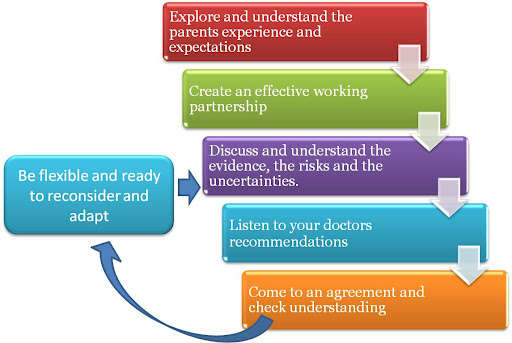
 In Dubai most of the large private hospitals are able to offer care to women who wish to try for a VBAC. All women should have the opportunity to discuss with their obstetrician how they would like to deliver. So take your time and discuss it with your doctor and formulate your birth plan.  This is my suggestion as to how you should approach your consultation / decision making;
1.   Your doctor should try and explore your previous experiences and understand your expectations. A lot of the decision making is coloured from what happened last time. Some mothers feel traumatised from a prolonged and unsuccessful labour and do not want to go through the same again. Others feel that they missed out on their opportunity for a vaginal birth and really want to try their best to achieve a vaginal delivery.

2.   One of the advantages of private care is the opportunity and the time  to build a working partnership between the parents and the doctor. So take full advantage of it and utilize it to help you make up your mind.
3.    Discuss the evidence and try to understand its strengths and its weaknesses. It is important to understand the uncertainties particularly when you try and tailor the available evidence to a certain case.
4.   Listen to your doctor’s recommendations. In addition to the widely accepted evidence they should reflect the local realities. It is good to read the evidence on the internet but implementing them at a local level is different and your doctor will be the best person to advise you on this.
5.    Come to an agreement  This includes checking that everybody fully understands what is decided.
6.   Always be flexible ready to reconsider and adapt. Pregnancy and in particular labour are dynamic developing scenarios. The main objective though remains the same ” a healthy mother and a healthy baby”. Parents need to be ready to reconsider and adapt as the situation changes.  Typical examples are; ” what do you do if while you decided for an elective CS you present to labour ward in advanced labour ? ” , ” what do you do if while you decided to go for a VBAC you labour you have 40 weeks and nothing happened ?”
In my experience the parents approach varies from one couple to another.  Some parents come with a clear plan while others may need time to come to formulate in their mind what they feel is best for them.
You might find helpful the following basic statistics.
·The overall chance of a successful VBAC is between 70-80%. This is an overall figure . Your doctor should be able to adjust this figure and give you an assessment tailored to you. There are a number of factors that increase or decrease your chance for a successful vaginal birth after cesaerean section.  Your past obstetric history (what happened in your last pregnancy), your medical history, the progress of the current pregnancy, how your labour starts are all factors that make a difference.
·Risks; whatever you decide to do you need to have a good idea of the risks for you and your baby.
Labor is a risky time of a woman’s and her baby’s life. Whichever mode of delivery you choose there are some risks. 
Elective cesarean section to deliver your baby after one previous Cesarean section;
·It is more likely that you will stay in hospital longer and will need a longer time for recovery. You have to recover from a major surgical procedure.
·There is increased risk for surgical complications like injury of the bladder and the bowel. The more cesarean sections you have the more likely to run in these troubles. After every operation during the healing process you create adhesion (organs and tissues sticking together). This makes future operation in the same site (like a repeat CS ) more risky.
·There is increased risk to have problems in future pregnancies. These mainly have to do with the location of placenta and the risk for it to become very adherent to the womb (placenta accreta).
·Your delivery is more likely to be by CS next time as well.
Vaginal birth after one previous Cesarean section – successful
·There is a risk for uterine rupture. The chance for this happening is small (0.5%) it can lead to serious problems for both mother and baby.
·There is a risk for complications during the labour. Sometimes these can be serious. The risk for perinatal death or hypoxic encephalopathy (brain damage) is almost 0.5/1000.
·With every vaginal delivery there is a risk of vaginal tear and significant perineal (this is the area between the vagina and the back passage) trauma.
Unsuccessful trail of labour after one previous Cesarean section
The worst of both worlds suffer those who try for a vaginal birth but fail and end up with and emergency CS.
·Every operation performed in and emergency setting is more risky that an elective -scheduled one. As a result of that all the risks mentioned for the elective CS are increased in this scenario.
·Furthermore it is more likely to have a large bleed that requires transfusion, or ends up to a hysterectomy.
·More likely to have an infection.
·More likely to have to stay in hospital for longer and take longer time to recover.
I hope you find this info useful
Dr George Michailidis
FURTHER READING

ACOG patient education leaflet; Vaginal birth after Cesarean Section

Dr George Michailidis, Obstetrician and Gynecologist 
Fetal and Maternal Medicine Consultant 

2 Comments

No need to delay pregnancy after a miscarriage

How long should a mother wait before trying to conceive after a miscarriage?
A study of more than 30,000 women in Scotland suggested that women who suffered a miscarriage have the best chance for a healthy pregnancy when they conceive within the six months.
This is a very interesting publication at the recent BMJ issue ( Effect of interpregnancy interval on outcomes of pregnancy after miscarriage: retrospective analysis of hospital episode statistics in Scotland — Love et al. 341: c3967 — BMJ that sparked a lot of media attention as it contradicts current international guidelines.

The length of inter-pregnancy interval has long been debated in the literature. The current WHO recommendations are for parents to wait for 6 months before trying for another pregnancy after a miscarriage. However the scientific / research basis for such a recommendation is very weak
There is good data suggesting that women should allow 6 -12 months after having their baby before they try for the next pregnancy. The evidence is ample that pregnancy complications are more common when the mother conceives shortly after having her baby. The higher rate of problems has been attributed to the fact that the mother’s stores of macro and micronutrients (like folic acid) are depleted after a full term pregnancy and need time to recover. 
This is the first large scale study that deals specifically with the issue of pregnancy after a miscarriage and not a full term pregnancy. The results were that women who conceived within 6 months from their miscarriage had the best pregnancy results. This was maintained even after controlling for factors like maternal age and socio-economic status. 
The strength of this research is the large number of patients (30000) and the good quality of primary data. 
The weakness is that it is a retrospective (meaning looking back at old records) study. Hospital records do have their weaknesses and seldom looking at the paper record you get a full picture for the patient (common problem in epidemiologic studies). 
The significance however of this research is that it provides for the first times good quality evidence to help doctors advise their patients about when they should try for a pregnancy after a miscarriage.
It is a fact that in developed countries many women push back having children for the sake of education/ professional career. This is particularly true for the expat women of Dubai. A large number of women are over 35 when they start their families. Many are in their forties and have not yet completed their family. Waiting for long period of time after a miscarriage may have a negative overall effect to the woman’s chance for a successful pregnancy.
The final decision as to when a couple should try for a pregnancy after a miscarriage lies of course with the couple itself. In particularly the mother needs to be not only physically but psychologically ready to try for the next pregnancy after her miscarriage.
Your Doctor should be able to offer you the support and counselling you may need to carry on and help you focus on positive issues.
In preparation for the next pregnancy it essential to try and offer advice to help both parents optimize their health before and during the pregnancy. General preconception advice (like taking folic acid, stop smoking) as well as specific interventions tailored to the mother’s needs should be instituted to give the couple the best chance for a healthy pregnancy.

Dr George Michailidis, Obstetrician and Gynecologist 
Fetal and Maternal Medicine Consultant 
Links to news headlines 


4 Comments

What is a screening test? what is the difference from a diagnostic test?

(The following is an extract from our Fetal Medicine information sheet for Downs Syndrome.) 

Screening tests give as a result a risk estimate, in other words how likely it is for a person to have a certain condition. This is usually expressed as a numerical value for example 1:100. Many times for simplicity if the risk is higher than a certain value the test is reported as “high risk” or “low risk” if it is lower than the threshold selected. 

Screening tests do not confirm or exclude a condition. For example a screening test does not say that a baby “has” or “has not” Down’s syndrome.
They do however, provide valuable information to help the parents decide if they want to proceed with diagnostic tests.

Diagnostic tests are those that confirm or exclude a condition.
If the screening tests do not tell us “yes or no” why don’t we just have the diagnostic tests ?
Today the available diagnostic tests for Down’s syndrome are
1.Chorionic villus sampling CVS
2. Amniocentesis
Both tests carry a small risk of causing a miscarriage (0.5-1%).
For this reason many parents would opt to have first a screening test and use the results to help them decide if they would proceed to a diagnostic test.
What are the recommended screening tests?
In the past the main screening test for Down’s syndrome was the mother’s age. Unfortunately this was proven to be neither very sensitive (picked up about 60% of babies with T21) nor very specific (too many women had to have unnecessary invasive procedures).
 At the American Hospital Dubai we recommend;
1.First trimester combined test. This test combines the results of first trimester ultrasound scanning (Nuchal translucency, fetal heart rate) with biochemical markers (bHCG, PAPP A). The test is done at 11-13 weeks at the Fetal Medicine Unit of the American Hospital Dubai. The test detection rate is approximately 90%
2.Second trimester biochemistry. For those mothers who have booked late (after 13weeks and 6 days) we recommend the quadruple biochemistry test. This is a blood test for the mother. The detection rate is approximately 75%.
What is considered to be a high risk result?
The result of the test is considered to be “positive” if the risk estimate is higher than  1/300. For a example 1/240 is considered a “positive” or “high risk” result while 1/310 is considered a “negative” or “low risk” result.
It is always challenging for the parents to appreciate the magnitude of risk. 
Please take time to discuss the results with your Doctor as finally a good result is a result the parents are content with.

Dr George Michailidis, Obstetrician and Gynecologist 
Fetal and Maternal Medicine Consultant 


1 Comment

What are the questions a couple / mother in Dubai should think before embarking in testing for Down’s syndrome?

In pregnancy mothers undergo a large number of tests, many times without actually fully appreciating what each test is about. In particular screening and diagnostic tests for Downs syndrome T21 can end up causing a lot of anxiety. 
It would worth thinking and discussing with your partner and your doctor the following questions;

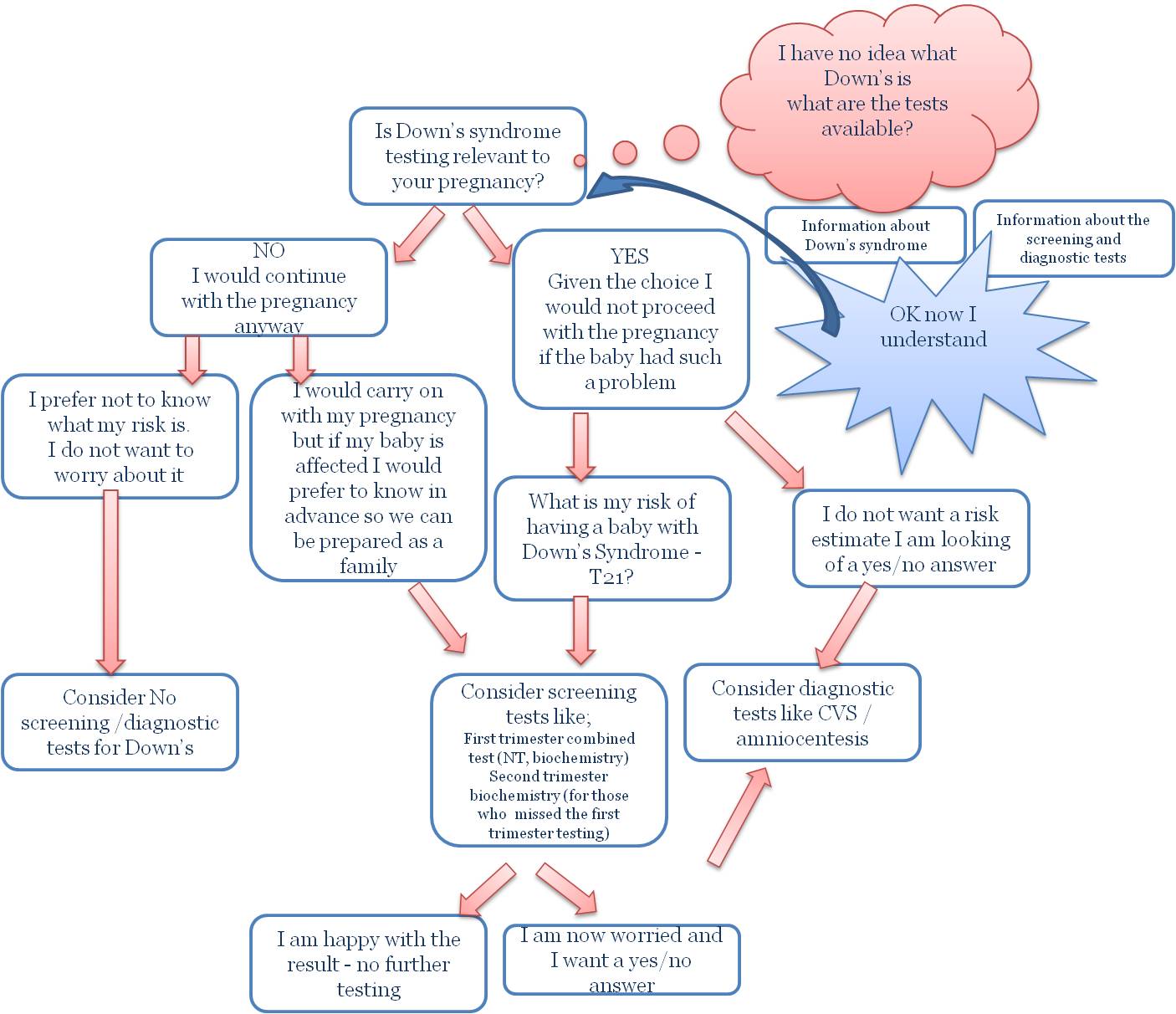
  1. Is this a relevant test?  In other words would it change the way you view this pregnancy?
  Usually parents do come in 3 big groups;
      Those for whom whether the baby has or not Downs make no difference what so ever. These parents would not consider termination and they would look after the baby the same way as any other baby would come their way.

       Those parents who believe that given the choice they would not bring to life a baby  with such a problem. 

       Those that say “Doctor I have no idea what I would do. Lets discuss what are the chances of this happening to help us make up our mind how will go forward”


For the first group testing for Downs may not be appropriate. It may result in extreme anxiety if the results are not reassuring without any real benefit for the overall pregnancy management.
I should point out here that although the majority of parents in this group would prefer not to know and worry, a small number would opt to undergo testing as they would like to be prepared (psychologically, making appropriate family arrangement etc..)


In the second group usually we see a number of parents that are looking for absolute certainty. They do not want a risk estimate but a “yes or no” answer to help them early make arrangement for the pregnancy management. For these parents  diagnostic tests like a CVS or an amniocentesis should be considered.


The third group contains the majority of parents and they should try and think the following;

  1. Is there a risk level that will make you feel content and secure?
    Unfortunately the results of screening tests give a risk estimate. The cut off points are usually set anywhere between a risk of 1/250 to 1/300. So a result 1/299 – abnormal – high risk result is statistically not different from the 1/301 – normal- low risk result. Dealing with the results of the test is challenging for everybody and you should spend some time with your doctor  discussing these issues.
  2. Avoid the question “doctor what would you do in my case?“. Each family has a unique setting. Even within the same family the circumstances change over a period of time. The role of you doctor in most of the cases should not be to tell you what to do but to give the information you need to help you make up your mind what is right for your family.   

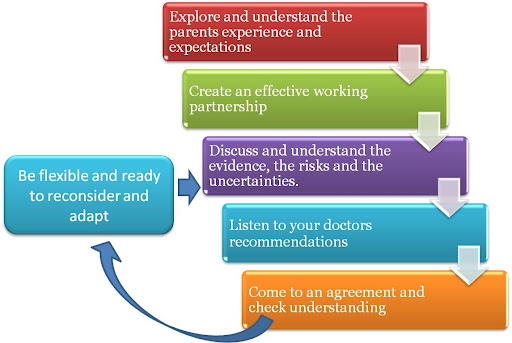
The following flow chart is summarising the decision making process
Dr G Michailidis 
Make sure you have some quality time with your doctor and discuss the issues above. 

Remember for most of these questions there are no universally “right” answers. The correct plan is the one that is appropriately tailored to you and your family.

Dr George Michailidis, Obstetrician and Gynecologist 
Fetal and Maternal Medicine Consultant