How mothers perceive their birthing experience a large extent depends on how they deal with labor pain. Giving birth is painful. It is well accepted that pain during labouris severeand usually exceeds the mother’s expectations.
It has been describedby some, as the worst pain a woman experiences. Although many mothers are able to deal with it well for some is overwhelming.
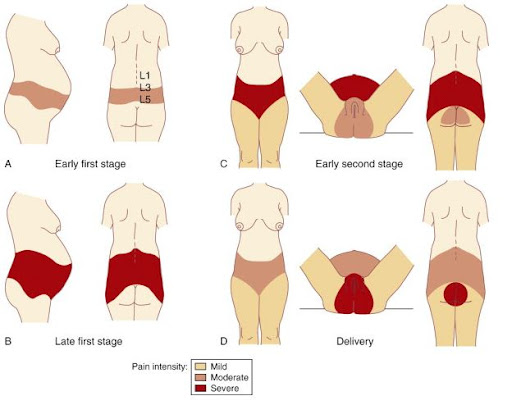
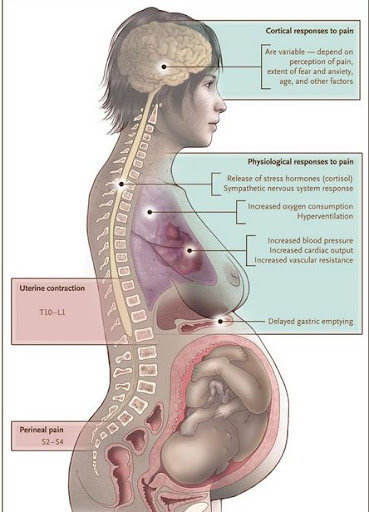
Sometimes the maternal reaction -over reaction to the pain can adversely affect the labor/fetus.
The most effective to deal with pain during labourare the various regional techniques for pain relief.
What is epidural anesthesia?
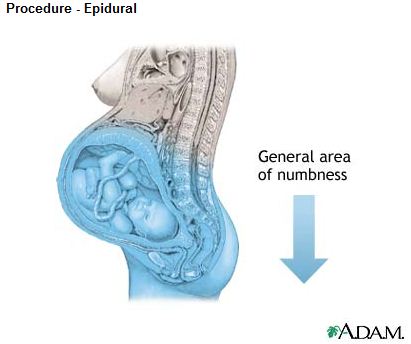
Epidural is a popular techniqueof regionalanesthesia. It is called regionalas it blocks sensation– painat a certainpart regionof the body.
How does it work?
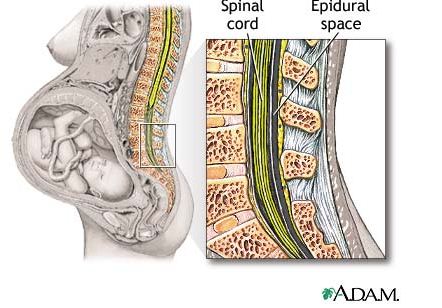
It works by stopping the pain signal transmission at the lower nerves of the spine.As a resultit numbs the lower part of the body. This is achievedby a “cocktail” of local anesthetic medication and special opioids.
Read more about how epidural is set up what are the advantages and disadvantages using it as pain relief for your labor
Read more about how epidural is set up what are the advantages and disadvantages using it as pain relief for your labor
How is itsetup?
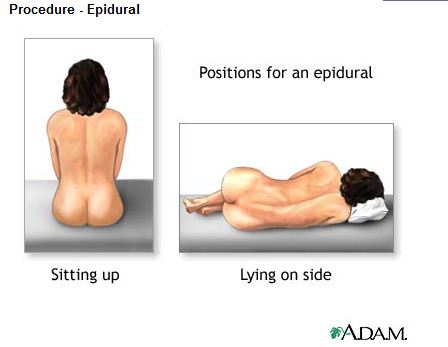
The nurse or the midwife will first placea cannula to have access to your veins and ensurethat you receiveintravenous (through the vein) fluids. This is maintainedthroughout the labour. Then the anesthetist will cometo setthe epidural. They will usually either ask youto situp or lie on your side. In both casesthey will require youto try and archyour back “like an angrycat” you may hear them say. This helps them a lot to find the right spacefor placing the epidural catheter.
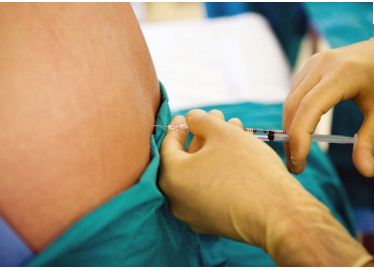
The anaesthetist will use an antiseptic solution to cleanyour back in order to minimise the risk for infection. Using a fine needle he will injectlocal anesthetic and numb the areahe is planning to placethe epidural catheter.
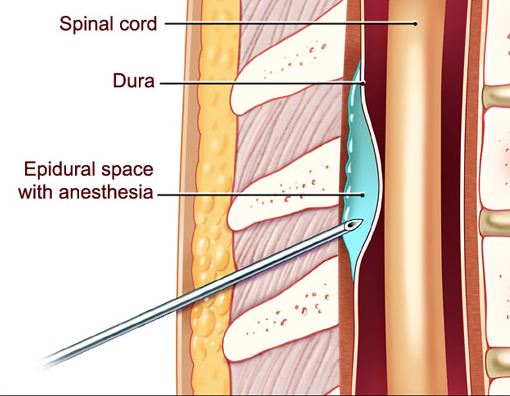
He will then inserta needle via the numbed area to the epidural space. Youusually feela pushing sensation at that point. Using the needleas a guidehe threads a verythin plastictube to the epidural space.
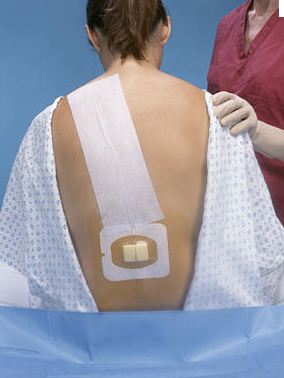
Then the needle is removedand the catheter is securedwith plastic tape.This catheter is usedto deliverthe medication during the labour. This initially is doneby a directbolus injection followed by a continuous infusion
What are there different types of epidural used in labor? What is a walking epidural?
There are essentially two variations of the epidural technique used.
1. Routine Epidural ; as described earlier
2. Combined Spinal Epidural (CSE) or “walking epidural”. The difference with this technique is that by using a special verythin needle the initial dose of medication is givento the intrathecal space (a layer further in from the epidural space).The advantage of this technique is that it has its effectmuch faster and alsopreserves your motor control (ieyou can controlyou muscle better) allowing to move more freely at your bed. Although it is calledwalking epidural it is not commonly recommended to walkas your balancewith beaffected.
Each Hospital unit uses customised protocols regarding the medications and instruments used.
2.What are the side effects – complications of the epidural in labour?
1. Youmay feel shivering, nausea, or itching on some occasions you may experience backache or soreness where the needle was inserted.
2. It may cause a sudden drop of your blood pressure (BP). The midwife should keep a close eye on the BP and ensure youare receiving adequate fluids. In some casesthe anesthetist may have to give you specificmedications to deal with verylow BP
3. On occasions youmay havebreakthrough painor not completecoverage of the pain. Usually the anesthetist will try to remedythis by extra doses of medication or on occasions replacing the epidural catheter.
4. Severe headache. This complicates about 1% of procedures and it is dueto leakage of spinal fluid from the site of the needle placement.It can be devilishly severe headache and usually is aggravatedby movements. Most of the time the treatmentis conservativewith painkillers and hydration but some times aprocedurecalled “bloodpatchmay be offered to improve symptoms.
Normally the anesthetist will come and fully explain what happened andfollowyouup.
5. Very rarely, severe infectionor nerve damage can be caused by the insertion of the needle
How will an epidural affect my labor?
Positive effects

• It is the best modeof pain relief available for labor pain. It allows youto get some restduring labor.
• It can be used to cover medical procedures like instrumental deliveries, repair of tears or episiotomy even a Cesarean sectionif needed.
• It is easier to controlthe deliveryof the fetal head as the extreme pain elementis not there.
• It allows you to be alert with a clear mindthroughout labor. This helps mothers to “enjoy” the labourwithout the pain. Many find crucialto be ableand maintain a clear mindand decision making abilitywithout being distractedby the relentless contraction pain.
Negative effects
• More medical interventions; youwill need access to your veins, continuousmonitoring of your baby. It is more common that you will need syntocinon – oxytocin to ensure good strong contractions and it is recommended that you have a urinary catheter to help you emptyyour bladder. These are common tasks and in some units many will be done anyway even if you do not have an epidural.
• You are confinedto your bed.
• It is more common to need help with the use of a ventouseor forcepsto deliver the baby especially if youhave a “heavyepidural” meaning verylittle muscle control.
Myths
Do Epidurals increase the risk for CS? NO.There is now goodevidence that the CS rate is not increased using an epidural.
Do epidurals increase the length of labor? Yes by 15 min.So a well-managed epidural is not expected to have any significant effect to the length of labour.
Do epidurals affect my baby? A well working epidural does not affect your baby’s well being. However side-effect like sudden drop of your blood pressure can cause fetal distress if not dealt timely and appropriately.
When is the earliest stage inlabourthat I can have an epidural?
The commonadvice is to opt for an epidural at the active phase of the first stage of labor i.e.| 3-4 cm dilatation of the cervix with regular contractions.
In realityif youneed pain relief and either you membranes have ruptured or they are accessibleand can be rupturedyou can have an epidural.
Are there situations that Iwill be refusedan epidural if Iaskfor one?
1. You are in advanced in labourand the team feels that youwill deliverbefore they have time to provideyou and effective epidural.
2. The anaesthetist is busyor there isn’tenough staff to look youafter safely. On occasions in very busylabor wardsthere might not be enough trained staff to safely look youafter with an epidural.
3. Youtake medication that affect how your blood clots like heparin or warfarin or your pregnancy is complicatedby conditions that affect your bloods clotting ability. In these situationsthere is riskfor having a bruise– hematoma at the place of the needle insertion. Given that the spinal canal is a confined space, hematoma can affect adversely your nerves and spinal cord.
4. Youhave or suspected to have an infectionthat has spread to your blood stream
What shouldyoudo in advance ;
Mother-
- Discuss yourbirth plan in advance
It is importantto discuss your pain relief options when youare building your birth plan with your midwife / obstetrician. This will allow time, at a non stressful environmentto explore the optionsavailable for you. It will make it possible to bring to light your fears and answeryour questions.
- The D day
Inform the staff that is looking after you regarding your preferences for pain relief.
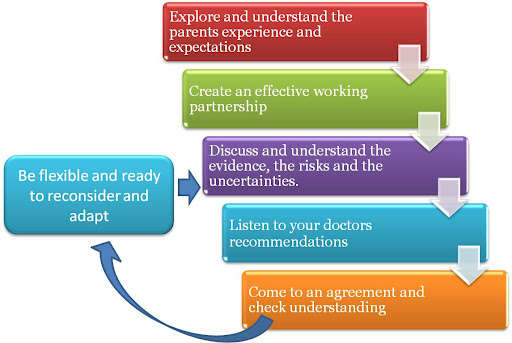
Be flexible, realistic and ready to adapt. Now, this can be very challenging given that there is a good chance that you will be anxious, tired and in a lot of discomfort.
Labour wards can on occasions be very busy places. You have the disadvantage that you are not usually aware of what else is going on at the floor. So make your midwife your best friend – ally. Let her know what you want for pain relief and listen to her advice. Ask her to help you in choosing the better time for the epidural. Although you are the one in pain the midwife will know what is happening at the rest of the labour ward rooms, how busy the anaesthetist is and whether there are any cases that may have an impact on staff availability when you need your epidural.
Obstetrician Risk assessment
Your obstetrician should be able to identify factors that can may makeregional anesthesia more riskyand difficult.Typical examples are ; previous spinal injury or spinal operations, scoliosis, high BMI. Particular fears like fear of needles or a bad previousexperience can make the procedure verydifficult.
Be forthcoming with your Doctor and let him/her know if you have particular worries about pain relief in labour.
In these cases early review preferably by a senior anaesthetist will help appropriate planning for the delivery day.
Dr George Michailidis, Obstetrician and Gynecologist
Fetal and Maternal Medicine Consultant