Pregnancy in Dubai

Advice & information on common pregnancy problems by a Fetal & Maternal Medicine Consultant


Leave a comment

Preterm birth and cervical length screening in Dubai

Preterm premature birth is the leading cause of neonatal death and long term morbidity. It has a huge impact in the affected families with both physical and psychological implications. From the provider health-care system point of view employing effective screening and treatment methods translates in major good outcome benefits including great health care savings.


The American College of Obestrics and Gynecology and the Society of Maternal Fetal Medicine have recently published their position on the issue of screening and prevention of preterm birth. 
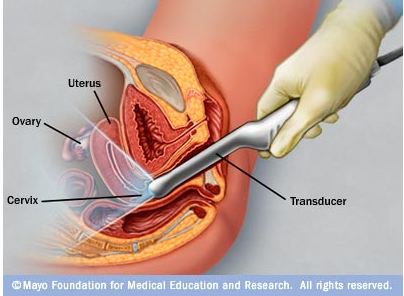
Both Societies  acknowledged the importance of cervical length as a predictor of preterm labor and the efficacy of vaginal progesterone in improving pregnancy outcomes 


In summary the some of the SMFM recommendations are the following
1 In women found to have a prematurely short cervix are at high risk for preterm labour and should be treated

2 Use of progesterone is associated with lower risk for preterm birth in some pregnant women, as well as with better neonatal outcomes

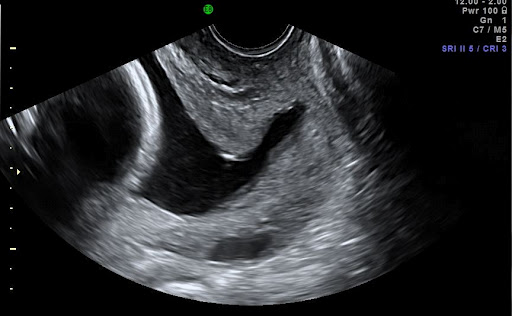
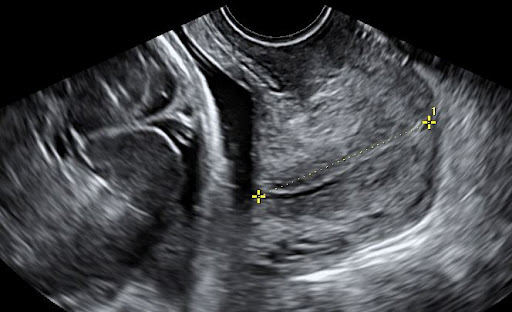
3 Because of the high prevalence and public health burden of preterm birth, experts recommend universal cervical length measurement, which meets World Health Organisation criteria for an effective screening test.

Preterm labor in Dubai there are additional issues that the family physician need to consider. The availability and of neonatal unit beds, the high costs of care for the baby, the rather fragmented after care. See our blog What you need to know about preterm labor in Dubai.

The best approach is prevention. A methodical approach including your detailed history and Cervical measurement done by qualified and experienced clinicians is likely to give the best results. Discuss with your obstetrician the best way to tackle preterm labour.  Feel free to contact us for further information.


Dr George Michailidis, Obstetrician and Gynecologist 
Fetal and Maternal Medicine Consultant 


Addtional resourses 


Berghella, V., The Society for Maternal-Fetal Medicine: 
Publications Committee, Progesterone and Preterm Birth Prevention: Translating Clinical 
Trials Data into Clinical Practice, American Journal of Obstetrics and 
Gynecology (2012), doi: 10.1016/j.ajog.2012.03.010.


2 Comments

No need to delay pregnancy after a miscarriage

How long should a mother wait before trying to conceive after a miscarriage?
A study of more than 30,000 women in Scotland suggested that women who suffered a miscarriage have the best chance for a healthy pregnancy when they conceive within the six months.
This is a very interesting publication at the recent BMJ issue ( Effect of interpregnancy interval on outcomes of pregnancy after miscarriage: retrospective analysis of hospital episode statistics in Scotland — Love et al. 341: c3967 — BMJ that sparked a lot of media attention as it contradicts current international guidelines.

The length of inter-pregnancy interval has long been debated in the literature. The current WHO recommendations are for parents to wait for 6 months before trying for another pregnancy after a miscarriage. However the scientific / research basis for such a recommendation is very weak
There is good data suggesting that women should allow 6 -12 months after having their baby before they try for the next pregnancy. The evidence is ample that pregnancy complications are more common when the mother conceives shortly after having her baby. The higher rate of problems has been attributed to the fact that the mother’s stores of macro and micronutrients (like folic acid) are depleted after a full term pregnancy and need time to recover. 
This is the first large scale study that deals specifically with the issue of pregnancy after a miscarriage and not a full term pregnancy. The results were that women who conceived within 6 months from their miscarriage had the best pregnancy results. This was maintained even after controlling for factors like maternal age and socio-economic status. 
The strength of this research is the large number of patients (30000) and the good quality of primary data. 
The weakness is that it is a retrospective (meaning looking back at old records) study. Hospital records do have their weaknesses and seldom looking at the paper record you get a full picture for the patient (common problem in epidemiologic studies). 
The significance however of this research is that it provides for the first times good quality evidence to help doctors advise their patients about when they should try for a pregnancy after a miscarriage.
It is a fact that in developed countries many women push back having children for the sake of education/ professional career. This is particularly true for the expat women of Dubai. A large number of women are over 35 when they start their families. Many are in their forties and have not yet completed their family. Waiting for long period of time after a miscarriage may have a negative overall effect to the woman’s chance for a successful pregnancy.
The final decision as to when a couple should try for a pregnancy after a miscarriage lies of course with the couple itself. In particularly the mother needs to be not only physically but psychologically ready to try for the next pregnancy after her miscarriage.
Your Doctor should be able to offer you the support and counselling you may need to carry on and help you focus on positive issues.
In preparation for the next pregnancy it essential to try and offer advice to help both parents optimize their health before and during the pregnancy. General preconception advice (like taking folic acid, stop smoking) as well as specific interventions tailored to the mother’s needs should be instituted to give the couple the best chance for a healthy pregnancy.

Dr George Michailidis, Obstetrician and Gynecologist 
Fetal and Maternal Medicine Consultant 
Links to news headlines 


4 Comments

What is a screening test? what is the difference from a diagnostic test?

(The following is an extract from our Fetal Medicine information sheet for Downs Syndrome.) 

Screening tests give as a result a risk estimate, in other words how likely it is for a person to have a certain condition. This is usually expressed as a numerical value for example 1:100. Many times for simplicity if the risk is higher than a certain value the test is reported as “high risk” or “low risk” if it is lower than the threshold selected. 

Screening tests do not confirm or exclude a condition. For example a screening test does not say that a baby “has” or “has not” Down’s syndrome.
They do however, provide valuable information to help the parents decide if they want to proceed with diagnostic tests.

Diagnostic tests are those that confirm or exclude a condition.
If the screening tests do not tell us “yes or no” why don’t we just have the diagnostic tests ?
Today the available diagnostic tests for Down’s syndrome are
1.Chorionic villus sampling CVS
2. Amniocentesis
Both tests carry a small risk of causing a miscarriage (0.5-1%).
For this reason many parents would opt to have first a screening test and use the results to help them decide if they would proceed to a diagnostic test.
What are the recommended screening tests?
In the past the main screening test for Down’s syndrome was the mother’s age. Unfortunately this was proven to be neither very sensitive (picked up about 60% of babies with T21) nor very specific (too many women had to have unnecessary invasive procedures).
 At the American Hospital Dubai we recommend;
1.First trimester combined test. This test combines the results of first trimester ultrasound scanning (Nuchal translucency, fetal heart rate) with biochemical markers (bHCG, PAPP A). The test is done at 11-13 weeks at the Fetal Medicine Unit of the American Hospital Dubai. The test detection rate is approximately 90%
2.Second trimester biochemistry. For those mothers who have booked late (after 13weeks and 6 days) we recommend the quadruple biochemistry test. This is a blood test for the mother. The detection rate is approximately 75%.
What is considered to be a high risk result?
The result of the test is considered to be “positive” if the risk estimate is higher than  1/300. For a example 1/240 is considered a “positive” or “high risk” result while 1/310 is considered a “negative” or “low risk” result.
It is always challenging for the parents to appreciate the magnitude of risk. 
Please take time to discuss the results with your Doctor as finally a good result is a result the parents are content with.

Dr George Michailidis, Obstetrician and Gynecologist 
Fetal and Maternal Medicine Consultant 


1 Comment

What are the questions a couple / mother in Dubai should think before embarking in testing for Down’s syndrome?

In pregnancy mothers undergo a large number of tests, many times without actually fully appreciating what each test is about. In particular screening and diagnostic tests for Downs syndrome T21 can end up causing a lot of anxiety. 
It would worth thinking and discussing with your partner and your doctor the following questions;

  1. Is this a relevant test?  In other words would it change the way you view this pregnancy?
  Usually parents do come in 3 big groups;
      Those for whom whether the baby has or not Downs make no difference what so ever. These parents would not consider termination and they would look after the baby the same way as any other baby would come their way.

       Those parents who believe that given the choice they would not bring to life a baby  with such a problem. 

       Those that say “Doctor I have no idea what I would do. Lets discuss what are the chances of this happening to help us make up our mind how will go forward”


For the first group testing for Downs may not be appropriate. It may result in extreme anxiety if the results are not reassuring without any real benefit for the overall pregnancy management.
I should point out here that although the majority of parents in this group would prefer not to know and worry, a small number would opt to undergo testing as they would like to be prepared (psychologically, making appropriate family arrangement etc..)


In the second group usually we see a number of parents that are looking for absolute certainty. They do not want a risk estimate but a “yes or no” answer to help them early make arrangement for the pregnancy management. For these parents  diagnostic tests like a CVS or an amniocentesis should be considered.


The third group contains the majority of parents and they should try and think the following;

  1. Is there a risk level that will make you feel content and secure?
    Unfortunately the results of screening tests give a risk estimate. The cut off points are usually set anywhere between a risk of 1/250 to 1/300. So a result 1/299 – abnormal – high risk result is statistically not different from the 1/301 – normal- low risk result. Dealing with the results of the test is challenging for everybody and you should spend some time with your doctor  discussing these issues.
  2. Avoid the question “doctor what would you do in my case?“. Each family has a unique setting. Even within the same family the circumstances change over a period of time. The role of you doctor in most of the cases should not be to tell you what to do but to give the information you need to help you make up your mind what is right for your family.   

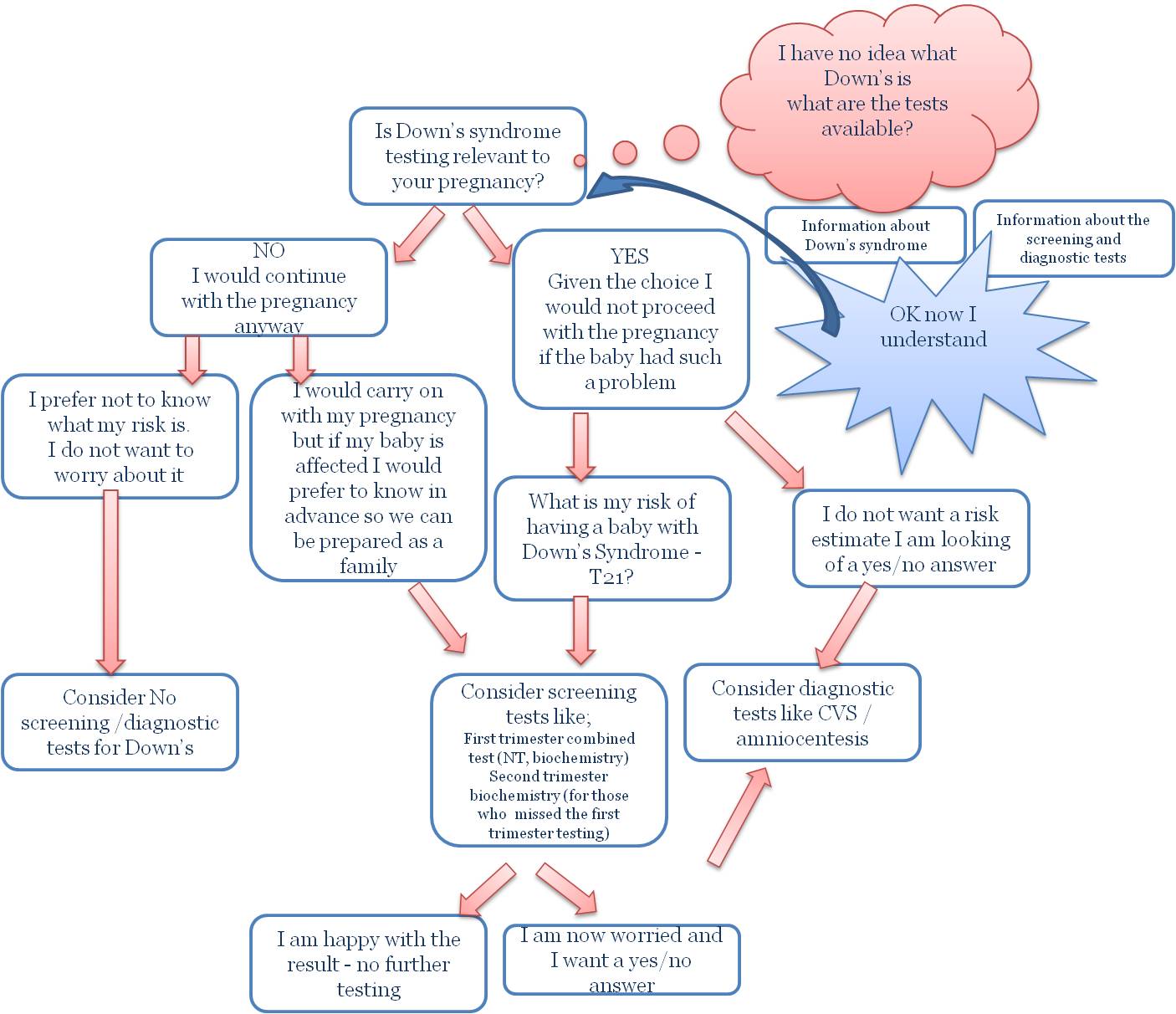
The following flow chart is summarising the decision making process
Dr G Michailidis 
Make sure you have some quality time with your doctor and discuss the issues above. 

Remember for most of these questions there are no universally “right” answers. The correct plan is the one that is appropriately tailored to you and your family.

Dr George Michailidis, Obstetrician and Gynecologist 
Fetal and Maternal Medicine Consultant 


3 Comments

Down’s syndrome

 In Dubai  there is a larger than average number of women in the age group 35-40. This is due to the large number of expatriates who usually will reach Dubai at  the mid or later stage of their professional carrier. 
Screening and diagnostic tests for Down’s syndrome are usually offered to most mothers at some time during the first or second trimester of their pregnancy. I will try in the next few posts to explain some of the basic principles of screening. But first of all in a brief post i will deal with what Down’s syndrome is. 
Down’s syndrome (Trisomy 21) is a genetic disorder. Humans normally have 46 chromosomes. The chromosomes are structures where our cells pack all the (genetic) information needed to create a fully functional human being. Individuals with Down Syndrome have an extra copy of chromosome 21 and thus 47 rather than 46 chromosomes. This additional genetic material results in the characteristic features of Down Syndrome.
People with Trisomy 21 look different.
They have a rather flat face, large protruding tongue and eyes that slant upwards.
Many have problems with their heart (40%), eyes and ears. They tend to be more sensitive to infections.
All those with Down’s Syndrome have some degree of learning disability/ mental retardation. This can vary from moderate to severe.
The average life expectancy has improved with recent medical advances and it expected to be about 50 years of age. This varies from country to country. The most common reason for death for those that reach this age is Alzheimer’s which is like dementia.
Why should you consider screening for Down’s syndrome? Trisomy 21 is one of the common genetic disorders. It affects approximately 1/800 live births. 
How likely it is for a mother to have a baby with Down syndrome increases with her age.
Age
Risk for T21
25
1/1300
30
1/900
35
1/350
40
1/100
45
1/40
However as more babies are born by young women about 80%
of babies with T21  born by younger women.
Due to the high frequency of this genetic condition and its significant consequences, in most developed countries today the parents are offered the option of screening and diagnostic tests.

Dr George Michailidis, Obstetrician and Gynecologist 
Fetal and Maternal Medicine Consultant 


1 Comment

Car seats

We have all witnessed with terror children running from the front to the back of a car unstrapped, babies been  held at the lap of their parents behind the wheel.  

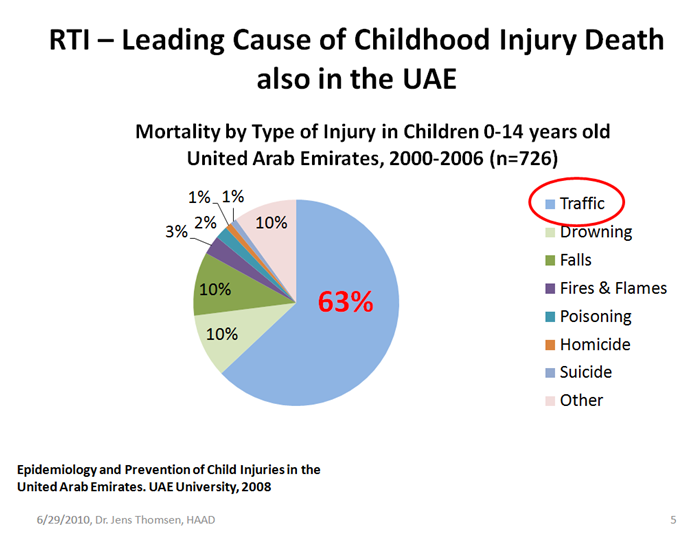
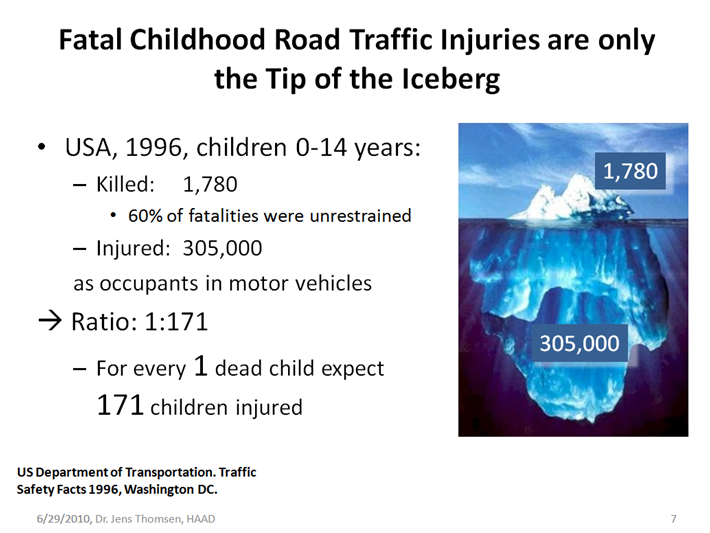
I have attached a couple of slides from Dr Jens Thomsen recent presentation that beautifully illustrates the magnitude of the problem in UAE 

This is very easy to imagine for one child that has died many more are injured.

It is great to see a large private unit to try and actively pursue initiatives that will increase public awareness of simple safety measures that can really make a difference.
During antenatal consultations we spend a lot of time with parents trying to tackle relatively small risks for pregnancy problems. We discuss about vitamins and nutrition and their effect to their offspring development. In my previous post we were discussing the effect of “cosmic radiation” to the pregnancy. 
Well all those these are just a drop in the ocean compared to the effect that the right use of a car seat would have to the child’s health.
There is no point trying to ignore it,  this is a very real issue, in particular in UAE.  Being strict and ensuring that our little darlings are safely strapped while travelling in a car is vital – life saving! 
It is a matter of education. It takes  time and unfortunately a number of lost lives for people to change their attitudes. 
But it is a target that we have to achieve and it is just a matter of time until we manage this.


Dr George Michailidis, Obstetrician and Gynecologist 
Fetal and Maternal Medicine Consultant