
Pregnancy in Dubai

Advice & information on common pregnancy problems by a Fetal & Maternal Medicine Consultant


Leave a comment

Nutrition in Pregnancy; Vitamin D

Nutrition in Pregnancy; Vitamin D

Over the last few years a number of studies have highlighted vitamin D deficiency as an important risk factor for pregnancy complications. Epidemiological studies have linked vitamin D with conditions like diabetes, low birthweight, pre-eclampsia. There is also good evidence that extreme deficiency can lead to neonatal rickets and bone fractures.
Despite this the ACOG has issued a statement that routine screening for vitamin D deficiency is not recommended in low risk women. This was based on the lack of good quality evidence to inform general public recommendations.
Let’s try and review some facts about vitamin D.


What is a Vitamin D ? What does it do?
It is a fat soluble vitamin that helps our body to regulate the amount of calcium and phosphorus. Both of these minerals are very important for our bones and teeth.
How do I get it?
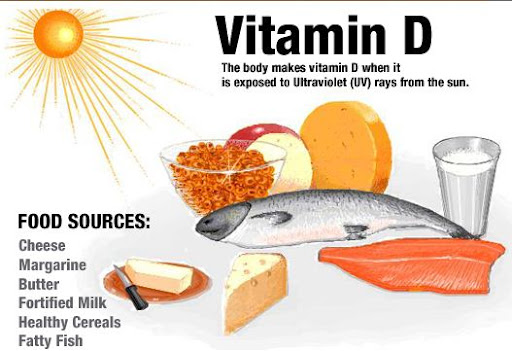
·Few foods have vitamin D. Good food sources are oily fish (like sardines) and eggs.
·In many countries governments add vitamin D to milk, fat spreads or breakfast cereals. 
·However the largest amount is produced by our body at our skin when this is exposed to sunlight.
Most people with a healthy diet and enough sun exposure do not need vitamin D supplements.
 Read more about who is at risk for vitamin D deficiency and find out answers on common question about vitamin D supplementation in pregnancy

Who is at risk for vitamin D deficiency?
·People older than 65
·Obese people
·People with dark skin ( such as Africans)
·People who have limited sun exposure.
oThese can be people who live indoors for long periods of  
time,
opeople who routinely cover up their skin for religious and cultural reasons
o people who live in countries with limited sunlight throughout the year .
·Pregnant and breastfeeding mothers

What is the right dose for supplementation?

For most adults not at high risk groups 600iu/day is adequate. Doses up to 4000IU/day are considered safe.  

Questions

I am planning to get pregnant; I am worried and confused what to do?

·If you not in any of the high risk groups there is no need to be particularly worried. Following a healthy diet with reasonable sun exposure is the best and should be enough. You may consider pregnancy multivitamin that will have a combination of folic acid, vitamin D and other useful micronutrients particularly if you have a hectic urban professional lifestyle.
·If you are at a high risk group (this would apply to many women from the Middle East – UAE as well as mothers from the Subcontinent) and especially if you have multiple factors ie limited sun exposure, overweight, multiple pregnancies with short inter-pregnancy interval, young age etc;
oIt is best checking your vitamin D levels before pregnancy. This will allow you time to correct possible deficiencies before pregnancy.
oThis can be done effectively with high doses of vitamin D.
oThe safety of these high dose regimes has not been established in pregnancy and is better avoided.

I am pregnant but not in any of the risk groups for vitamin D deficiency you have mentioned what should I do?

Ensure a well-balanced diet and consider a branded pregnancy multivitamin (usually contains about 600-800 IU of vitamin D).

I am pregnant and I have multiple risk factors for vitamin D deficiency from the list above what should I do?

·Best discuss with your Obstetrician.
·Measuring vitamin D levels in pregnancy can be helpful. It has some limitations as the normal reference values in pregnancy are not well establish.
·Higher doses of vitamin D 1000- 2000IU are safe and would be appropriate for you.
·If you have low levels for vitamin D it appears that upper limit 4000IU daily can be safely given (as suggested by the Institute of Medicine) and is more likely to normalise your vitamin D levels.

Dr George Michailidis, Obstetrician and Gynecologist 
Fetal and Maternal Medicine Consultant 
Links

Leave a comment

Flu vaccination during pregnancy in Dubai

The American College of Obstetrics and Gynecology has issued a new guideline advising women to get the flu vaccine. Traditionally, routine medical advice has been for women to shy away from all non essential medications during pregnancy. This has never changed what need however to change is the perception of the public about the potential consequences of sever flu during pregnancy and the safety   of the vaccines.
The 2009 H1N1, swine flu virus pandemic has brought to the attention of the public a number of facts;
How dangerous flu can be in pregnancy. A recent Australian study has shown that
Compared with non-pregnant women of childbearing age, pregnant or postpartum women with 2009 H1N1 influenza were at increased risk of admission to an intensive care unit (relative risk 7.4, 95% confidence interval 5.5 to 10.0). This risk was 13-fold greater (13.2, 9.6 to 18.3) for women at 20 or more weeks’ gestation.
How safe the vaccine is. Seasonal flu vaccines are prepared the same way each year. They have been used by millions of people every year and despite this there have been no studies that show side effects to the mothers or their babies
Thimershal is a preservative used in vaccines. There are vaccines that have it and others that do not. Despite the concerns again there has been no evidence of adverse effects. Thimershal is usually used in vaccines that are distributed in multiple doses vials (meaning from one vial you vaccinate multiple patients).
Flu in Dubai.
In Dubai due to the climate there is no well defined flu season. However, Dubai being a major Middle East travel hub with a large expatriate population follows the world variations of flu incidence.
There are certain times of the year that cases of upper respiratory infections including flu increase. These

usually coincide with the school season. Large concentrations of children make easier for flu viruses to spread in the community. August to October and February to March flu tends to be on the rise.

Flu vaccination during pregnancy. Pregnant women especially if they are approaching the second or third trimester should consider having the vaccine. This is even more important if you have other medical conditions as well like asthma, diabetes or if you are overweight.
What is not widely known is that the vaccine does not only protect the mother but it protects the newborn baby as well.   
Why women skip the vaccine ?
Most due to lack of knowledge of its importance while the rest due to concerns regarding the effects to the baby or the mother  Improving education is important in order alleviate some of the fears of parents for the flu vaccination.
Does having the vaccine fully protects you against the flu?
No is the answer. Scientists when developing the vaccine for the year to come are forced to make an educated guess as to what would be the most common strains of the virus. The do get it right most of the time but not always.
So you still need to use common sense and avoid contact with people with flu symptoms and keep a high levels you personal hygiene hand cleansing etc.
What to do if you got flu like symptoms;
Routine supportive measures are more than enough for most women if they happen to get the flu. Make sure you remain well hydrated by drinking plenty of fluids. You can use paracetamol to help you if you have fever.
Inform your Doctor, but try if possible, to avoid visiting a busy antenatal clinic as you will be spreading it to other women.
Instead call the clinic and they should make arrangements to see you avoiding as much as possible contact with other pregnant women.

When to Seek Emergency Medical Care

If you have any of these signs, call your Doctor right away and seek emergency care:
·Difficulty breathing or shortness of breath
·Pain or pressure in the chest or abdomen
·Sudden dizziness
·Confusion
·Severe or persistent vomiting
·High fever that is not responding to Tylenol® (or store brand equivalent)
·Decreased or no movement of your baby
Further resources;

Dr George Michailidis, Obstetrician and Gynecologist 
Fetal and Maternal Medicine Consultant 


2 Comments

No need to delay pregnancy after a miscarriage

How long should a mother wait before trying to conceive after a miscarriage?
A study of more than 30,000 women in Scotland suggested that women who suffered a miscarriage have the best chance for a healthy pregnancy when they conceive within the six months.
This is a very interesting publication at the recent BMJ issue ( Effect of interpregnancy interval on outcomes of pregnancy after miscarriage: retrospective analysis of hospital episode statistics in Scotland — Love et al. 341: c3967 — BMJ that sparked a lot of media attention as it contradicts current international guidelines.

The length of inter-pregnancy interval has long been debated in the literature. The current WHO recommendations are for parents to wait for 6 months before trying for another pregnancy after a miscarriage. However the scientific / research basis for such a recommendation is very weak
There is good data suggesting that women should allow 6 -12 months after having their baby before they try for the next pregnancy. The evidence is ample that pregnancy complications are more common when the mother conceives shortly after having her baby. The higher rate of problems has been attributed to the fact that the mother’s stores of macro and micronutrients (like folic acid) are depleted after a full term pregnancy and need time to recover. 
This is the first large scale study that deals specifically with the issue of pregnancy after a miscarriage and not a full term pregnancy. The results were that women who conceived within 6 months from their miscarriage had the best pregnancy results. This was maintained even after controlling for factors like maternal age and socio-economic status. 
The strength of this research is the large number of patients (30000) and the good quality of primary data. 
The weakness is that it is a retrospective (meaning looking back at old records) study. Hospital records do have their weaknesses and seldom looking at the paper record you get a full picture for the patient (common problem in epidemiologic studies). 
The significance however of this research is that it provides for the first times good quality evidence to help doctors advise their patients about when they should try for a pregnancy after a miscarriage.
It is a fact that in developed countries many women push back having children for the sake of education/ professional career. This is particularly true for the expat women of Dubai. A large number of women are over 35 when they start their families. Many are in their forties and have not yet completed their family. Waiting for long period of time after a miscarriage may have a negative overall effect to the woman’s chance for a successful pregnancy.
The final decision as to when a couple should try for a pregnancy after a miscarriage lies of course with the couple itself. In particularly the mother needs to be not only physically but psychologically ready to try for the next pregnancy after her miscarriage.
Your Doctor should be able to offer you the support and counselling you may need to carry on and help you focus on positive issues.
In preparation for the next pregnancy it essential to try and offer advice to help both parents optimize their health before and during the pregnancy. General preconception advice (like taking folic acid, stop smoking) as well as specific interventions tailored to the mother’s needs should be instituted to give the couple the best chance for a healthy pregnancy.

Dr George Michailidis, Obstetrician and Gynecologist 
Fetal and Maternal Medicine Consultant 
Links to news headlines 


4 Comments

What is a screening test? what is the difference from a diagnostic test?

(The following is an extract from our Fetal Medicine information sheet for Downs Syndrome.) 

Screening tests give as a result a risk estimate, in other words how likely it is for a person to have a certain condition. This is usually expressed as a numerical value for example 1:100. Many times for simplicity if the risk is higher than a certain value the test is reported as “high risk” or “low risk” if it is lower than the threshold selected. 

Screening tests do not confirm or exclude a condition. For example a screening test does not say that a baby “has” or “has not” Down’s syndrome.
They do however, provide valuable information to help the parents decide if they want to proceed with diagnostic tests.

Diagnostic tests are those that confirm or exclude a condition.
If the screening tests do not tell us “yes or no” why don’t we just have the diagnostic tests ?
Today the available diagnostic tests for Down’s syndrome are
1.Chorionic villus sampling CVS
2. Amniocentesis
Both tests carry a small risk of causing a miscarriage (0.5-1%).
For this reason many parents would opt to have first a screening test and use the results to help them decide if they would proceed to a diagnostic test.
What are the recommended screening tests?
In the past the main screening test for Down’s syndrome was the mother’s age. Unfortunately this was proven to be neither very sensitive (picked up about 60% of babies with T21) nor very specific (too many women had to have unnecessary invasive procedures).
 At the American Hospital Dubai we recommend;
1.First trimester combined test. This test combines the results of first trimester ultrasound scanning (Nuchal translucency, fetal heart rate) with biochemical markers (bHCG, PAPP A). The test is done at 11-13 weeks at the Fetal Medicine Unit of the American Hospital Dubai. The test detection rate is approximately 90%
2.Second trimester biochemistry. For those mothers who have booked late (after 13weeks and 6 days) we recommend the quadruple biochemistry test. This is a blood test for the mother. The detection rate is approximately 75%.
What is considered to be a high risk result?
The result of the test is considered to be “positive” if the risk estimate is higher than  1/300. For a example 1/240 is considered a “positive” or “high risk” result while 1/310 is considered a “negative” or “low risk” result.
It is always challenging for the parents to appreciate the magnitude of risk. 
Please take time to discuss the results with your Doctor as finally a good result is a result the parents are content with.

Dr George Michailidis, Obstetrician and Gynecologist 
Fetal and Maternal Medicine Consultant 


1 Comment

What are the questions a couple / mother in Dubai should think before embarking in testing for Down’s syndrome?

In pregnancy mothers undergo a large number of tests, many times without actually fully appreciating what each test is about. In particular screening and diagnostic tests for Downs syndrome T21 can end up causing a lot of anxiety. 
It would worth thinking and discussing with your partner and your doctor the following questions;

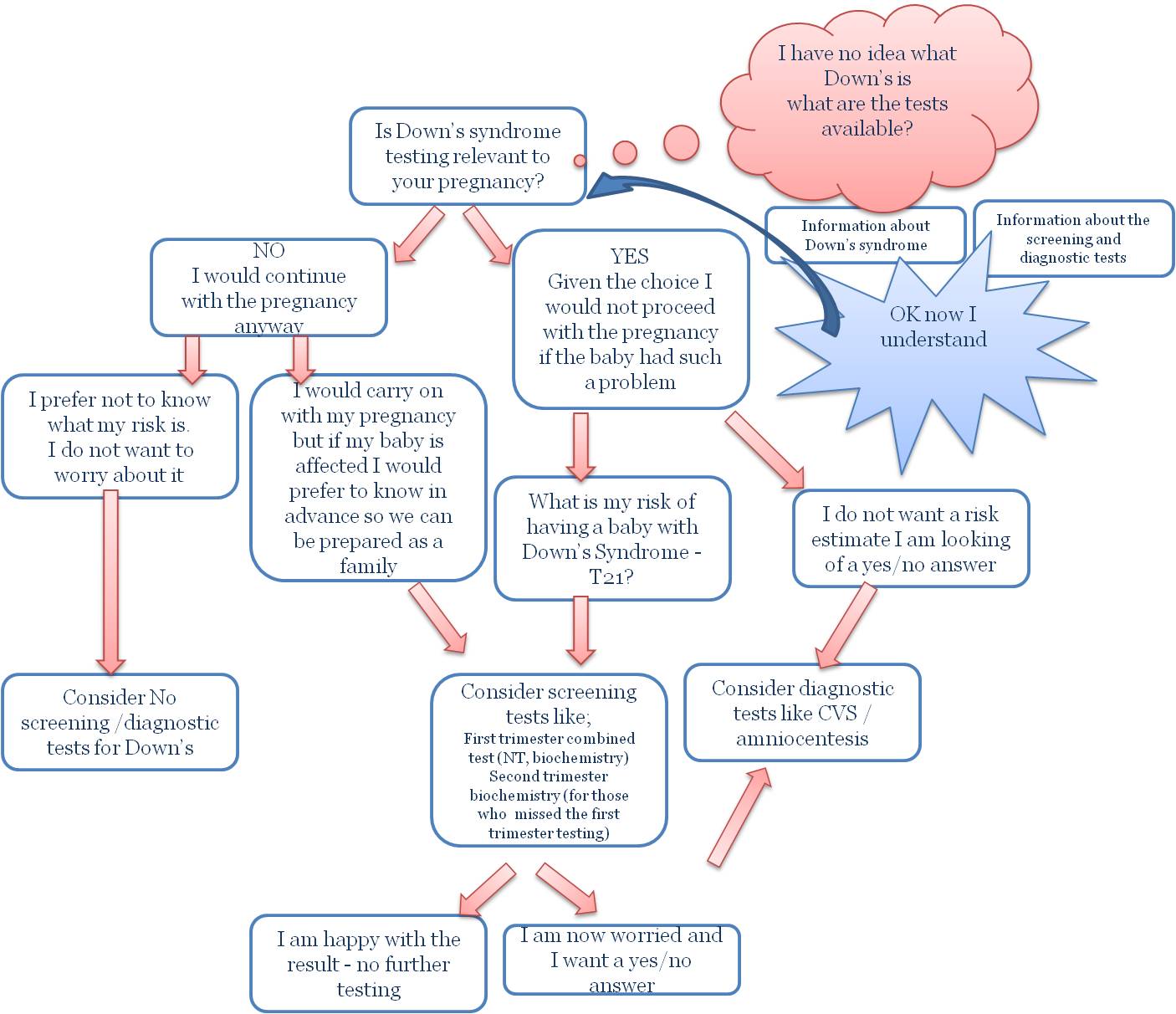
  1. Is this a relevant test?  In other words would it change the way you view this pregnancy?
  Usually parents do come in 3 big groups;
      Those for whom whether the baby has or not Downs make no difference what so ever. These parents would not consider termination and they would look after the baby the same way as any other baby would come their way.

       Those parents who believe that given the choice they would not bring to life a baby  with such a problem. 

       Those that say “Doctor I have no idea what I would do. Lets discuss what are the chances of this happening to help us make up our mind how will go forward”


For the first group testing for Downs may not be appropriate. It may result in extreme anxiety if the results are not reassuring without any real benefit for the overall pregnancy management.
I should point out here that although the majority of parents in this group would prefer not to know and worry, a small number would opt to undergo testing as they would like to be prepared (psychologically, making appropriate family arrangement etc..)


In the second group usually we see a number of parents that are looking for absolute certainty. They do not want a risk estimate but a “yes or no” answer to help them early make arrangement for the pregnancy management. For these parents  diagnostic tests like a CVS or an amniocentesis should be considered.


The third group contains the majority of parents and they should try and think the following;

  1. Is there a risk level that will make you feel content and secure?
    Unfortunately the results of screening tests give a risk estimate. The cut off points are usually set anywhere between a risk of 1/250 to 1/300. So a result 1/299 – abnormal – high risk result is statistically not different from the 1/301 – normal- low risk result. Dealing with the results of the test is challenging for everybody and you should spend some time with your doctor  discussing these issues.
  2. Avoid the question “doctor what would you do in my case?“. Each family has a unique setting. Even within the same family the circumstances change over a period of time. The role of you doctor in most of the cases should not be to tell you what to do but to give the information you need to help you make up your mind what is right for your family.   

The following flow chart is summarising the decision making process
Dr G Michailidis 
Make sure you have some quality time with your doctor and discuss the issues above. 

Remember for most of these questions there are no universally “right” answers. The correct plan is the one that is appropriately tailored to you and your family.

Dr George Michailidis, Obstetrician and Gynecologist 
Fetal and Maternal Medicine Consultant 


Leave a comment

Air travel and pregnancy

This is a rather odd start for the “Pregnant in Dubai” Blog but flying out of Dubai for the summer holidays is the main theme the last few weeks. 

A lot of pregnant women are worried how air travel can affect their pregnancy. 

The main message is that air travel is safe and is not expected to cause any troubles to the pregnancy for most women. 

There are however a number of important things that you should consider;


 I will start with the bureaucratic part.  

1. Gestation (how far you are in your pregnancy); most airlines will allow you to fly up to 34 weeks. This vary with individual airlines and the trip you are planning (short V long haul flights). Emirates for most cases will allow you to fly up to 34 weeks while some will go up to 36. Make sure you know how far you are, what is the rule the airline your are flying with and that you have some documentation to prove it if questioned. 

2. Doctor’s certificate. You will certainly need this if your are over 27 weeks. My advice is to ask for one at your last doctors appointment anyway. You do not want to try and prove to an inquisitive clerk that you are less than 28 weeks and you just look “bigger”. 
2.a Please do not forget that you have to come back! So if you are not planning to deliver abroad make sure your return is before the 34 weeks (or whatever limit your airline has) and you are able to obtain  a travel certificate for your return trip ( this might be needed if for example you going for a long summer holiday). 

3. Remember to take with you your antenatal notes. A copy of your last scan report is also very useful as it would normally have your expected day of delivery, the size and the presentation of your baby as well as the site of the placenta.

4. Remember your travel insurance and check that it covers your pregnancy. 

On the medical part now. 

a. What about the cosmic radiation? Is it safe for the pregnancy? The advice is that the levels of radiation for most of us, occasional flyers, are very safe. Flight attendants and very frequent flyers can on occasions be exposed to higher levels but this is out of the scope of this blog.

b. There is no evidence to suggest that there is increased risk for an early miscarriage if you travel by air.

c. DVT and pregnancy ( deep vein thrombosis – clots in the legs).
The main risk for a pregnant women has for centuries been the risk of bleeding at the time of labour. “Mother nature” in an effort to protect women made sure that during the pregnancy the clotting system  (what makes our blood clot and stops the bleeding) switches on. This puts pregnant women at a higher risk for having clots in their legs. What is not widely appreciated is that these changes do happen from very early in the pregnancy (first few weeks) and last for at least six weeks after delivering the baby. So what should you do?

Ensure you remain well hydrated by drinking plenty of water during the flight. 

Compression stockings do help to reduce the swelling and venous stasis. Please be careful to wear them properly as they can sometimes act like tourniquets causing more harm than good. 
Make sure you do the leg exercises and mobilise during the flight ensuring good circulation to your legs.

Some would advice aspirin for the travel. The evidence is not very conclusive and i would recommend discussing this with your physician. 

Think; do you have any additional risk factors? Obese, previous venous thrombosis, family history of thrombosis, pregnancy complications like pre – eclampsia. In these cases you should have a good discussion with your physician to make a plan whether you need additional measures like low molecular heparin.  

Be alert for DVT symptoms after the flight; swollen and painful calf particularly if one of the legs is affected. Difficult breathing, chest pain should get you to seek medical advice.

d Reduced oxygen tension in the aeroplane cabin. Usually the cabin is pressurised as if you are at a height of 5000-8000ft. This varies with type of aircraft and the actual height of flight but it does not exceed the  8200ft. Without getting in too much technical detail in practice this means the air has less oxygen than that at ground level. For most the difference is very small and has no significance. 

There are a small number of mothers with pre-existing medical conditions that can be affected by these changes. These are typically women with cardiac disease, respiratory problems. Other groups that can be affected are those with sickle disease or thalassemia/sickle who can get into a crisis in mild hypoxic conditions. Finally severely growth restricted babies can on occasions get in to trouble but it is uncommon for these mothers to decide to go on a holiday trip. 
In summary the reduced oxygen tension for most healthy mothers is not an issue while for those with medical conditions careful discussion with your Doctor should be able to inform decitions to travel. 

e Trauma and seat belts; Well we usually do not think a lot about it but over the years there have been a number of cases of trauma with sudden  loss of height. The advice for this is the same as for the rest of the passengers to “remember to put on the belt whenever you resting at your seat”. 


Well this is a summary of the do’s and don’ts for pregnancy and air-travel. One last comment before I close this post; choosing your seat, if you are do not have the luxury to fly business make sure that you have an isle seat as particularly if you follow the remain well hydrated advice you will be a frequent visitor to the toilet.

Enjoy your holidays 

Dr George Michailidis, Obstetrician and Gynecologist 
Fetal and Maternal Medicine Consultant