Pregnancy in Dubai

Advice & information on common pregnancy problems by a Fetal & Maternal Medicine Consultant


Leave a comment

Screening for Down’s syndrome in twin pregnancies.

Screening for Down’s syndrome in twin pregnancies.

Twins and higher order multiple pregnancies are increasingly becoming more common. Fertility services have had a major impact in the changing incidence of multiple pregnancies. 
This is especially true in Dubai. Social pressures to achieve pregnancy quickly, private medicine practices, higher average income; all make couples more likely to see a fertility specialist.
Having some of the best fertility specialists practicing in Dubai and the neighbouring emirates results in more twins and multiple pregnancies. 
Twin and higher order multiple pregnancies pose extra challenges even for the best obstetricians when it comes to screening and diagnostic tests forDown’s syndrome (T21). 
1. Age related risk 
In Dubai the female population has its own distribution with more mothers in the age group of 35 -40. This is due to the structure of the expatriate group who tend to be higher end professionals and their families at their peak of their carriers. Screening and diagnostic tests for Down’s syndrome T21 are even more important for these mothers due to their high background risk (age related) for chromosomal anomalies. Twins naturally tend also to be more common in mothers of advanced age. 
2. Twins; double the risk ?

 
As we mentioned at an earlier blog for twin pregnancies determining thechronicity (i.e. monochorionic or dichorionic twin pregnancy) is of paramount importance. Without getting in detail about pregnancy complications like twin to twin transfusion syndrome regarding the risk for T21 you should know the following;
a. Monochorionic twins ; they are identical twins. One embryo splits at an early stage resulting in 2 fetuses (babies). Both babies have the same genetic information and the risk for T21 (Down’s sydrome) is THE SAME as if there was ONE only baby.
b. Dichorionic twins; they are most commonly fraternal – non identical twins (90%). The risk for each one of them being affected by T21 is calculated individually meaning each baby has its own risk.
The risk for ANY ONE of them being affected by T21 is the calculated by ADDING the two risks. 

baby one risk 1/100  baby two 1/200  calculated risk 3/200 1.5/100  approx 1/66
3. Nuchal translucency in monochorionic twins

In monochorionic twins increased nuchal translucency in one baby can be a sign of twin to twin transfusion syndrome.
4. What about the blood tests for Down’s syndrome?
Although they seem to improve somewhat the overall results of the test their influence is not as strong as in singleton pregnancies. Only recently publications dealt with reference range specific for twins. Their results must be very carefully interpreted. 
In cases were pregnancy has started as twin and one of the babies has not developed – miscarried, blood tests for Down’s syndrome may give very misleading results. 
First trimester screening by using the nuchal translucency and other markers (nasal bone etc) is the best option for screening for Down’s syndrome.
First trimester ultrasound scan that screens for major structural anomalies, determines the chronicity, determine the gestational age and screens for T21 is your best option. 
4. What are you going to do faced with a positive high risk for Down’s result?
This should be best discussed with your Doctor before the test. Good Obstetricians will explain your options for both the best screening and diagnostic tests. The screening should be performed by the best qualified professionals.
A fetal medicine specialist should be involved when diagnostic tests like amniocentesis or chorionic villus sampling CVS are considered due to the complexity of the procedures and the increased risks.
Discuss screening with your Obstetrician / Fertility Doctor. They should be able to give you good advice and refer you to a reliable Medical Institute for screening.
Dr George Michailidis, Obstetrician and Gynecologist 
Fetal and Maternal Medicine Consultant 

1 Comment

Nuchal translucency and screening for Down’s syndrome in Dubai.

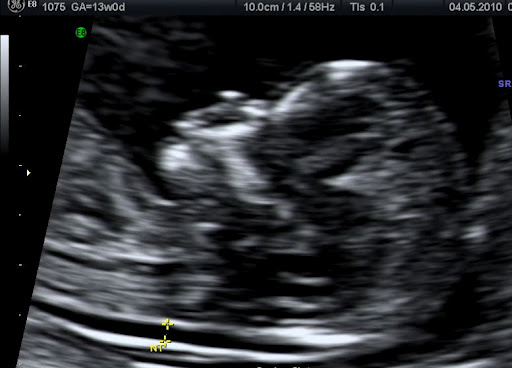
What is nuchal translucency ( NT ); The term nuchal translucency is used to describe the sonographic (ultrasound scan) appearances of a specific region of the baby’s neck during the first trimester of pregnancy. It is routinely measured between weeks 11 -13+6 days and used as a screening test for chromosomal abnormalities like Down’s (trisomy 21).
What do you need to know about the nuchal translucency;
The quality of Nuchal translucency measurement (and its prediction accuracy) depends on who is doing it and what equipment is used. If you decide to have the test done ensure it is performed by properly trained and certified operators that use good quality equipment.  One of the well respected certification organisations is The Fetal Medicine Foundation. You will find in this link lists of certified professionals for your country.

Normal Nuchal Translucency

NT is only a part of the first trimester scan. Although commonly referred as NT scan at the first trimester scan the doctor / sonographer should report on how some basic features of our baby have developed as well. For example the fetal abdomen the baby’s skull and brain, the fetal stomach and bladder the arms and legs should be clearly visible in most cases.

Nuchal translucency is a powerful predictor for problems like Down’s syndrome. It is routinely used in combination with maternal age and biochemical markers (blood test) to give a risk estimate for major chromosomal anomalies (T21, T18, T13).
The size of the nuchal translucency depends on the gestational age (how old the baby is). The upper limit of normal is smaller at 11 weeks and larger at   13 weeks.
Ultrasound scanning measurement of the NT is only a screening and not a diagnostic test. This means that it will provide you with a risk estimate rather than a “Yes – No” answer.
It is best practice to discuss with your obstetrician and understand what is the NT scan beforehand. Make sure you have some quality time with your doctor to understand the purpose of the test, the results you expected to have as well as the limitations it has.


Dr George Michailidis, Obstetrician and Gynecologist 
Fetal and Maternal Medicine Consultant 

1 Comment

What are the questions a couple / mother in Dubai should think before embarking in testing for Down’s syndrome?

In pregnancy mothers undergo a large number of tests, many times without actually fully appreciating what each test is about. In particular screening and diagnostic tests for Downs syndrome T21 can end up causing a lot of anxiety. 
It would worth thinking and discussing with your partner and your doctor the following questions;

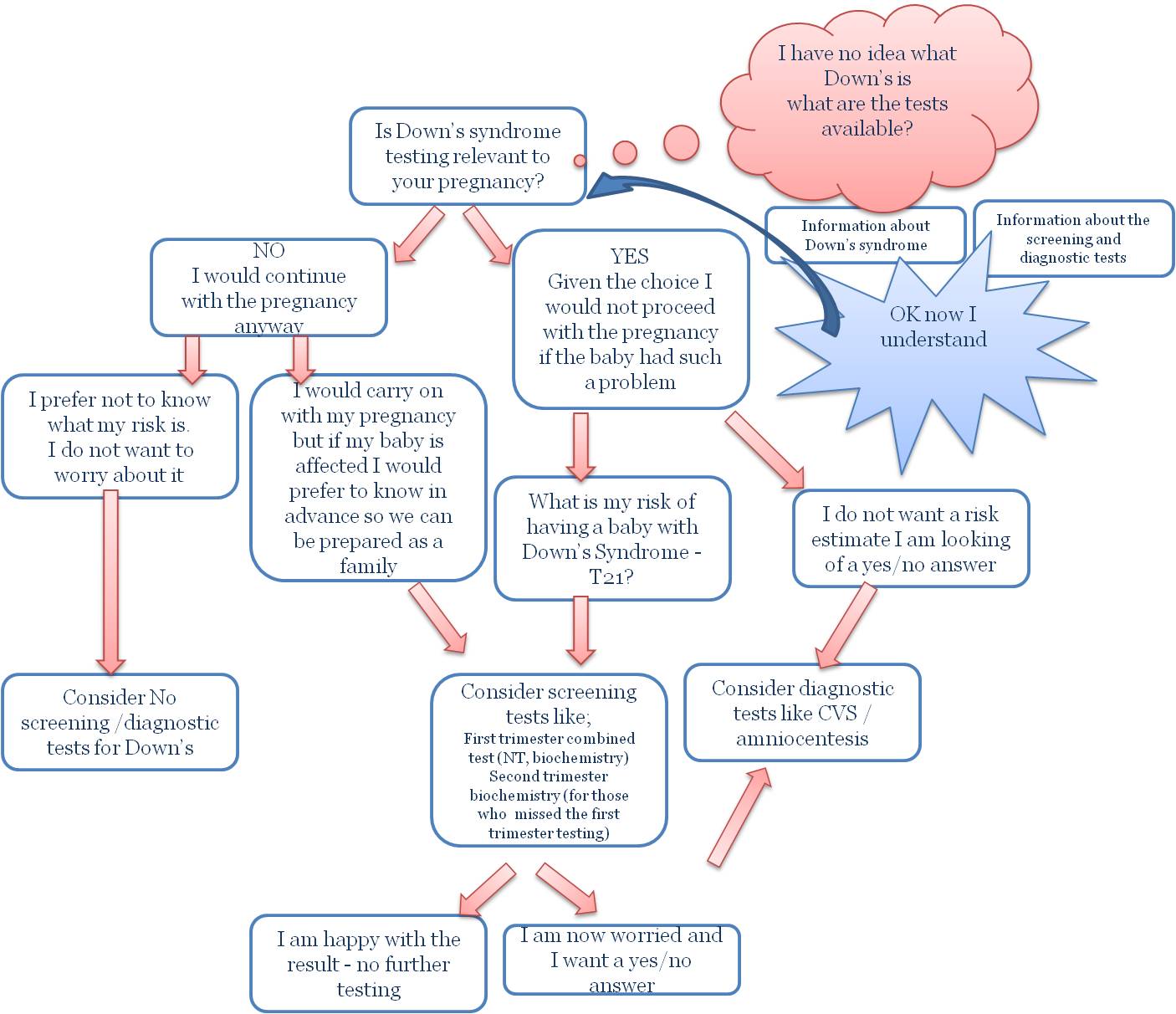
  1. Is this a relevant test?  In other words would it change the way you view this pregnancy?
  Usually parents do come in 3 big groups;
      Those for whom whether the baby has or not Downs make no difference what so ever. These parents would not consider termination and they would look after the baby the same way as any other baby would come their way.

       Those parents who believe that given the choice they would not bring to life a baby  with such a problem. 

       Those that say “Doctor I have no idea what I would do. Lets discuss what are the chances of this happening to help us make up our mind how will go forward”


For the first group testing for Downs may not be appropriate. It may result in extreme anxiety if the results are not reassuring without any real benefit for the overall pregnancy management.
I should point out here that although the majority of parents in this group would prefer not to know and worry, a small number would opt to undergo testing as they would like to be prepared (psychologically, making appropriate family arrangement etc..)


In the second group usually we see a number of parents that are looking for absolute certainty. They do not want a risk estimate but a “yes or no” answer to help them early make arrangement for the pregnancy management. For these parents  diagnostic tests like a CVS or an amniocentesis should be considered.


The third group contains the majority of parents and they should try and think the following;

  1. Is there a risk level that will make you feel content and secure?
    Unfortunately the results of screening tests give a risk estimate. The cut off points are usually set anywhere between a risk of 1/250 to 1/300. So a result 1/299 – abnormal – high risk result is statistically not different from the 1/301 – normal- low risk result. Dealing with the results of the test is challenging for everybody and you should spend some time with your doctor  discussing these issues.
  2. Avoid the question “doctor what would you do in my case?“. Each family has a unique setting. Even within the same family the circumstances change over a period of time. The role of you doctor in most of the cases should not be to tell you what to do but to give the information you need to help you make up your mind what is right for your family.   

The following flow chart is summarising the decision making process
Dr G Michailidis 
Make sure you have some quality time with your doctor and discuss the issues above. 

Remember for most of these questions there are no universally “right” answers. The correct plan is the one that is appropriately tailored to you and your family.

Dr George Michailidis, Obstetrician and Gynecologist 
Fetal and Maternal Medicine Consultant