Screening for Down’s syndrome in twin pregnancies.
 Twins and higher order multiple pregnancies are increasingly becoming more common. Fertility services have had a major impact in the changing incidence of multiple pregnancies.
This is especially true in Dubai. Social pressures to achieve pregnancy quickly, private medicine practices, higher average income; all make couples more likely to see a fertility specialist.
Having some of the best fertility specialists practicing in Dubai and the neighbouring emirates results in more twins and multiple pregnancies.
Twin and higher order multiple pregnancies pose extra challenges even for the best obstetricians when it comes to screening and diagnostic tests forDown’s syndrome (T21).
1. Age related risk
In Dubai the female population has its own distribution with more mothers in the age group of 35 -40. This is due to the structure of the expatriate group who tend to be higher end professionals and their families at their peak of their carriers. Screening and diagnostic tests for Down’s syndrome T21 are even more important for these mothers due to their high background risk (age related) for chromosomal anomalies. Twins naturally tend also to be more common in mothers of advanced age.
2. Twins; double the risk ?

As we mentioned at an earlier blog for twin pregnancies determining thechronicity (i.e. monochorionic or dichorionic twin pregnancy) is of paramount importance. Without getting in detail about pregnancy complications like twin to twin transfusion syndrome regarding the risk for T21 you should know the following;
a. Monochorionic twins ; they are identical twins. One embryo splits at an early stage resulting in 2 fetuses (babies). Both babies have the same genetic information and the risk for T21 (Down’s sydrome) is THE SAME as if there was ONE only baby.
b. Dichorionic twins; they are most commonly fraternal – non identical twins (90%). The risk for each one of them being affected by T21 is calculated individually meaning each baby has its own risk.
The risk for ANY ONE of them being affected by T21 is the calculated by ADDING the two risks.

baby one risk 1/100 baby two 1/200 calculated risk 3/200 1.5/100 approx 1/66
3. Nuchal translucency in monochorionic twins
In monochorionic twins increased nuchal translucency in one baby can be a sign of twin to twin transfusion syndrome.
4. What about the blood tests for Down’s syndrome?
Although they seem to improve somewhat the overall results of the test their influence is not as strong as in singleton pregnancies. Only recently publications dealt with reference range specific for twins. Their results must be very carefully interpreted.
In cases were pregnancy has started as twin and one of the babies has not developed – miscarried, blood tests for Down’s syndrome may give very misleading results.
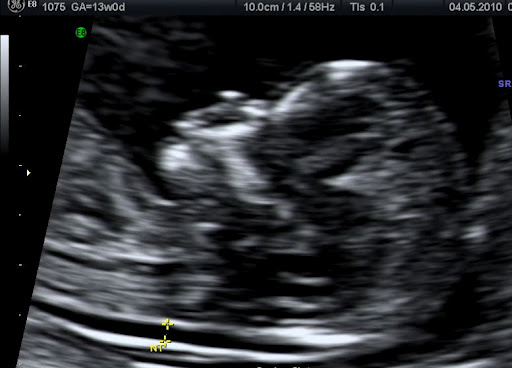
First trimester screening by using the nuchal translucency and other markers (nasal bone etc) is the best option for screening for Down’s syndrome.
First trimester ultrasound scan that screens for major structural anomalies, determines the chronicity, determine the gestational age and screens for T21 is your best option.
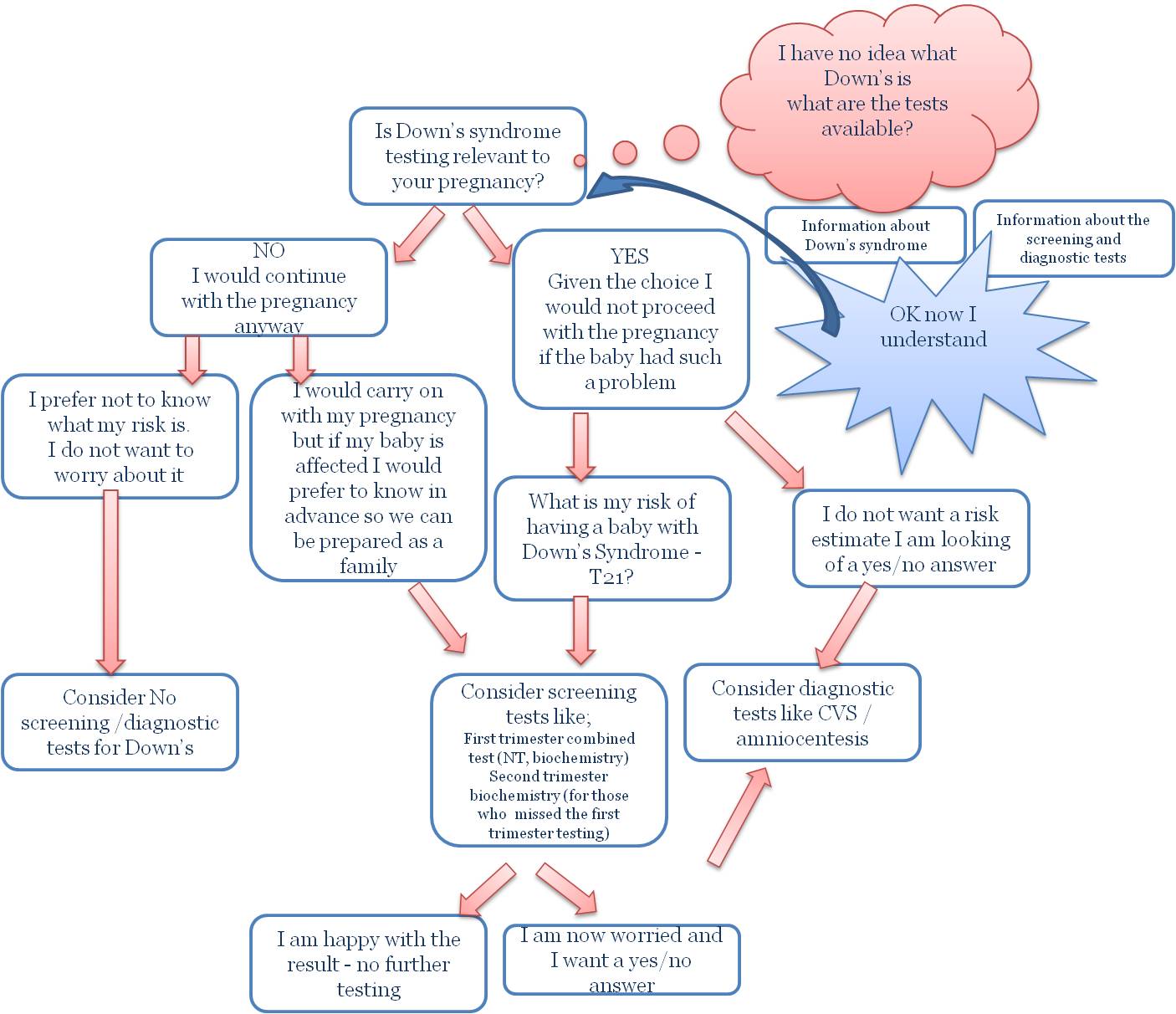
4. What are you going to do faced with a positive high risk for Down’s result?
This should be best discussed with your Doctor before the test. Good Obstetricians will explain your options for both the best screening and diagnostic tests. The screening should be performed by the best qualified professionals.
A fetal medicine specialist should be involved when diagnostic tests like amniocentesis or chorionic villus sampling CVS are considered due to the complexity of the procedures and the increased risks.
Discuss screening with your Obstetrician / Fertility Doctor. They should be able to give you good advice and refer you to a reliable Medical Institute for screening.
Dr George Michailidis, Obstetrician and Gynecologist
Fetal and Maternal Medicine Consultant