
 |
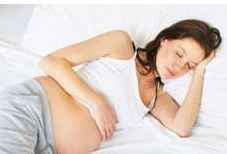
| Best sleeping position in Pregnancy |
What is the best position to sleep in late pregnancy? This is a question frequently asked by pregnant mums. Some will go even further and carry on “I am terrified when I wake up and realize that I am sleeping on my back… am I hurting my baby?
Some publicity has recently been stirred up on this issue after a BMJ article that claimed an association between sleeping position and pregnancy complications.
My advice; Just listen to your body and enjoy you sleep.
read more for more info on the subject
Medics have to study, explore and understand human physiology as a way of improving mothers’ health. But on the same time have the obligation to report their findings in a sensitive and constructive manner.
Both the editorial and rapid responses highlight the shortcomings of this work;
- For the cases with problems the interview took place 2-3 weeks after the event. Now seriously…. how reliably can you remember how you slept or woke up even for the day before let alone a few days back. You would expect a more rigorous approach in validating the tools-questionnaires ensuring first that they actually measure what they supposed to before reaching conclusions.
- For almost half of the cases the babies did not undergo postmortem / placental examination so exclusion of other reasons that are more likely have this outcome was more than inadequate.
- The difference mentioned, even after all the above, was from 2/1000 to 3.93 /1000. The authors concluded that the risk stating “doubled” . Although in stirct terms this is true in absolute numbers the difference is miniscule.
Yes there is some evidence of changing of the perfusion of the uterus when a mother is lying on her back. This is relevant when the mothers are placed in such position; ie during an ultrasound examination or a clinical examination or operation. This is why clinicians will ensure the mother will be placed with a lateral tilt or elevate the back of the bed appropriately.
However mothers instinctively will, as anybody else, change their position when this is uncomfortable for whatever reason. Although the studies are sparse there are suggestions that support the logical idea that pregnant women will naturally adopt positions less likely to cause aorto caval compression.
In conclusion; yes we should further explore the physiological changes during sleep but do that by developing well validated tools.
So Please Enjoy your Sleep.
Sleeping in the third trimester is hard enough anyway. Heartburn, active baby, heat constant need to go to the toilet.
There is no need to add extra worries (especially with issues that are very difficult to control ie sleeping position)
… just listen to your body
Dr George Michailidis, Obstetrician and Gynecologist
Fetal and Maternal Medicine Consultant
Relevant articles
Mills GH, Chaffe AG.
Anaesthesia. 1994 Mar;49(3):249-50.
Farine D, Seaward PG.
J Obstet Gynaecol Can. 2007 Oct;29(10):841-2.
BMJ 2011;342:d3659

