usually coincide with the school season. Large concentrations of children make easier for flu viruses to spread in the community. August to October and February to March flu tends to be on the rise.
Author Archives: drgeorgemichailidis
Having your 20 weeks ultrasound scan (morphology or anomaly scan) in Dubai; what you need to know.
Ultrasound scanning has revolutionised obstetric practise. It provides a reliable and safe method of examining the developing baby. However what it is not widely known in Dubai and in most countries is that formal ultrasound training only very recently became part of training in our speciality even in well respected western countries. As a result although most good obstetricians can perform a basic scan only a handful have the skills and experience to perform a full morphology scan. It is a huge misconception that a good doctor can do everything. It is common practise for the best obstetricians to refer their clients to centres (like our Fetal Medicine Unit) which routinely perform ultrasound examinations.
- To confirm a viable (alive) intrauterine (within the womb) pregnancy. This is achieved by demonstrating a beating fetal (baby) heart.
- To provide a detailed anatomical survey of the developing baby. A number of major structural anomalies can be seen at this stage.
- To describe the position of the placenta (afterbirth).
- To date the pregnancy if this happens to be your first scan in your pregnancy. Although this is not as good as dating by an early pregnancy scan it still has an accuracy of about 7 days.
- To diagnose multiple pregnancies if this is our first scan. Diagnosing twins or higher order multiple pregnancies early helps appropriate pregnancy planning.
How is the scan done?
What information will I get?
- It is not 100% accurate
- It is not one of the primary aims of the scan (this is to confirm that major structures are normal) and it might not be possible to be seen during the allocated time.
What are the risks for my pregnancy?
What if there is a problem?
- Suspicion or evidence of a structural anomaly (problems relating to how the baby has developed). The doctor will explain the findings to you and depending on the problem explain what are the implications for you pregnancy and the baby. If you are having your scan by a sonographer they should be able to inform you of their concerns and arrange an urgent consultation with your obstetrician. In most cases your doctor after explaining the initial findings will arrange for you to see a Fetal Medicine Specialist. In some occasions further tests may be needed to clarify the diagnosis.
- A low lying placenta. Although this is not a problem at this stage of the pregnancy further scans will be needed later in pregnancy to confirm that the placenta has moved out of the way. Ask the doctor to provide you with the relevant information sheet.
What if I still have questions about my scan?
What is the role of a Fetal & Maternal Medicine Specialist – Perinatologist – in the care of a "high risk" pregnancy?
Fetal & Maternal Medicine Specialists, also known asperinatologists, are obstetricians who specialize in diagnosis andcareof women with complicated pregnancies. The services they provideincludepreconception counseling, detailed ultrasound examinations, fetal and maternalsurveillance. Multiple pregnancies, pregnancies complicated by diabetes or autoimmune diseases like SLE are typical examples of cases that are referredto aperinatologist. Fetal Medicine Specialists are the ones who will provide the initial counseling when fetal abnormalities are diagnosed.They have been trained to perform a number ofstateof the art diagnostic and therapeutic procedures while the baby is still in the womb.
Mothers will usually be referred to a Perinatologist by their obstetrician. The Fetal & Maternal Medicine Specialist works alongside with the mother’s obstetrician and helps to develop a personalized plan of care for each pregnancy. They also play aleadingrole in coordinating thecareof complex cases and ensuring appropriate arrangements are in place for thebaby’s birth. For example liaising with the neonatologist who will look after the baby after birth, the pediatric surgeon or pediatric cardiologist.
Being referred to a Fetal Medicine Specialist is not a reason to be alarmed or worried. In most cases is doneas a precaution in order to achieve the best plans for the pregnancy care. Some parents maychooseto see a specialist without referral from their obstetrician.
Parvo Virus B19 infection during pregnancy; What to do in Dubai.
What you need to know about premature labor and delivery in Dubai.
|
this is a useful list that appears at the ACOG website Risk Factors for Preterm Labor
Check any box that applies to you:
□You have warning signs of preterm labor.
□You have had preterm labor during this pregnancy.
□You had preterm labor or preterm birth in a previous pregnancy.
□You smoke cigarettes or use cocaine.
□You are carrying more than 1 baby.
□You have an abnormal cervix (due to surgery, for instance).
□You have an abnormal uterus.
□You have had abdominal surgery during this pregnancy.
□You have had an infection while pregnant.
□You have had bleeding in the second or third trimester of your pregnancy.
□You are underweight.
□You had a mother or a grandmother who took DES (diethylstilbestrol, a medication given to many pregnant women in the 1950s and 1960s).
□You have had little or no prenatal care.
□You have a child with chromosomal disorders.
If you checked any of these boxes, you may be at risk for preterm labor. Despite what is known about these risk factors, much remains to be learned about preterm labor. Half of the women who go into preterm labor have no known risk factors.
|
- Traditionally bed rest was advocated as a way of reducing the risk for preterm birth. Unfortunately till now no major study has shown any significant advantage in strict bed rest regimes. On the contrary there are serious risks directly associated with bed rest in pregnancy like deep vein thrombosis. Discuss your life style with your doctor who should be able to give you good advice regarding your daily activities based on your case review.
- Cervical cerclage. Cervical cerclage has its place in selected cases. By including ultrasound screening a good obstetrician should be able to reduce the need for unnecessary interventions.
- Progesterone supplements; This is the only intervention that has shown good results in preventing extreme preterm labour in singleton pregnancies.
- 1.Availability of neonatal intensive care beds. At the moment even the large private units only support babies after 28 weeks of gestation. The main units that can care for babies under 28 weeks are Al Wasl Hospital and Dubai Hospital. Both units are heavily overprescribed and it can be difficult to find a bed for your baby.
- 2.Financial issues. Even when you deliver after 28 weeks the baby or babies (in case of multiple pregnancies) will have to spent a lot of time in an intensive care unit. The cost may easily spiral out of control. Make sure you know what you insurance is going to cover. Especially for those with higher order multiple pregnancies (triplets etc) make sure you budget for the event of extreme preterm delivery.
- 3.Choose your obstetrician and hospital carefully.
What is a Chorionic Villus Sampling and how is it done?
- The test will give a result for a specific condition. It does NOT guarantee that the baby does not have other genetic disorders.
- Rarely while the test was performed to exclude one problem it picks up another unexpected one. Your doctor will help you to understand the results and their implications for your baby.
- Rarely (less that 1/100) the test may not give a clear a result. A repeat test may be necessary.
Amniocentesis services in Dubai
What is an amniocentesis?
Amniocentesis is a diagnostic procedure performed during pregnancy. It helps to obtain a small sample of amniotic fluid (the fluid around the baby) which in turn is usedfor the diagnosisof certain genetic conditions or infections.
Why should I have an amniocentesis?
An amniocentesis is not a routine test. Your doctor may offer youan amniocentesis if there are concerns about specific genetic conditions. The following are typical examples;
- The one most widely knowngenetic problem is Down’s syndrome. A number of screening tests are available to help parents and obstetricians determine the riskof a pregnancy being affectedbefore deciding for an amniocentesis. The best test to date is the combined first trimester screening. This is part of the first trimester scan.
- In some cases, the test is doneto excludeknown genetic problems that run in the family.
- Routine ultrasound scans on occasions pick up certain features of the baby associated with genetic conditions.
- Some parents wantto be certainthat their babyis not affected by a certain disorder.
- An amniocentesis may also be offered to check whether an infectionhas passed from mother to the baby.
How is anamniocentesis done?
The procedure is best done after week 15 of your pregnancy. The doctor will fully explain the procedure and get youto sign an informed consent.
He will checkyour blood group, your HIV and HepB status. If youare Rh Negativeyou will need an injectionof Anti-D after the procedure.If youare HIV or Hep-B positive, having the procedure may increase the risk of passing the infectionto the baby.
Usually the doctor will performprior to the amniocentesis an ultrasound scanto examinethe babyand identifythe best window for the procedure.
It takes a few minutes to prepare the proceduretray. Then he will clean your tummywith an antiseptic solution. A small amount of local anaesthetic will be usedto numb the skin where the needle is to be inserted. A thin needle is usedfor the local anaesthetic youmight find this a bit uncomfortable.
Following the local anaesthetic and under direct ultrasound guidance, the doctor will passa fineneedle through your tummyinto your womb and the fluid around the baby. The doctor’s assistantusing a syringe will obtainabout 15mls of this fluid. The babywill not miss this fluidand will replace it in a few hours. As a verythin needle is used, it takes a few seconds to takethe sample. At the end of the procedure, the doctorwillremove the needle.
Most women find the whole procedure uncomfortablerather than painful. On occasions, youmight experience mild period like pains. This not uncommon and simpleparacetamol is very helpful.
In some occasions, not enough fluid is obtainedwith the first attempt. This is usuallydue to the position of the baby. In this case, the doctor may have to reinsert the sampling needle.
What information will Igetfrom an amniocentesis?
This will depend on the why the test was performed.
In most cases, the aim is to examine the baby’s karyotype (genetic information).
Within the fluid withdrawn, there are cells that come off the baby’s skin. These cells (unlike our outer skin cells) are alive and can be cultured in the lab. After they are culturedto increase their number and getmost of them to startmultiplying, using specialtechniques, the geneticist will look at these cells under the microscope. The karyotype is a snapshot of the baby’s chromosomes. The geneticist will counttheir number(they should be 46) and examinetheir morphology (how they look). Usually, due tothe time it takes to culture the cells, this test is readyin 14 days from when it reaches the lab.
Rapid tests that only look at certainchromosomes in a small number of cells (FISH- PCR) are available. These tests usually take48h after the fluid reaches the lab. Ouradvice to all is to have the fullkaryotype in addition to the rapid tests.
These tests in the vast majority of cases will givea definitive answer whether the baby is affectedor not from the disorder youwere testing for.
Pleasenotethe following;
The test will givea resultfor a specific condition.It does NOT guarantee that the babydoes not have other genetic disorders.
Rarely whilethe test was performedto excludeone problem it picks up another unexpected one. Your Obstetrician, sometimes with the help of a geneticist, will help youto understand the results and their implications for your baby.
Rarely (less that 1/100) the cells do not grow well in the lab and the testcannot givea result.A repeat test may be necessary.
What are the risks for my pregnancy?
Unfortunately, the amniocentesis is not without risks. It is quotedthat there is a risk of 1% having a miscarriage as a result of the test. In ourexperience, this riskhas been much smaller (about 0.5%)
In a small number of cases (1:1000), a serious infectionmight develop.
Youshould carefully consider these risks against the value of the information youseektogetfrom the test.
The team will also explain to you; How you will receive your results.
What if my results areabnormal?
Although in many of the cases, the results will come back as normalthere will be those that are going to be affected by the conditionwe were testing for.
We hope youwill find this information useful. If youhave any questions, you can contact either Dr Michailidis or our specialist midwife.
High risk pregnancy
A commonly used definition for high risk pregnancy is the following; A pregnancy is characterised as high risk when the likelihood for significant complications is higher than average. How the care of these pregnancies is managed varies around the world. For the purpose of being referred to a Fetal & Maternal specialist in Dubai the following list outlines some of the common scenarios were our input can help the management of your pregnancy (Doctor’s referral form and self referral form);
|
Risk for
|
Referral for
|
|
|
Multiple pregnancies (twins dichorionic)
|
Chromosomal/structural anomalies
Preterm delivery
Growth retardation
|
First trimester screening for Down’s syndrome
Morphology scans
Growth scans and Doppler studies
|
|
Multiple pregnancies
(monochorionic twins)
|
As above plus the risk for TTTS (1/5)
|
It is good practice these pregnancies to be managed by a Fetal Medicine specialist.
|
|
Suspected Fetal abnormalities
|
Depends on the anomaly
|
Morphology scan, counselling
Fetal surveillance
|
|
|
||
|
History of previous pregnancy by a affected congenital anomaly
|
Re occurrence
|
Preconception counselling,
First trimester and morphology scans.
|
|
Suspected fetal growth retardation
|
Fetal loss / or unnecessary pregnancy intervention
|
Serial growth scans
Fetal surveillance
|
|
Advanced maternal age
|
Chromosomal anomalies (like Down’s)
|
First trimester screening
|
|
Particular maternal medical conditions
|
||
|
Pre existing diabetes or GDM on insulin
|
Risk for congenital anomalies/macrosomia
|
Consider Full management by the FMU due to the frequency of scans visits it would be easier for these patients to be followed up by the FMU with aid of an endocrinologist
|
|
Hypothyroidism (treated Graves)
|
Risk of fetal hyperthyroidism
|
Fetal surveillance
|
|
Autoimmune disease (lupus , antiphospholipid syndrome, RA etg)
|
Risk of deterioration of the maternal condition/ growth retardation
|
Preconception counselling,
Fetal surveillance
|
|
Maternal cardiac disease
|
Risk of deterioration of the maternal condition/ fetal abnormalities
|
Preconception counselling,
Fetal surveillance,
Maternal surveillance with the aid of a cardiologist
|
|
Rh negative with positive antibodies
|
Risk for fetal anemia -hydrops
|
Preconception counselling,
Fetal surveillance
|
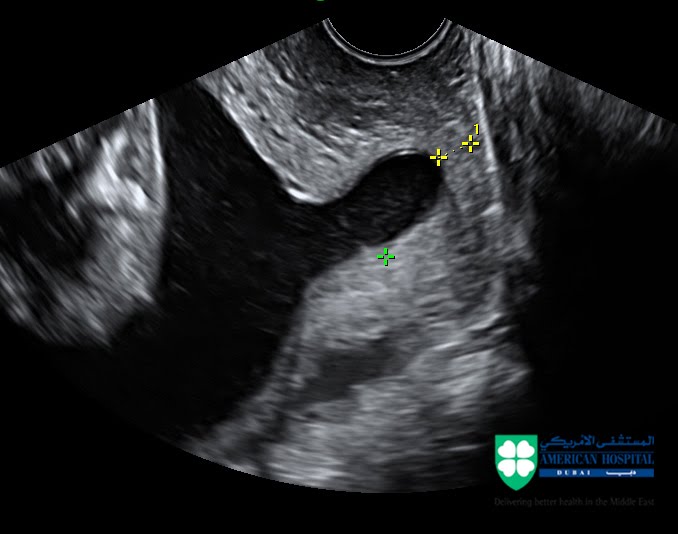
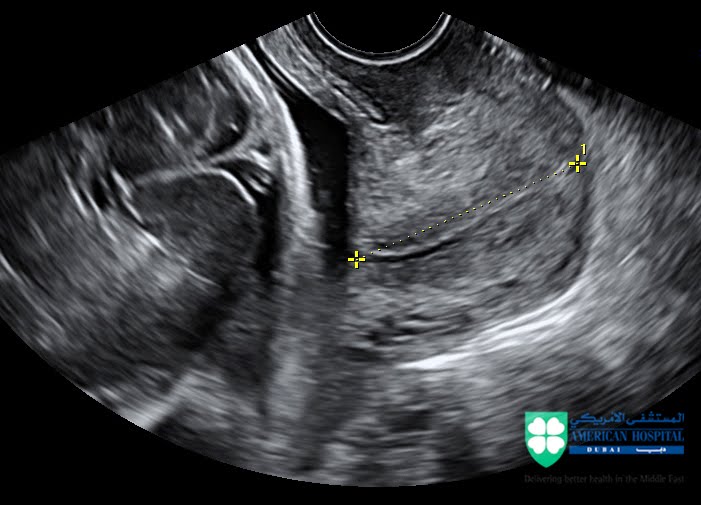
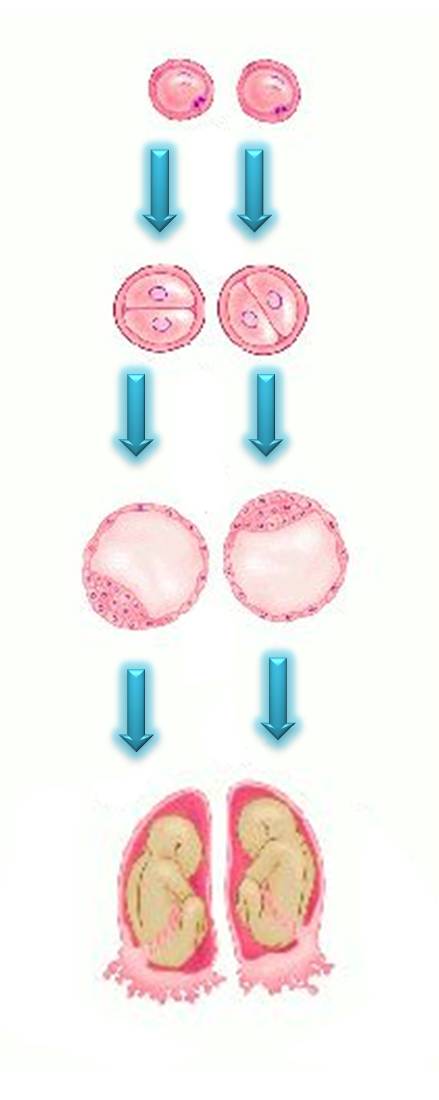
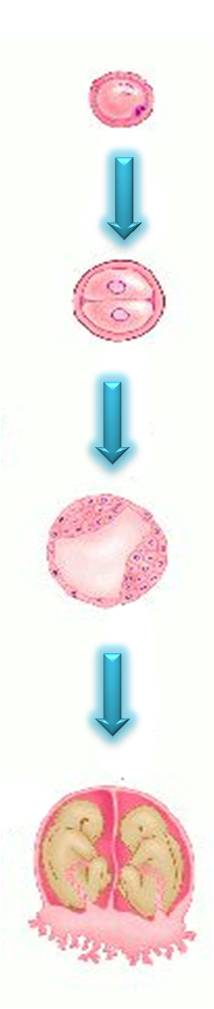
Twin pregnancy in Dubai
![]() |
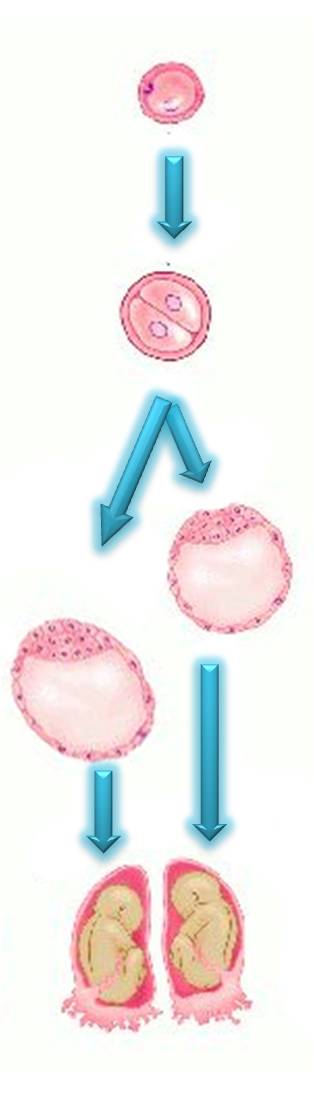
| Dizygotic (fraternal , not identical ) twins |
![]() |
| Monozygotic (identical ) monochrionic twins |
![]() |
| Monozygotic dichorionic twins |
![]() |
| Monozygotic monochorionic monoamniotic twins |
- Screening for chormosomal anomalies
- Nutrition and diet.
- Monitoring for twin to twin transfusion syndrome in monochorionic twin pregnancies.
- Risks and monitoring for preterm delivery. In Dubai it can be proven very difficult (and costly) to manage very premature babies. This is an important part of you care and should be fully discussed to ensure you reach informed choices about your care.
- Monitoring for growth It is good practice each time you have an ultrasound scan to get a typed report that clearly documents the findings and type of twins.
- Timing and mode of delivery
The value of birth plan, advice how and why you should prepare one.
Birth Plan
Birth plans used to be a terrible nightmare for young trainees in O&G in the UK including myself. We used to associate them with difficult patients, difficult decision making and sometimes conflict when the clinical circumstances forced us to deviate from the printed document. However as with many other things in life as you gain experience you recognise their real value.
- Keep it simple and short. Someone will have to read it most likely in the middle of the night. The more complicated the birth plan the less likely to be followed.
- Be pragmatic on your expectations and requests. For example dimming the lights at the time an operation may not be a good idea. What you are asking needs to be in line with the what the place you have chosen is able to offer, the hospital policies and procedures.
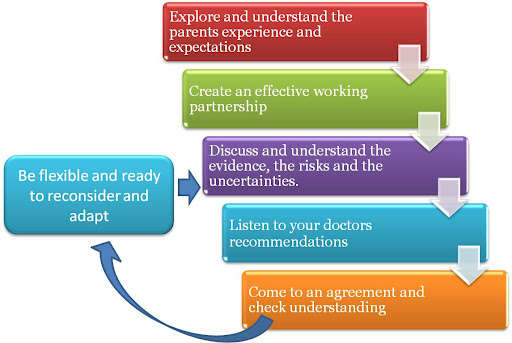
- Be flexible and ready to adapt. It is extremely important to recognise that labour is a dynamic process. It is difficult to predict all the possible scenarios. So be ready to change and adapt if the circumstances require it. The women who are more likely to be happy with the whole experience are those that approached childbirth with an adaptable plan.
- After you have prepared your birth plan review it with your doctor. If you involve other people in the birth plan make sure they are aware and agree with your requests.
- Consider the “decision making process” described in the VBAC post