Pregnancy in Dubai

Advice & information on common pregnancy problems by a Fetal & Maternal Medicine Consultant


Leave a comment

Hypothyroidism in pregnancy


Hypothyroidism in pregnancy

What is hypothyroidism?

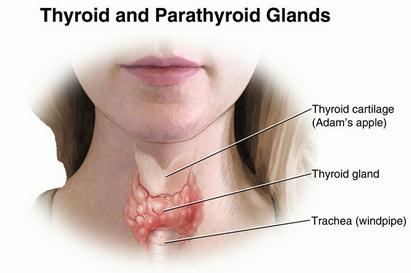
In our neck have a gland the thyroid gland. One of its main products is thyroid hormone. This hormone helps to control how the body uses and stores energy.

Hypothyroidism is medical term used to describe the medical condition when a person does not produce enough thyroid hormone.

What are the symptoms of hypothyroidism?

Mild hypothyroidism might be completely asymptomatic. However, most people with hypothyroidism feel tired. On occasions it is difficult to diagnose as there a lot of conditions that can make you tired.

Common symptoms of hypothyroidism include:

  • Lack of energy, feeling tired all the time
  • Feeling cold all the time
  • Developing coarse or thin hair
  • Getting constipated

In women, hypothyroidism can disrupt ovulation (production of an egg). As a result these women have irregular periods which can make it hard to get pregnant.
In women who do get pregnant, untreated hypothyroidism can cause problems. It has been clearly link with increased risk for a miscarriage and developmental / mental problems of the baby.
As you can see from the list of symptoms most of them common in normal pregnancies especially during the first trimester which makes it very difficult to diagnose mild form of hypothyroidism based on the symptoms.
Is there a test for hypothyroidism?
Read more about who is at risk for hypothyroidism and find out answers on common question about hypothyroidism in pregnancy

Yes. Hypothyroidism can be diagnosed by a routine blood test.

How is hypothyroidism diagnosed?

This is based on the levels of a hormone called TSH (responsible to make the thyroid gland produce thyroxine ) and the levels of T3 and T4 (two forms of thyroid hormone in our body).
Please note the normal TSH levels during pregnancy are the following (they differ from the accepted normal range in non pregnant women):

  • First trimester: less than 2.5 with a range of 0.1-2.5 mIU/L
  • Second trimester:0.2-3.0 mIU/L
  • Third trimester:0.3-3.0 mIU/L

Your obstetrician / GP will decide the best way to follow up depending on their expertise, the medical setting and the actual lab results.
In summary overt hypothyroidsm is best dealt/ treated with the help of your endocrinologist.
Untreated hypothyroidism can impair the baby’s mental development. It does also significantly increases the risk for preterm delivery, low birthweight babies, and miscarriage.
The value of treatment in cases of Subclinical hypothyroidism ( high TSH but normal T4 ) is still debated by some. There are studies that have shown lower IQ in children of untreated women.

Who should be tested for hypothyroidism in pregnancy?

Many obstetricians will include screening for thyroid problems in the routine early pregnancy testing. Some will try and target those at higher risk for hypothyroidism in pregnancy.
The following factors put women at increased risk for thyroid problems:

  • Age over 30;
  • Living in an area with known low iodine in the diet;
  • Personal or family history of thyroid problems, diabetes, history of miscarriage, infertility, or preterm delivery;
  • Overweight BMI of 40 or higher;

Given the higher average age of mothers in Dubai and the high prevalence of diabetes in Arabic and Middle East population most of antenatal patients would be eligible for testing even with a targeted approach.

What is the treatment for hypothyroidism in pregnancy?

The treatment of hypothyroidism in a pregnant woman is adequate replacement of thyroid hormone.
Ideally, women with thyroid disease should have their Thyroxine dose optimized before getting pregnant and should have their thyroid function tested as soon as pregnancy is detected.
 Thyroxine requirements frequently increase during pregnancy and the dose should be changed  by their physician as needed.
Important tip;
Iron containing prenatal vitamins can interfere with the thyroxine absorption. So make sure you do not take them at the same time an allow 2-3h between them. The best time to take your thyroxine is first thing in the morning.
You need to check your thyroid function regularly to ensure the adequate replacement of the thyroid hormone throughout the pregnancy.

Dr George Michailidis, Obstetrician and Gynecologist 
Fetal and Maternal Medicine Consultant 


Leave a comment

Nutrition in Pregnancy; Vitamin D

Nutrition in Pregnancy; Vitamin D

Over the last few years a number of studies have highlighted vitamin D deficiency as an important risk factor for pregnancy complications. Epidemiological studies have linked vitamin D with conditions like diabetes, low birthweight, pre-eclampsia. There is also good evidence that extreme deficiency can lead to neonatal rickets and bone fractures.
Despite this the ACOG has issued a statement that routine screening for vitamin D deficiency is not recommended in low risk women. This was based on the lack of good quality evidence to inform general public recommendations.
Let’s try and review some facts about vitamin D.


What is a Vitamin D ? What does it do?
It is a fat soluble vitamin that helps our body to regulate the amount of calcium and phosphorus. Both of these minerals are very important for our bones and teeth.
How do I get it?
·Few foods have vitamin D. Good food sources are oily fish (like sardines) and eggs.
·In many countries governments add vitamin D to milk, fat spreads or breakfast cereals. 
·However the largest amount is produced by our body at our skin when this is exposed to sunlight.
Most people with a healthy diet and enough sun exposure do not need vitamin D supplements.
 Read more about who is at risk for vitamin D deficiency and find out answers on common question about vitamin D supplementation in pregnancy

Who is at risk for vitamin D deficiency?
·People older than 65
·Obese people
·People with dark skin ( such as Africans)
·People who have limited sun exposure.
oThese can be people who live indoors for long periods of  
time,
opeople who routinely cover up their skin for religious and cultural reasons
o people who live in countries with limited sunlight throughout the year .
·Pregnant and breastfeeding mothers

What is the right dose for supplementation?

For most adults not at high risk groups 600iu/day is adequate. Doses up to 4000IU/day are considered safe.  

Questions

I am planning to get pregnant; I am worried and confused what to do?

·If you not in any of the high risk groups there is no need to be particularly worried. Following a healthy diet with reasonable sun exposure is the best and should be enough. You may consider pregnancy multivitamin that will have a combination of folic acid, vitamin D and other useful micronutrients particularly if you have a hectic urban professional lifestyle.
·If you are at a high risk group (this would apply to many women from the Middle East – UAE as well as mothers from the Subcontinent) and especially if you have multiple factors ie limited sun exposure, overweight, multiple pregnancies with short inter-pregnancy interval, young age etc;
oIt is best checking your vitamin D levels before pregnancy. This will allow you time to correct possible deficiencies before pregnancy.
oThis can be done effectively with high doses of vitamin D.
oThe safety of these high dose regimes has not been established in pregnancy and is better avoided.

I am pregnant but not in any of the risk groups for vitamin D deficiency you have mentioned what should I do?

Ensure a well-balanced diet and consider a branded pregnancy multivitamin (usually contains about 600-800 IU of vitamin D).

I am pregnant and I have multiple risk factors for vitamin D deficiency from the list above what should I do?

·Best discuss with your Obstetrician.
·Measuring vitamin D levels in pregnancy can be helpful. It has some limitations as the normal reference values in pregnancy are not well establish.
·Higher doses of vitamin D 1000- 2000IU are safe and would be appropriate for you.
·If you have low levels for vitamin D it appears that upper limit 4000IU daily can be safely given (as suggested by the Institute of Medicine) and is more likely to normalise your vitamin D levels.

Dr George Michailidis, Obstetrician and Gynecologist 
Fetal and Maternal Medicine Consultant 
Links


Leave a comment

Pain relief in labour Epidural


How mothers perceive their birthing experience a large extent depends on how they deal with labor pain. Giving birth is painful. It is well accepted that pain during labouris severeand usually exceeds the mother’s expectations. 
It has been describedby some, as the worst pain a woman experiences. Although many mothers are able to deal with it well for some is overwhelming. 

Sometimes the maternal reaction -over reaction to the pain can adversely affect the labor/fetus.
The most effective to deal with pain during labourare the various regional techniques for pain relief.
What is epidural anesthesia?


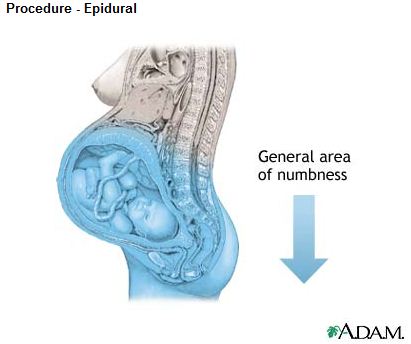
Epidural is a popular techniqueof regionalanesthesia. It is called regionalas it blocks sensation– painat a certainpart regionof the body.


How does it work?

It works by stopping the pain signal transmission at the lower nerves of the spine.As a resultit numbs the lower part of the body. This is achievedby a “cocktail” of local anesthetic medication and special opioids.


Read more about how epidural is set up what are the advantages and disadvantages using it as pain relief for your labor


How is itsetup?


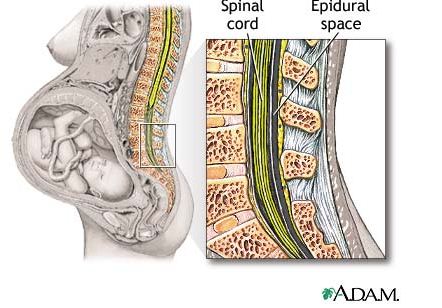
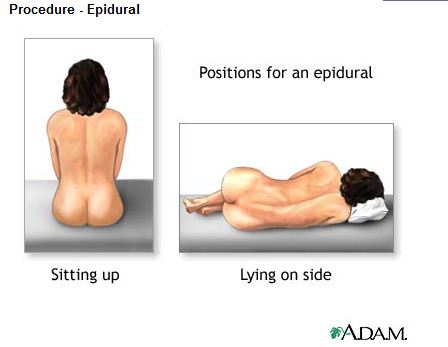
The nurse or the midwife will first placea cannula to have access to your veins and ensurethat you receiveintravenous (through the vein) fluids. This is maintainedthroughout the labour. Then the anesthetist will cometo setthe epidural. They will usually either ask youto situp or lie on your side. In both casesthey will require youto try and archyour back  “like an angrycat” you may hear them say. This helps them a lot to find the right spacefor placing the epidural catheter. 


The anaesthetist will use an antiseptic solution to cleanyour back in order to minimise the risk for infection. Using a fine needle he will injectlocal anesthetic and numb the areahe is planning to placethe epidural catheter.


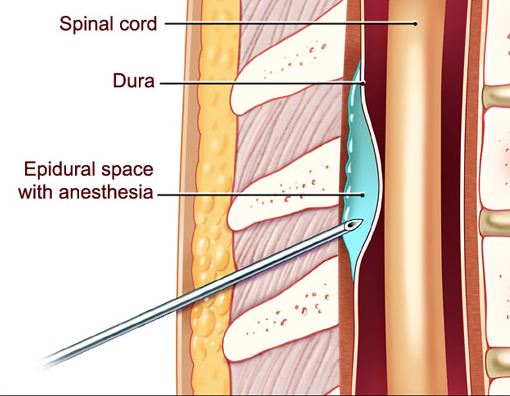
He will then inserta needle via the numbed area to the epidural space. Youusually feela pushing sensation at that point. Using the needleas a guidehe threads a verythin plastictube to the epidural space.



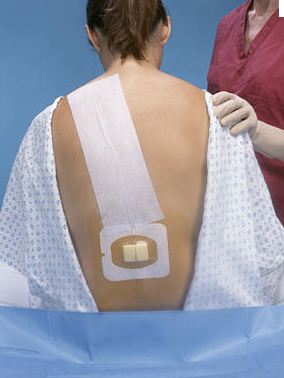
Then the needle is removedand the catheter is securedwith plastic tape.This catheter is usedto deliverthe medication during the labour. This initially is doneby a directbolus injection followed by a continuous infusion


What are there different types of epidural used in labor? What is a walking epidural?


There are essentially two variations of the epidural technique used. 


1. Routine Epidural ; as described earlier


2. Combined Spinal Epidural (CSE) or “walking epidural”. The difference with this technique is that by using a special verythin needle the initial dose of medication is givento the intrathecal space (a layer further in from the epidural space).The advantage of this technique is that it has its effectmuch faster and alsopreserves your motor control (ieyou can controlyou muscle better) allowing to move more freely at your bed. Although it is calledwalking epidural it is not commonly recommended to walkas your balancewith beaffected. 

Each Hospital unit uses customised protocols regarding the medications and instruments used.


2.What are the side effects – complications of the epidural in labour?


1. Youmay feel shivering, nausea, or itching on some occasions you may experience backache or soreness where the needle was inserted.

2. It may cause a sudden drop of your blood pressure (BP). The midwife should keep a close eye on the BP and ensure youare receiving adequate fluids. In some casesthe anesthetist may have to give you specificmedications to deal with verylow BP


3. On occasions youmay havebreakthrough painor not completecoverage of the pain. Usually the anesthetist will try to remedythis by extra doses of medication or on occasions replacing the epidural catheter.

4. Severe headache. This complicates about 1% of procedures and it is dueto leakage of spinal fluid from the site of the needle placement.It can be devilishly severe headache and usually is aggravatedby movements. Most of the time the treatmentis conservativewith painkillers and hydration but some times aprocedurecalled “bloodpatchmay be offered to improve symptoms.
Normally the anesthetist will come and fully explain what happened andfollowyouup.

5. Very rarely, severe infectionor nerve damage can be caused by the insertion of the needle

How will an epidural affect my labor?

Positive effects


• It is the best modeof pain relief available for labor pain. It allows youto get some restduring labor.


• It can be used to cover medical procedures like instrumental deliveries, repair of tears or episiotomy even a Cesarean sectionif needed.

• It is easier to controlthe deliveryof the fetal head as the extreme pain elementis not there.


• It allows you to be alert with a clear mindthroughout labor. This helps mothers to “enjoy” the labourwithout the pain. Many find crucialto be ableand maintain a clear mindand decision making abilitywithout being distractedby the relentless contraction pain.


Negative effects

• More medical interventions; youwill need access to your veins, continuousmonitoring of your baby. It is more common that you will need syntocinon – oxytocin to ensure good strong contractions and it is recommended that you have a urinary catheter to help you emptyyour bladder. These are common tasks and in some units many will be done anyway even if you do not have an epidural.

• You are confinedto your bed.

• It is more common to need help with the use of a ventouseor forcepsto deliver the baby especially if youhave a “heavyepidural” meaning verylittle muscle control. 

Myths


Do Epidurals increase the risk for CS? NO.There is now goodevidence that the CS rate is not increased using an epidural.

Do epidurals increase the length of labor? Yes by 15 min.So a well-managed epidural is not expected to have any significant effect to the length of labour.

Do epidurals affect my baby? A well working epidural does not affect your baby’s well being. However side-effect like sudden drop of your blood pressure can cause fetal distress if not dealt timely and appropriately.


When is the earliest stage inlabourthat I can have an epidural?


The commonadvice is to opt for an epidural at the active phase of the first stage of labor i.e.| 3-4 cm dilatation of the cervix with regular contractions.

In realityif youneed pain relief and either you membranes have ruptured or they are accessibleand can be rupturedyou can have an epidural.


Are there situations that Iwill be refusedan epidural if Iaskfor one?

1. You are in advanced in labourand the team feels that youwill deliverbefore they have time to provideyou and effective epidural.

2. The anaesthetist is busyor there isn’tenough staff to look youafter safely. On occasions in very busylabor wardsthere might not be enough trained staff to safely look youafter with an epidural.

3. Youtake medication that affect how your blood clots like heparin or warfarin or your pregnancy is complicatedby conditions that affect your bloods clotting ability. In these situationsthere is riskfor having a bruise– hematoma at the place of the needle insertion. Given that the spinal canal is a confined space, hematoma can affect adversely your nerves and spinal cord.

4. Youhave or suspected to have an infectionthat has spread to your blood stream

What shouldyoudo in advance ;

Mother-

It is importantto discuss your pain relief options when youare building your birth plan with your midwife / obstetrician. This will allow time,  at a non stressful environmentto explore the optionsavailable for you. It will make it possible to bring to light your fears and answeryour questions.

  • The D day                                                                                                                                                                                              
Inform the staff that is looking after you regarding your preferences for pain relief. 

Be flexible, realistic and ready to adapt. Now, this can be very challenging given that there is a good chance that you will be anxious, tired and in a lot of discomfort. 

Labour wards can on occasions be very busy places. You have the disadvantage that you are not usually aware of what else is going on at the floor. So  make your midwife your best friend – ally. Let her know what you want for pain relief and listen to her advice. Ask her to help you in choosing the better time for the epidural. Although you are the one in pain the midwife will know what is happening at the rest of the labour ward rooms, how busy the anaesthetist is and whether there are any cases that may have an impact on staff availability when you need your epidural. 

Obstetrician Risk assessment

Your obstetrician should be able to identify factors that can may makeregional anesthesia more riskyand difficult.Typical examples are ; previous spinal injury or spinal operations, scoliosis, high BMI. Particular fears like fear of needles or a bad previousexperience can make the procedure verydifficult.
Be forthcoming with your Doctor and let him/her know if you have particular worries about pain relief in labour.  

In these cases early review preferably  by a senior anaesthetist will help appropriate planning for the delivery day. 

Dr George Michailidis, Obstetrician and Gynecologist 

Fetal and Maternal Medicine Consultant 


Leave a comment

Best Sleeping position in late pregnancy

Best sleeping position in Pregnancy 

What is the best position to sleep in late pregnancy? This is a question frequently asked by pregnant mums. Some will go even further and carry on  “I am terrified when I wake up and realize that I am sleeping on my back… am I hurting my baby?
Some publicity has recently been stirred up on this issue after a BMJ article that claimed an association between sleeping position and pregnancy complications.

My advice; Just listen to your body and enjoy you sleep. 

read more for more info on the subject 


Medics have to study, explore and understand human physiology as a way of improving mothers’ health. But on the same time have the obligation to report their findings in a sensitive and constructive manner.


Both the editorial and rapid responses highlight the shortcomings of this work;
  1. For the cases with problems the interview took place 2-3 weeks after the event. Now seriously…. how reliably can you remember how you slept or woke up even for the day before let alone a few days back. You would expect a more rigorous approach in validating the tools-questionnaires ensuring first that they actually measure what they supposed to before reaching conclusions.
  2. For almost half of the cases the babies did not undergo postmortem / placental examination so exclusion of other reasons that are more likely have this outcome was more than inadequate.
  3. The difference mentioned,  even after all the above, was from 2/1000 to 3.93 /1000. The authors concluded that the risk stating “doubled” . Although in stirct terms this is true  in absolute numbers the difference is miniscule. 
Yes there is some evidence of changing of the perfusion of the uterus when a mother is lying on her back. This is relevant when the mothers are placed in such position; ie during an ultrasound examination or a clinical examination or operation. This is why clinicians will ensure the mother will be placed with a lateral tilt or elevate the back of the bed appropriately.

However mothers instinctively will, as anybody else,  change their position when this is uncomfortable for whatever reason. Although the studies are sparse there are suggestions that support the logical idea that pregnant women will naturally adopt positions less likely to cause aorto caval compression. 

In conclusion; yes we should further explore the physiological changes during sleep but do that by developing well validated tools. 
So Please Enjoy your Sleep.
Sleeping in the third trimester is hard enough anyway. Heartburn, active baby, heat constant need to go to the toilet.
There is no need to add extra worries (especially with issues that are very difficult to control ie sleeping position)

… just listen to your body 

Dr George Michailidis, Obstetrician and Gynecologist 
Fetal and Maternal Medicine Consultant 
Relevant articles
Mills GH, Chaffe AG.
Anaesthesia. 1994 Mar;49(3):249-50.
Farine D, Seaward PG.
J Obstet Gynaecol Can. 2007 Oct;29(10):841-2.
BMJ 2011;342:d3659


Leave a comment

Pain relief in labour; psychoprophylaxis, relaxation, pethidine, epidural. What is the best option? Part 1 labour pain, psycho prophylaxis

Pain relief in labour; psychoprophylaxis, relaxation, pethidine,  epidural.  What is the best option?

Part 1 labour pain, psycho prophylaxis

One of the common discussion points during the preparation of the birth plan are the pain relief options during labour.
Understanding the labour pains;
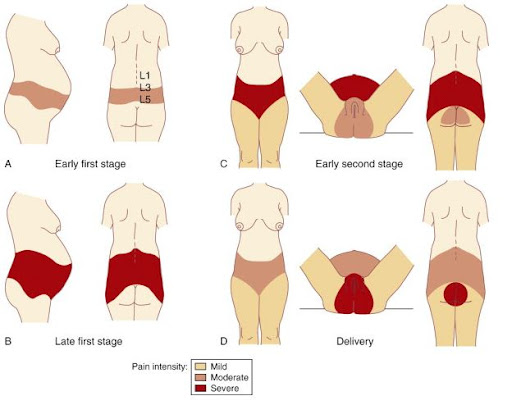
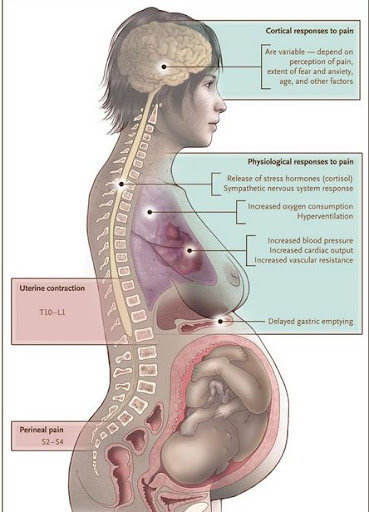
Labour is a painful process. During active labour the contractions come about every 3 min and last a good 40 sec. During the first stage of labour (when the neck of the womb is opening up) women have generalised abdominal (tummy) pain mainly originating from the contracting uterus (womb) and the dilating cervix (neck of the womb). During the second stage of labour (when the mother tries to push the baby out) more sharp pain comes from the distension – stretching of the vagina and the perineum by the baby’s head.  All women do experience pain during normal labour and most would describe this pain becoming very intense at some point during labour.
The threshold for pain is different for different people. Even for the same person how much pain she can tolerate changes depending on her physical and emotional state. In general our pain threshold becomes lower as we get more tired and more anxious.
Pain is a complex phenomenon. It has both a sensory (what our nerve fibres transmit) and an emotional part (how our brain interprets the signal) and a great ability to get our attention and dominates over other cognitive (thinking and emotional) processes.
There are two main approaches in dealing with labour pains
1.Non pharmacological / psycho-prophylactic  approach
2.Pharmacological (use of drugs)
Psycho prophylaxis;
It includes a number of methods that help the mother deal with labour pains. Examples are gentle massage, relaxation techniques, breathing exercises. One of the most well known is the Lamaze approach to childbirth ( www.lamaze.org ).

At their web site you can find a wealth of information for pregnancy and childbirth.

 These methods do not change the intensity of the pain but they do alter the perception of pain and they reduce maternal suffering.  Although pain and suffering usually occur together it is possible in the same way that you can have suffering without pain to have pain without suffering. Psycho prophylaxis helps women interpret the pain as a normal part of labour so they do not feel threaten from it and find it easier to cope with it.
Different methods have different approaches but one of the great advantages of all is that they include extensive education regarding the normal labour process. By providing quality education they prepare the mother to deal with it better and reduce the anxiety of the unknown.
One major disadvantage is that some of the teaching settings is the following; while dealing with pain without medication is praised, use of drugs is considered as failure. Achieving a balanced approach is the best way forward. Rather than adopting a hard line approach for everyone, having personalised plan for each client works best.  By putting the mother as the centre piece of the birth plan it is possible to cater for the individual needs and wishes.  This avoids the huge emotional stress and negative feelings of failure that some women are left with when they decide to use medications for pain relief.

Fetal & Maternal Medicine Specialist
Obstetrician & Gynecologist


1 Comment

Nuchal translucency and screening for Down’s syndrome in Dubai.

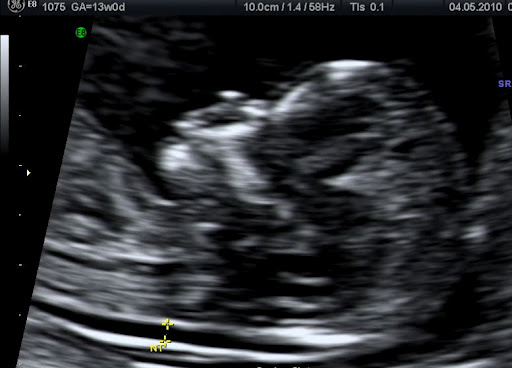
What is nuchal translucency ( NT ); The term nuchal translucency is used to describe the sonographic (ultrasound scan) appearances of a specific region of the baby’s neck during the first trimester of pregnancy. It is routinely measured between weeks 11 -13+6 days and used as a screening test for chromosomal abnormalities like Down’s (trisomy 21).
What do you need to know about the nuchal translucency;
The quality of Nuchal translucency measurement (and its prediction accuracy) depends on who is doing it and what equipment is used. If you decide to have the test done ensure it is performed by properly trained and certified operators that use good quality equipment.  One of the well respected certification organisations is The Fetal Medicine Foundation. You will find in this link lists of certified professionals for your country.

Normal Nuchal Translucency

NT is only a part of the first trimester scan. Although commonly referred as NT scan at the first trimester scan the doctor / sonographer should report on how some basic features of our baby have developed as well. For example the fetal abdomen the baby’s skull and brain, the fetal stomach and bladder the arms and legs should be clearly visible in most cases.

Nuchal translucency is a powerful predictor for problems like Down’s syndrome. It is routinely used in combination with maternal age and biochemical markers (blood test) to give a risk estimate for major chromosomal anomalies (T21, T18, T13).
The size of the nuchal translucency depends on the gestational age (how old the baby is). The upper limit of normal is smaller at 11 weeks and larger at   13 weeks.
Ultrasound scanning measurement of the NT is only a screening and not a diagnostic test. This means that it will provide you with a risk estimate rather than a “Yes – No” answer.
It is best practice to discuss with your obstetrician and understand what is the NT scan beforehand. Make sure you have some quality time with your doctor to understand the purpose of the test, the results you expected to have as well as the limitations it has.


Dr George Michailidis, Obstetrician and Gynecologist 
Fetal and Maternal Medicine Consultant 


Leave a comment

Preconception consultation in Dubai; What to do and discuss with your doctor before you get pregnant.

It would be ideal if every pregnancy was to be thought of and planned in advance. In reality though, what tends to happen is that couples relax their precautions when they feel that a baby would be a welcome event.
There are a number of easy steps that every couple/ woman can take to optimise their chances for a healthy pregnancy.
Preconception medical visit; what to ask your doctor and what a good doctor should ask you before you get pregnant.
It is a good idea to visit your Obstetrician Gynaecologist or your GP and discuss your family planning. A good medical history, obstetric and family history from your Obstetrician should identify possible risk factors. The best practice is to create a plan tailored to your pregnancy and family needs. However, some common recommendations that apply to most are;
1.When was youlast Pap smear? Was it OK? For those that need minor treatments pregnancy may delay interventions and can in occasions cause unnecessary anxieties. Ensure youhave had a recent Pap smear and you have the all clear from your Doctor.
2. Are youimmune against Rubella (German measles) and Varicella (chickenpox)? Both are common children’s diseases. If however you getthem during pregnancy (especially rubella) they can cause problems to the pregnancy.
 For boththere are available vaccines so youcan ensureyou are protectedbefore you get pregnant. For rubellathe vaccine is a live virusvaccine and the adviceis not to get pregnant for three months after the injection. In many European countriesthere are establishedimmunisation programs that aim to reduce the number of susceptibleindividual. In Dubai howeverthere is a mixed populationfrom countries with different health systems. This makes it more likely to havelarger numbers of non immune people which allows the transmission of these contagious diseases.
3. Thalassemia /sickle diseasedepending on your ethnic originsome people are more likely than others to be carriers. For instancethalassemia is common in people from Mediterranean countries and sickle is verycommon in people from Africa. Many of us carrythe defective gene without actually having any significantsymptoms.sure that youknow your statusand if you happen to be a “carrier” make sure your partner is checked as well. If both of youare carriersthen you will need to seea specialist to explain the possible implications for your children.
4. Are youtaking medications for a medical condition?Discuss with your Doctor whether it is safe to continue during pregnancy or changes areneeded. Do not just stop medications without prior consultation with your physician.For some chronic conditions like diabetes, epilepsy careful planning is neededbefore youstart trying for a pregnancy.
5. When was the last time youvisited your dentist?Pregnancy veryoften can cause problems with your gums and teeth. It is a goodto visityour dentist for a check up before your pregnancy.
Contraception; Sometimes when there are coexisting medical conditions that besttreated before pregnancy or medications that have to be altered careful planning is needed. In these cases selectionof an appropriateand safe contraceptive methodis essential.

Healthy lifestyle – general advice

Introduce exerciseto your daily routine. It  will help you controlyour weightand will certainly boostyour energy levels.

Aim for a balanced diet with plenty of fruits and vegetables.

Take your folic acid supplements. 400mcgr is the commondose. Youwill find it in a variety of standalone medications or pregnancy multivitamins.

Do yousmoke ? STOP SMOKING. There is amble evidence of the problems smoking can harm youand your baby. It is not easy, but use the pregnancy as an extra incentive to keep youtrying.It is a uniqueopportunity to get rid of a bad habit. THIS SHOULD BE A FAMILY EFFORT. It will be devilishly difficultfor youto stop smoking if your partner carries on. It will be easier if youcombine your efforts.

Shisha is dangerous as cigarettes are. So do not followthe commonmisconception that it is OK to smoke shisha.

Do youdrink alcohol regularly? In particular binge drinking can be terribly harmfulduring early pregnancy.

Dr George Michailidis, Obstetrician and Gynecologist 
Fetal and Maternal Medicine Consultant 


1 Comment

Pelvic floor exercises after pregnancy and delivery

Pelvic floor exercises should also become part of your daily exercise routine after delivery. Your pelvic floor muscles are affected by pregnancy and vaginal birth. The combination of nerve damage and physical injury during labour with the changes the pregnancy brings to your body can significantly weaken these muscles. This can lead to problems like pelvic organ prolapse or leakage of urine.

Identifying the right muscles; this is very important in getting the exercises to work. You can do this by inserting one or two fingers in your vagina and trying to squeeze the surrounding muscles. You should feel your vagina tighten and your pelvic floor moving up. Another way to try and realize which are the pelvic floor muscles is to try and stop the flow of urine when you urinate. You should only use this manoeuvre infrequently to either test your progress ( for example every 2 weeks) and not make a habit of doing it as it can create problems with proper urination.
You should with time improve your technique and maintain your focus. His is a long term commitment and do not get disappointed if you do not get fast results. Usually you will see a significant difference after 4-6 weeks. 
The following link is an information sheet and pelvic floor muscles training routine from Guy’s & St Thomas Hospital UK. It is comprehensive and should answer most of your questions.


Fetal & Maternal Medicine Specialist
Obstetrician &  Gynaecologist


1 Comment

Advice about exercise after pregnancy.

Exercise after pregnancy and delivery


There are numerous benefits in starting exercising regularly after having your baby. Introducing a regular exercise routine in your daily schedule can greatly help to promote weight loss and help you rebuild your muscles – in particular your tummy muscles. But the benefits do not stop there, exercise will boost your energy levels, it improves your mood and reduces the chances of postpartum depression.


When you should start exercising after pregnancy? If you are generally fit and healthy, you had a normal pregnancy and a normal uncomplicated vaginal delivery you should be able to start within a few days after your delivery.  However if you have had pregnancy complications (like high blood pressure, significant symphysis pubis dysfunction ), a difficult delivery (for example significant vaginal perineal trauma) or a caesarean section you should have a good discussion with your obstetrician before you start.

What about breast feeding and exercise? Moderate exercise is not believed to affect your ability to breast feed or the quality of your milk. You should make sure you stay comfortable and a good idea is to breast feed or express before you start your work out. Make sure you wear a good quality supportive bra. There has been some research that indicates that there might be increased lactic acid concentration in the breast milk after intense exercise. You can avoid this by breast feeding an hour after exercise (or even discarding the milk produced within the first half hour post intense exercise) or simply by sticking with moderate intensity exercise.

Do not try to do too much too early and allow time to condition your body and muscles. 
Contacting a fitness expert that specialises in pregnancy and post partum training and joining a group of friends who like to exercise can provide valuable motivation.

The weather in Dubai is hot all year round so make sure you are well hydrated by drinking plenty before and during exercise.
Combine your exercise routine with regular pelvic floor exercises to have the best results in reclaiming your form after delivery 

Dr George Michailidis, Obstetrician and Gynecologist 
Fetal and Maternal Medicine Consultant 



Leave a comment

Having a dating ultrasound scan in Dubai

The common way to calculate how far your pregnancy has progressed is to use Naegele’s rule. This simple equation uses the first day of your last period it adds 9 months and 7 days. This is on what the small plastic wheels that you usually see in antenatal clinics are based.
As you can understand although in general this works well there a number of weak points.
1.The mother may not be certain of the first day of the last period.
2.The rule assumes that each mother has regular periods and produces an ovum (egg) on day 14 from the first day off the period.
It is easy to appreciate that this is not always the case. Humans are not like Swiss watches and there are normal variations from month to month.
Accurate dating of the pregnancy is important as it constitutes the starting point for planning pregnancy care.
The most accurate way to date your pregnancy (with the exception of IVF pregnancies) is the dating ultrasound scan. This is usually performed between weeks 8-10.
The purpose of the dating scan is
  1. To confirm a viable (alive) intrauterine (within the womb) pregnancy.  This is achieved by demonstrating a beating fetal (baby) heart.
  2. To date the pregnancy. This is achieved by measuring how long the fetus is from the top of its head to its bottom  (Crown Rump Length – CRL). Between 8-10 weeks it is the best time to calculate how far you are in your pregnancy (accuracy about 4 days).
  3. To diagnose multiple pregnancies. Diagnosing twins or higher order multiple pregnancies early helps appropriate pregnancy planning.
Most of the times the scan is done transabdominally. This means the probe that produces and receives ultrasound waves touches your lower abdomen ( tummy) and allow us to get views  of the uterus (womb). Special gel is used to improve contact between the probe and your tummy.
In some occasions a transvaginal (internal) scan is needed.

This means that a special probe is inserted in the vagina. In this way it gets much closer to the womb and produces a much clearer image. This is more commonly needed in very early pregnancy, for those women who are overweight or have a backwards tilted womb.

A good doctor should explain to you the type of scan that needs to be done and a chaperone should will be in the room during internal scans.
Having a scan should not be painful. If in any case you feel uncomfortable let the doctor know as he/she is usually concentrating at the ultrasound screen.
What information will I get ?
It is best obstetric practice to give a report which summarizes the scan findings at the end of the examination ie; position of the pregnancy, number of fetuses (babies), fetal heart activity, CRL and the calculated gestation and expected date of delivery.
At this stage it unlikely due to the very small size of the baby that even severe abnormalities will be picked up.
Make sure you keep a copy of the report as the expected date of delivery should not be changed again during the pregnancy. Providing the initial scan has been performed by a well trained doctor, good obstetricians know well that follow up scans should confirm how your baby is growing against the already set date and not change the dates. So when you see a new doctor bring that documentation with you as it will help with your pregnancy management.
Can the dating scan pick up any problems?
 At this stage of the pregnancy possible problems that can be picked up are
  1. A missed miscarriage. This is when the pregnancy has stopped developing and there is no visible fetal heart beat. A miscarriage in early pregnancy unfortunately is not uncommon. Most of the times no specific reason can be identified. Your gynecologist will explain the findings to you and arrange with you the appropriate management.
2.A pregnancy cannot be clearly seen within the womb. Possible reasons for this are; a very early pregnancy, a miscarriage, or in some occasions an ectopic pregnancy. Your Gynecologist  will explain the findings to you and initiate the appropriate investigations needed to clarify the diagnosis. In those cases that an ectopic pregnancy is diagnosed or strongly suspected an operation might be needed to deal with it.

Dr George Michailidis, Obstetrician and Gynecologist 
Fetal and Maternal Medicine Consultant