Pregnancy in Dubai

Advice & information on common pregnancy problems by a Fetal & Maternal Medicine Consultant


1 Comment

Nuchal translucency and screening for Down’s syndrome in Dubai.

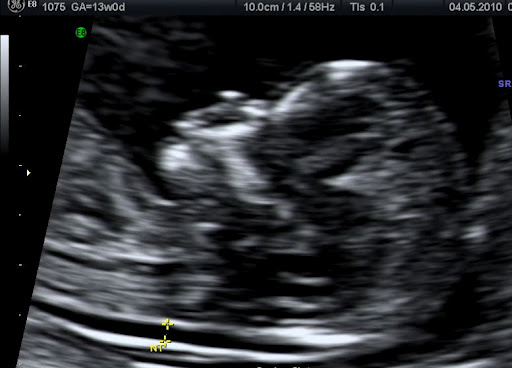
What is nuchal translucency ( NT ); The term nuchal translucency is used to describe the sonographic (ultrasound scan) appearances of a specific region of the baby’s neck during the first trimester of pregnancy. It is routinely measured between weeks 11 -13+6 days and used as a screening test for chromosomal abnormalities like Down’s (trisomy 21).
What do you need to know about the nuchal translucency;
The quality of Nuchal translucency measurement (and its prediction accuracy) depends on who is doing it and what equipment is used. If you decide to have the test done ensure it is performed by properly trained and certified operators that use good quality equipment.  One of the well respected certification organisations is The Fetal Medicine Foundation. You will find in this link lists of certified professionals for your country.

Normal Nuchal Translucency

NT is only a part of the first trimester scan. Although commonly referred as NT scan at the first trimester scan the doctor / sonographer should report on how some basic features of our baby have developed as well. For example the fetal abdomen the baby’s skull and brain, the fetal stomach and bladder the arms and legs should be clearly visible in most cases.

Nuchal translucency is a powerful predictor for problems like Down’s syndrome. It is routinely used in combination with maternal age and biochemical markers (blood test) to give a risk estimate for major chromosomal anomalies (T21, T18, T13).
The size of the nuchal translucency depends on the gestational age (how old the baby is). The upper limit of normal is smaller at 11 weeks and larger at   13 weeks.
Ultrasound scanning measurement of the NT is only a screening and not a diagnostic test. This means that it will provide you with a risk estimate rather than a “Yes – No” answer.
It is best practice to discuss with your obstetrician and understand what is the NT scan beforehand. Make sure you have some quality time with your doctor to understand the purpose of the test, the results you expected to have as well as the limitations it has.


Dr George Michailidis, Obstetrician and Gynecologist 
Fetal and Maternal Medicine Consultant 


Leave a comment

Preconception consultation in Dubai; What to do and discuss with your doctor before you get pregnant.

It would be ideal if every pregnancy was to be thought of and planned in advance. In reality though, what tends to happen is that couples relax their precautions when they feel that a baby would be a welcome event.
There are a number of easy steps that every couple/ woman can take to optimise their chances for a healthy pregnancy.
Preconception medical visit; what to ask your doctor and what a good doctor should ask you before you get pregnant.
It is a good idea to visit your Obstetrician Gynaecologist or your GP and discuss your family planning. A good medical history, obstetric and family history from your Obstetrician should identify possible risk factors. The best practice is to create a plan tailored to your pregnancy and family needs. However, some common recommendations that apply to most are;
1.When was youlast Pap smear? Was it OK? For those that need minor treatments pregnancy may delay interventions and can in occasions cause unnecessary anxieties. Ensure youhave had a recent Pap smear and you have the all clear from your Doctor.
2. Are youimmune against Rubella (German measles) and Varicella (chickenpox)? Both are common children’s diseases. If however you getthem during pregnancy (especially rubella) they can cause problems to the pregnancy.
 For boththere are available vaccines so youcan ensureyou are protectedbefore you get pregnant. For rubellathe vaccine is a live virusvaccine and the adviceis not to get pregnant for three months after the injection. In many European countriesthere are establishedimmunisation programs that aim to reduce the number of susceptibleindividual. In Dubai howeverthere is a mixed populationfrom countries with different health systems. This makes it more likely to havelarger numbers of non immune people which allows the transmission of these contagious diseases.
3. Thalassemia /sickle diseasedepending on your ethnic originsome people are more likely than others to be carriers. For instancethalassemia is common in people from Mediterranean countries and sickle is verycommon in people from Africa. Many of us carrythe defective gene without actually having any significantsymptoms.sure that youknow your statusand if you happen to be a “carrier” make sure your partner is checked as well. If both of youare carriersthen you will need to seea specialist to explain the possible implications for your children.
4. Are youtaking medications for a medical condition?Discuss with your Doctor whether it is safe to continue during pregnancy or changes areneeded. Do not just stop medications without prior consultation with your physician.For some chronic conditions like diabetes, epilepsy careful planning is neededbefore youstart trying for a pregnancy.
5. When was the last time youvisited your dentist?Pregnancy veryoften can cause problems with your gums and teeth. It is a goodto visityour dentist for a check up before your pregnancy.
Contraception; Sometimes when there are coexisting medical conditions that besttreated before pregnancy or medications that have to be altered careful planning is needed. In these cases selectionof an appropriateand safe contraceptive methodis essential.

Healthy lifestyle – general advice

Introduce exerciseto your daily routine. It  will help you controlyour weightand will certainly boostyour energy levels.

Aim for a balanced diet with plenty of fruits and vegetables.

Take your folic acid supplements. 400mcgr is the commondose. Youwill find it in a variety of standalone medications or pregnancy multivitamins.

Do yousmoke ? STOP SMOKING. There is amble evidence of the problems smoking can harm youand your baby. It is not easy, but use the pregnancy as an extra incentive to keep youtrying.It is a uniqueopportunity to get rid of a bad habit. THIS SHOULD BE A FAMILY EFFORT. It will be devilishly difficultfor youto stop smoking if your partner carries on. It will be easier if youcombine your efforts.

Shisha is dangerous as cigarettes are. So do not followthe commonmisconception that it is OK to smoke shisha.

Do youdrink alcohol regularly? In particular binge drinking can be terribly harmfulduring early pregnancy.

Dr George Michailidis, Obstetrician and Gynecologist 
Fetal and Maternal Medicine Consultant 


1 Comment

Pelvic floor exercises after pregnancy and delivery

Pelvic floor exercises should also become part of your daily exercise routine after delivery. Your pelvic floor muscles are affected by pregnancy and vaginal birth. The combination of nerve damage and physical injury during labour with the changes the pregnancy brings to your body can significantly weaken these muscles. This can lead to problems like pelvic organ prolapse or leakage of urine.

Identifying the right muscles; this is very important in getting the exercises to work. You can do this by inserting one or two fingers in your vagina and trying to squeeze the surrounding muscles. You should feel your vagina tighten and your pelvic floor moving up. Another way to try and realize which are the pelvic floor muscles is to try and stop the flow of urine when you urinate. You should only use this manoeuvre infrequently to either test your progress ( for example every 2 weeks) and not make a habit of doing it as it can create problems with proper urination.
You should with time improve your technique and maintain your focus. His is a long term commitment and do not get disappointed if you do not get fast results. Usually you will see a significant difference after 4-6 weeks. 
The following link is an information sheet and pelvic floor muscles training routine from Guy’s & St Thomas Hospital UK. It is comprehensive and should answer most of your questions.


Fetal & Maternal Medicine Specialist
Obstetrician &  Gynaecologist


1 Comment

Advice about exercise after pregnancy.

Exercise after pregnancy and delivery


There are numerous benefits in starting exercising regularly after having your baby. Introducing a regular exercise routine in your daily schedule can greatly help to promote weight loss and help you rebuild your muscles – in particular your tummy muscles. But the benefits do not stop there, exercise will boost your energy levels, it improves your mood and reduces the chances of postpartum depression.


When you should start exercising after pregnancy? If you are generally fit and healthy, you had a normal pregnancy and a normal uncomplicated vaginal delivery you should be able to start within a few days after your delivery.  However if you have had pregnancy complications (like high blood pressure, significant symphysis pubis dysfunction ), a difficult delivery (for example significant vaginal perineal trauma) or a caesarean section you should have a good discussion with your obstetrician before you start.

What about breast feeding and exercise? Moderate exercise is not believed to affect your ability to breast feed or the quality of your milk. You should make sure you stay comfortable and a good idea is to breast feed or express before you start your work out. Make sure you wear a good quality supportive bra. There has been some research that indicates that there might be increased lactic acid concentration in the breast milk after intense exercise. You can avoid this by breast feeding an hour after exercise (or even discarding the milk produced within the first half hour post intense exercise) or simply by sticking with moderate intensity exercise.

Do not try to do too much too early and allow time to condition your body and muscles. 
Contacting a fitness expert that specialises in pregnancy and post partum training and joining a group of friends who like to exercise can provide valuable motivation.

The weather in Dubai is hot all year round so make sure you are well hydrated by drinking plenty before and during exercise.
Combine your exercise routine with regular pelvic floor exercises to have the best results in reclaiming your form after delivery 

Dr George Michailidis, Obstetrician and Gynecologist 
Fetal and Maternal Medicine Consultant 


Leave a comment

Having a dating ultrasound scan in Dubai

The common way to calculate how far your pregnancy has progressed is to use Naegele’s rule. This simple equation uses the first day of your last period it adds 9 months and 7 days. This is on what the small plastic wheels that you usually see in antenatal clinics are based.
As you can understand although in general this works well there a number of weak points.
1.The mother may not be certain of the first day of the last period.
2.The rule assumes that each mother has regular periods and produces an ovum (egg) on day 14 from the first day off the period.
It is easy to appreciate that this is not always the case. Humans are not like Swiss watches and there are normal variations from month to month.
Accurate dating of the pregnancy is important as it constitutes the starting point for planning pregnancy care.
The most accurate way to date your pregnancy (with the exception of IVF pregnancies) is the dating ultrasound scan. This is usually performed between weeks 8-10.
The purpose of the dating scan is
  1. To confirm a viable (alive) intrauterine (within the womb) pregnancy.  This is achieved by demonstrating a beating fetal (baby) heart.
  2. To date the pregnancy. This is achieved by measuring how long the fetus is from the top of its head to its bottom  (Crown Rump Length – CRL). Between 8-10 weeks it is the best time to calculate how far you are in your pregnancy (accuracy about 4 days).
  3. To diagnose multiple pregnancies. Diagnosing twins or higher order multiple pregnancies early helps appropriate pregnancy planning.
Most of the times the scan is done transabdominally. This means the probe that produces and receives ultrasound waves touches your lower abdomen ( tummy) and allow us to get views  of the uterus (womb). Special gel is used to improve contact between the probe and your tummy.
In some occasions a transvaginal (internal) scan is needed.

This means that a special probe is inserted in the vagina. In this way it gets much closer to the womb and produces a much clearer image. This is more commonly needed in very early pregnancy, for those women who are overweight or have a backwards tilted womb.

A good doctor should explain to you the type of scan that needs to be done and a chaperone should will be in the room during internal scans.
Having a scan should not be painful. If in any case you feel uncomfortable let the doctor know as he/she is usually concentrating at the ultrasound screen.
What information will I get ?
It is best obstetric practice to give a report which summarizes the scan findings at the end of the examination ie; position of the pregnancy, number of fetuses (babies), fetal heart activity, CRL and the calculated gestation and expected date of delivery.
At this stage it unlikely due to the very small size of the baby that even severe abnormalities will be picked up.
Make sure you keep a copy of the report as the expected date of delivery should not be changed again during the pregnancy. Providing the initial scan has been performed by a well trained doctor, good obstetricians know well that follow up scans should confirm how your baby is growing against the already set date and not change the dates. So when you see a new doctor bring that documentation with you as it will help with your pregnancy management.
Can the dating scan pick up any problems?
 At this stage of the pregnancy possible problems that can be picked up are
  1. A missed miscarriage. This is when the pregnancy has stopped developing and there is no visible fetal heart beat. A miscarriage in early pregnancy unfortunately is not uncommon. Most of the times no specific reason can be identified. Your gynecologist will explain the findings to you and arrange with you the appropriate management.
2.A pregnancy cannot be clearly seen within the womb. Possible reasons for this are; a very early pregnancy, a miscarriage, or in some occasions an ectopic pregnancy. Your Gynecologist  will explain the findings to you and initiate the appropriate investigations needed to clarify the diagnosis. In those cases that an ectopic pregnancy is diagnosed or strongly suspected an operation might be needed to deal with it.

Dr George Michailidis, Obstetrician and Gynecologist 
Fetal and Maternal Medicine Consultant 


Leave a comment

Flu vaccination during pregnancy in Dubai

The American College of Obstetrics and Gynecology has issued a new guideline advising women to get the flu vaccine. Traditionally, routine medical advice has been for women to shy away from all non essential medications during pregnancy. This has never changed what need however to change is the perception of the public about the potential consequences of sever flu during pregnancy and the safety   of the vaccines.
The 2009 H1N1, swine flu virus pandemic has brought to the attention of the public a number of facts;
How dangerous flu can be in pregnancy. A recent Australian study has shown that
Compared with non-pregnant women of childbearing age, pregnant or postpartum women with 2009 H1N1 influenza were at increased risk of admission to an intensive care unit (relative risk 7.4, 95% confidence interval 5.5 to 10.0). This risk was 13-fold greater (13.2, 9.6 to 18.3) for women at 20 or more weeks’ gestation.
How safe the vaccine is. Seasonal flu vaccines are prepared the same way each year. They have been used by millions of people every year and despite this there have been no studies that show side effects to the mothers or their babies
Thimershal is a preservative used in vaccines. There are vaccines that have it and others that do not. Despite the concerns again there has been no evidence of adverse effects. Thimershal is usually used in vaccines that are distributed in multiple doses vials (meaning from one vial you vaccinate multiple patients).
Flu in Dubai.
In Dubai due to the climate there is no well defined flu season. However, Dubai being a major Middle East travel hub with a large expatriate population follows the world variations of flu incidence.
There are certain times of the year that cases of upper respiratory infections including flu increase. These

usually coincide with the school season. Large concentrations of children make easier for flu viruses to spread in the community. August to October and February to March flu tends to be on the rise.

Flu vaccination during pregnancy. Pregnant women especially if they are approaching the second or third trimester should consider having the vaccine. This is even more important if you have other medical conditions as well like asthma, diabetes or if you are overweight.
What is not widely known is that the vaccine does not only protect the mother but it protects the newborn baby as well.   
Why women skip the vaccine ?
Most due to lack of knowledge of its importance while the rest due to concerns regarding the effects to the baby or the mother  Improving education is important in order alleviate some of the fears of parents for the flu vaccination.
Does having the vaccine fully protects you against the flu?
No is the answer. Scientists when developing the vaccine for the year to come are forced to make an educated guess as to what would be the most common strains of the virus. The do get it right most of the time but not always.
So you still need to use common sense and avoid contact with people with flu symptoms and keep a high levels you personal hygiene hand cleansing etc.
What to do if you got flu like symptoms;
Routine supportive measures are more than enough for most women if they happen to get the flu. Make sure you remain well hydrated by drinking plenty of fluids. You can use paracetamol to help you if you have fever.
Inform your Doctor, but try if possible, to avoid visiting a busy antenatal clinic as you will be spreading it to other women.
Instead call the clinic and they should make arrangements to see you avoiding as much as possible contact with other pregnant women.

When to Seek Emergency Medical Care

If you have any of these signs, call your Doctor right away and seek emergency care:
·Difficulty breathing or shortness of breath
·Pain or pressure in the chest or abdomen
·Sudden dizziness
·Confusion
·Severe or persistent vomiting
·High fever that is not responding to Tylenol® (or store brand equivalent)
·Decreased or no movement of your baby
Further resources;

Dr George Michailidis, Obstetrician and Gynecologist 
Fetal and Maternal Medicine Consultant 


Leave a comment

Having your 20 weeks ultrasound scan (morphology or anomaly scan) in Dubai; what you need to know.

Having your 20 weeks ultrasound scan (morphology or anomaly scan) in Dubai; what you need to know.

Ultrasound scanning has revolutionised obstetric practise. It provides a reliable and safe method of examining the developing baby.  However what it is not widely known in Dubai and in most countries is that formal ultrasound training only very recently became part of training in our speciality even in well respected western countries. As a result although most good obstetricians can perform a basic scan only a handful have the skills and experience to perform a full morphology scan. It is a huge misconception that a good doctor can do everything. It is common practise  for the best obstetricians to refer their clients to centres (like our Fetal Medicine Unit) which routinely perform ultrasound examinations.

What is the purpose of the 20 weeks ( morphology ) ultrasound scan?
The purpose of this scan is;
  1. To confirm a viable (alive) intrauterine (within the womb) pregnancy.  This is achieved by demonstrating a beating fetal (baby) heart.
  2. To provide a detailed anatomical survey of the developing baby. A number of major structural anomalies can be seen at this stage.
  3. To describe the position of the placenta (afterbirth).
If it happens to be the first scan in your pregnancy
  1. To date the pregnancy if this happens to be your first scan in your pregnancy. Although this is not as good as dating by an early pregnancy scan it still has an accuracy of about 7 days.
  2. To diagnose multiple pregnancies if this is our first scan. Diagnosing twins or higher order multiple pregnancies early helps appropriate pregnancy planning.

How is the scan done?

Most of the times the scan is done transabdominally. This means the probe that produces and receives ultrasound waves touches your lower abdomen (tummy) and allow us to get views of the uterus (womb). Special gel is used to improve contact between the probe and your tummy.
Very rarely a transvaginal (internal) scan is needed. This means that a special probe is inserted in your vagina. By approaching the baby from a different angle some structures may be seen better this way.
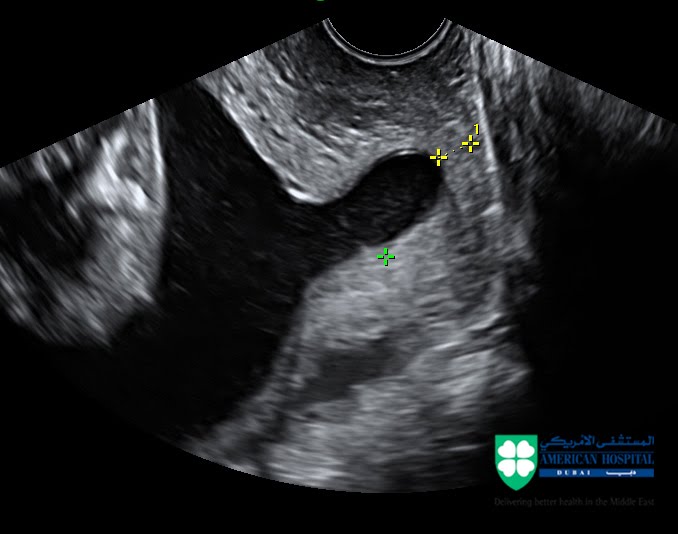
If however you opt to have your cervix(neck of the womb) measured as a screening test for preterm labour this is best done by an internal scan.
 The doctor will explain to you the type of scan that needs to be done and a chaperone will be in the room during internal scans.
Having an ultrasound scan should not be painful. If in any case you feel uncomfortable let the doctor know as he/she is usually concentrating at the ultrasound screen.
What about having a full bladder? A full bladder helps with transabdominal scans as it pushes your womb upwards and at the same time pushes the bowel out of the way creating good window to look at your baby. However you should not feel uncomfortable and be able to enjoy your scan.
Should I bring my friends and family with me? Although the scan is usually a very pleasant experience still the doctor need to concentrate as it is an important medical examination. In most cases it is best if your partner or a friend accompanies you at the scan room rather than a large number of people.   

What information will I get?

At the end of the scan YOU SHOULD BE GIVEN A COMPUTERIZED REPORT which will describe the structures seen and if there were any particular difficulties during the scan. THIS IS A VERY IMPORTANT PART OF YOUR ANTENATAL RECORD AND IT IS VERY USEFUL TO HAVE A COPY.
At this stage a large number of structural problems that a baby may have can be picked up. Ultrasound can usually provide information as to how various organs are put together and not how well they function.
Please note that scans are not foolproof. They do not show all the anomalies and in some occasions anomalies can be missed. A normal scan is not a guarantee of the delivery of a perfect baby.
Sometimes it is difficult to get good views of the baby. Common reasons for this is the baby’s position, an overweight mother or scar tissue from previous operations. In such cases the scan might need to be repeated another day.
Usually we will be able to comment on the baby’s gender at this stage. Please make sure that you let the doctor know if this is something that you want or do not want to know before the scan starts. Although doctors and sonographers are pretty good in finding the baby’s sex at this stage you should be aware that
  1. It is not 100% accurate
  2. It is not one of the primary aims of the scan (this is to confirm that major structures are normal) and it might not be possible to be seen during the allocated time. 

What are the risks for my pregnancy?

Ultrasound scanning has been routinely used in obstetrics for more than 20 years. Routine scanning does not pose any risk to your baby or yourself. 

What if there is a problem?

Most ultrasound scans are happy experiences but sometimes problems are either seen or suspected. At this stage of the pregnancy possible problems that can be picked up are
  1. Suspicion or evidence of a structural anomaly (problems relating to how the baby has developed). The doctor will explain the findings to you and depending on the problem explain what are the implications for you pregnancy and the baby. If you are having your scan by a sonographer they should be able to inform you of their concerns and arrange an urgent consultation with your obstetrician. In most cases your doctor after explaining the initial findings will arrange for you to see a Fetal Medicine Specialist. In some occasions further tests may be needed to clarify the diagnosis.
  2. A low lying placenta. Although this is not a problem at this stage of the pregnancy further scans will be needed later in pregnancy to confirm that the placenta has moved out of the way. Ask the doctor to provide you with the relevant information sheet.

  What if I still have questions about my scan?

Do not feel afraid to ask questions about aspects of the scan or the report that you do not understand. Your doctor should be able to provide you with clear information or arrange further consultation with a specialist.  

Dr George Michailidis, MRCOG
Fetal & Maternal Medicine Specialist
Consultant Obstetrician & Gynaecologist


Leave a comment

What is the role of a Fetal & Maternal Medicine Specialist – Perinatologist – in the care of a "high risk" pregnancy?

For most women, pregnancy is asmoothand incredible journey leading to the birth of their baby.However, some mayneedadditional preparation before they become pregnant, and a closer follow up during their pregnancy.These pregnancies are commonly called “high risk”. Fetal and Maternal Medicine has developed as a subspecialty of Obstetrics in order toprepareobstetricians and equip them with the appropriate skills to care for thesehigh riskpregnancies.

Fetal & Maternal Medicine Specialists, also known asperinatologists, are obstetricians who specialize in diagnosis andcareof women with complicated pregnancies. The services they provideincludepreconception counseling, detailed ultrasound examinations, fetal and maternalsurveillance. Multiple pregnancies, pregnancies complicated by diabetes or autoimmune diseases like SLE are typical examples of cases that are referredto aperinatologist. Fetal Medicine Specialists are the ones who will provide the initial counseling when fetal abnormalities are diagnosed.They have been trained to perform a number ofstateof the art diagnostic and therapeutic procedures while the baby is still in the womb.

Mothers will usually be referred to a Perinatologist by their obstetrician. The Fetal & Maternal Medicine Specialist works alongside with the mother’s obstetrician and helps to develop a personalized plan of care for each pregnancy. They also play aleadingrole in coordinating thecareof complex cases and ensuring appropriate arrangements are in place for thebaby’s birth. For example liaising with the neonatologist who will look after the baby after birth, the pediatric surgeon or pediatric cardiologist.

Being referred to a Fetal Medicine Specialist is not a reason to be alarmed or worried. In most cases is doneas a precaution in order to achieve the best plans for the pregnancy care. Some parents maychooseto see a specialist without referral from their obstetrician.

Dr George Michailidis, Obstetrician and Gynaecologist 
Fetal and Maternal Medicine Consultant 


Leave a comment

Parvo Virus B19 infection during pregnancy; What to do in Dubai.

Parvo  virus (B19) information

Schools have started again in Dubai. The large concentration of children in one place creates conditions for easy transmission of some infectious diseases. In general this is part of our natural exposure to infections that builds up our immune defence.
However there are some infections that if you have them while pregnant can affect your unborn baby. The two most widely known are rubella ( German measles) and chicken pox.  Almost all women are checked during their pregnancy regarding their immunity for these diseases so they are alerted and they have a plan of what to do if they are not immune. Another common childhood disease is the “Slapped cheek” or “fifth disease”. Having an infection with Parvo Virus B19 while pregnant can cause complications to your pregnancy. Here are some basic facts;
·Parvo B19 is a DNA virus. It is responsible for the “slapped cheek” or “fifth disease”
·Usually (in European countries) there are spring autumn epidemics that seem to come in four year cycles.
·The incubation period (the time from when you get infected to when you show the first symptoms) is usually 13-18 days while the period of maximum infectivity is during days 7-10. The risk of infection is greater to those that have frequent contact with children; teachers, day care workers, women with school age children.
·Children and adults with normal immune system usually have mild symptoms; rash, arthropathy (joint pains) Infection results in lifelong immunity.
·About 35–45% of women of childbearing age do not possess protective IgG antibodies against B19V and are not immune.
·If the mother is infected the virus can affect the baby. In particular it destroys red cell precursor cells- the cells responsible for the production of red blood cells and it can affect the fetal heart (can affect the heart muscle).
·If a mother gets infected there is a 4% risk for the baby to develop severe anaemia and hydrops. (this is when a baby presents with skin swelling and fluid collection in its chest and abdomen/tummy)
·The most difficult period is that of 8-20 weeks when the baby relies on its liver to produce red blood cells ( risk for hydrops 8% )
·
    This is preventable and treatable. Special ultrasound scans  at Fetal Medicine Unit can check whether your baby shows signs of anaemia (Doppler studies of the Middle cerebral artery). For those who have already significant symptoms a in utero fetal transfusion can be life saving.
What to do if a mother comes in contact with someone who is known to have parvo virus.
Your doctor should check your antibodies (virology tube).
·If she is IgG positive, IgM negative  reassure- evidence of immunity
·If she is IgG positive, IgM positive refer to Fetal Medicine specialist as this is evidence of recent infection.
·If she is IgG negative, IgM positive you have to be referred to a Fetal Medicine Specialist. This is evidence of recent infection but the mother may still be infective, so she will need arrangements for separate scan and to be advised to avoid meeting  with other pregnant mums.
·If she is IgG negative and IgM negative she is not immune. Advise to avoid possible contact . Repeat bloods in 7-10 days to exclude very recent infection.
Usually IgM antibodies will develop within 7 days and persist for 2-4 months.
Mothers who are referred to our Fetal Medicine Unit will be followed with serial scans looking for possible evidence of anaemia.
Please be aware that reduced fetal movements are a common manifestation of significant fetal anaemia.

Dr George Michailidis, Obstetrician and Gynecologist 
Fetal and Maternal Medicine Consultant 


1 Comment

What you need to know about premature labor and delivery in Dubai.

What you need to know about premature labor and delivery in Dubai.
What is premature (preterm) birth ?
Premature or preterm birth (delivery) is defined as a birth that takes place before 37 completed weeks of pregnancy. Unfortunately preterm labour is a relatively common pregnancy problem, up to 12.7% of births in the US were premature . Although some of preterm births are due to medical intervention the majority (75%) is due to spontaneous preterm labor. Preterm delivery is usually subdivided it in the following groups;
Late preterm birth when it occurs between 34-36 weeks
Moderately preterm birth when it occurs between 32-34 weeks
Very preterm birth when it occurs between 28-31 weeks
Extremely preterm when it occurs before 28 weeks
APPROXIMATELY 2% OF ALL PREGNANCIES DELIVER BEFORE 32 WEEKS.
Significance of preterm birth.
Up to 50% of deaths in babies born without abnormalities are related to problems caused by been born prematurely (CEMACH 2000 -2003). The following is the neonatal death rates in the UK as it was reported at the 2008 CEMACH publication.
Warning signs of Preterm labor
the following are common complains of women who eventually get in preterm labor.

□Increase in the amount of vaginal discharge. Usually the discharge changes in type and becomes watery or sometimes bloody.
□Pelvic or lower abdominal pressure.
□Constant, low, dull backache
□Mild abdominal cramps.
□Regular or frequent contractions or uterine tightening, often painless
□Ruptured membranes (your water breaks with a gush, or sometimes even a trickle of fluid)

What are the common risk factors?
this is a useful list that appears at the ACOG website Risk Factors for Preterm Labor
Check any box that applies to you:
□You have warning signs of preterm labor.
□You have had preterm labor during this pregnancy.
□You had preterm labor or preterm birth in a previous pregnancy.
□You smoke cigarettes or use cocaine.
□You are carrying more than 1 baby.
□You have an abnormal cervix (due to surgery, for instance).
□You have an abnormal uterus.
□You have had abdominal surgery during this pregnancy.
□You have had an infection while pregnant.
□You have had bleeding in the second or third trimester of your pregnancy.
□You are underweight.
□You had a mother or a grandmother who took DES (diethylstilbestrol, a medication given to many pregnant women in the 1950s and 1960s).
□You have had little or no prenatal care.
□You have a child with chromosomal disorders.
If you checked any of these boxes, you may be at risk for preterm labor. Despite what is known about these risk factors, much remains to be learned about preterm labor. Half of the women who go into preterm labor have no known risk factors.
Screening for premature labour.
A comprehensive history will should alert your obstetrician regarding the risks for preterm  birth. Unfortunately most of cases of preterm birth occur in women with no obvious risk factors.
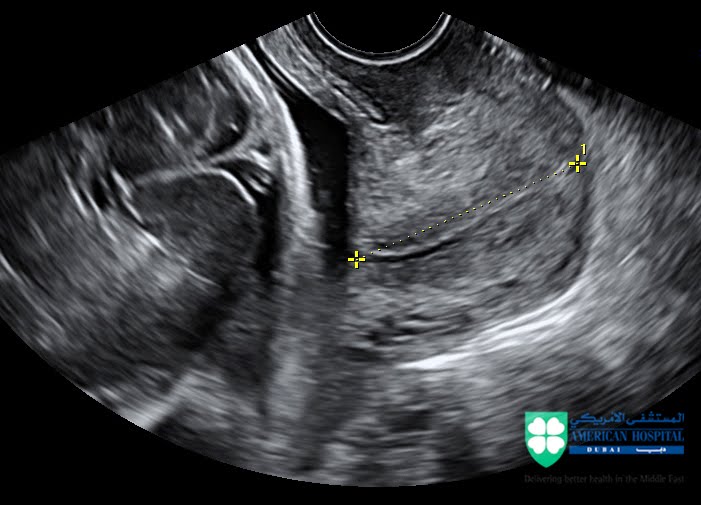
Measuring the length of your cervix is a powerful tool in indentifying those women at risk for preterm birth. This is especially important for pregnancies before 34 weeks when the impact to the baby’s wellbeing is greatest.
The mean measurement for the cervical length at 22-24 weeks is 36 mm. A short cervix <15mm is found in 1% pregnancies and about 30% of them will deliver before 34 weeks.
THE CERVIX SHOULD BE MEASURED BY A TRANSVAGINAL (INTERNAL) SCAN. Abdominal (through your tummy ) scan although can alert in case of an opening cervix does not produce good quality measurements.


The Fetal Medicine Foundation offers a comprehensive video lecture that deals with the role of screening for preterm labour by measuring the cervical length. 
MAKE SURE YOU OBTAIN A WRITTEN REPORT of the finding as well as images that demonstrate the cervical length measurement. This is essential for tracking the changes of you cervix.
Prevention and treatment options.
The purpose of screening for preterm labour is to offer interventions that can prevent or at least reduce the risk for extremely and very preterm labour and delivery. Working with a good obstetrician will ensure that you draft the best management plan for your pregnancy. This should be personalised to suite your needs and be based on the best evidence.
A few points worth mentioning ;
  • Traditionally bed rest was advocated as a way of reducing the risk for preterm birth. Unfortunately till now no major study has shown any significant advantage in strict bed rest regimes. On the contrary there are serious risks directly associated with bed rest in pregnancy like deep vein thrombosis. Discuss your life style with your doctor who should be able to give you good advice regarding your daily activities based on your case review.
  • Cervical cerclage.  Cervical cerclage has its place in selected cases. By including ultrasound screening a good obstetrician should be able to reduce the need for unnecessary interventions.
  • Progesterone supplements; This is the only intervention that has shown good results in preventing extreme preterm labour in singleton pregnancies.

Your doctor after assessing carefully the factors mentioned should be able to provide you with the best care plan for your pregnancy.

Dubai realities and premature labour
There are a number of factors that especially expatriots should keep in mind in cases that are at high risk for  preterm labour and delivery.
  1. 1.Availability of neonatal intensive care beds. At the moment even the large private units only support babies after 28 weeks of gestation. The main units that can care for babies under 28 weeks are Al Wasl Hospital and Dubai Hospital. Both units are heavily overprescribed and it can be difficult to find a bed for your baby.
  2. 2.Financial issues. Even when you deliver after 28 weeks the baby or babies (in case of multiple pregnancies) will have to spent a lot of time in an intensive care unit. The cost may easily spiral out of control. Make sure you know what you insurance is going to cover. Especially for those with higher order multiple pregnancies (triplets etc) make sure you budget for the event of extreme preterm delivery.
  3. 3.Choose your obstetrician and hospital carefully.

Dr George Michailidis, Obstetrician and Gynecologist 
Fetal and Maternal Medicine Consultant 
Useful additional reading :