Pregnancy in Dubai

Advice & information on common pregnancy problems by a Fetal & Maternal Medicine Consultant


3 Comments

First Trimester Ultrasound Scan (11-13 weeks)

What is the purpose of the first trimester scan?

The purpose of this scan is;

1.     To confirm a viable (alive) intrauterine (within the womb) pregnancy.  This is achieved by demonstrating a beating fetal (baby) heart.
2.     To date the pregnancy. This is achieved by measuring how long the fetus is from the top of its head to its bottom (Crown Rump Length – CRL accuracy about 7 days).
3.     To diagnose multiple pregnancies. Diagnosing twins or higher order multiple pregnancies early helps appropriate pregnancy planning.
4.     To provide a basic anatomical survey of the developing baby. A number of common major structural anomalies can be seen at this stage.
5.     If you wish in addition to the anatomical survey a number of specialist measurements can be done to help calculate the risk of your baby being affected by chromosomal anomalies like Down’s syndrome.

How is the scan done?

Most of the times the scan is done transabdominally. This means the probe that produces and receives ultrasound waves touches your lower abdomen (tummy) and allow us to get views  of the uterus (womb). Special gel is used to improve contact between the probe and your tummy.
In some occasions a transvaginal (internal) scan is needed. This means that a special probe is inserted in your vagina. In this way it gets much closer to the womb and produces a much clearer image. This is more commonly needed in very early pregnancy, for those women who are overweight or have a backwards tilted womb.
The doctor will explain to you the type of scan that needs to be done and a chaperone will be in the room during internal scans.
Having an ultrasound scan should not be painful. If in any case you feel uncomfortable let the doctor know as he/she is usually concentrating at the ultrasound screen.
What about having a full bladder? A full bladder helps with transabdominal scans as it pushes your womb upwards and at the same time pushes the bowel out of the way creating good window to look at your baby. However you should not feel uncomfortable and be able to enjoy your scan. 

What information will I get?


At the end of the scan you will be given a printed report which will summarize the scan findings ie; position of the pregnancy, number of fetuses (babies), fetal heart activity, CRL and the calculated gestation and expected date of delivery. Basic anatomical structures that can be seen at this stage will also be described.
At this stage due to the very small size of the baby only specific severe abnormalities will be picked up. Typical problems picked up at this stage are acrania (when the fetal skull has not develop), gastroschisis and omphalocele (anomalies that affect how the baby’s tummy has formed). Futhermore as the baby continues to develop further, some problems are evident later in the pregnancy.
Problems with the baby’s heart are not commonly seen at this stage. The main scan aiming to reassure that baby is structurally normal is the 20 week scan.
The baby’s gender is not easy to be determined at this stage. Male and female external genital organs look very similar at this gestation. However an educated guess (about 80-90% accurate) can be attempted if the views are good.

What are the risks for my pregnancy?

Ultrasound scanning has been routinely used in obstetrics for more than 20 years. Routine scanning does not pose any risk to your baby or yourself. 
What if there is a problem?
Most scans are happy experiences but sometimes problems are either seen or suspected. At this stage of the pregnancy problems that can be picked up are
1.     A missed miscarriage. This is when the pregnancy has stopped developing and there is no visible beating fetal heart. A miscarriage in early pregnancy unfortunately is not uncommon. Most of the times no specific reason can be identified. The doctor will explain the findings to you and arrange with you the appropriate management.
2.   Suspicion or evidence of a structural anomaly (problems relating to how the baby has developed). The doctor will explain the findings to you and depending on the problem explain what are the implications for you pregnancy and the baby. I some occasions further tests may be needed to clarify the diagnosis.
What if I have more questions ?

We hope you will find this information useful. If you have any questions you can contact either Dr Michailidis or our specialist midwife

Dr George Michailidis, Obstetrician and Gynecologist 
Fetal and Maternal Medicine Consultant 

1 Comment

Vaginal birth after a Cesarean Section

More than one in five deliveries in Dubai are done by Cesarean Section. A lot of women – couples are trying to find the right answer to the question; “What is the best way to deliver my baby if I had one previous Cesarean Section ?”


Recently the American College of Obstetricians updated its guidelines regarding vaginal deliveries after cesarean section (VBAC). The new guidelines are less restrictive. The main changes are in respect of where mothers should give birth and what are the group of mothers who should be considered for a VBAC or TOLAC (trial of labour after a cesarean section). This change has already started attracting media attention.
Most of the obstetric organisations in the world (ACOG – USA, RCOG – UK, SOGC – Canada, RANZOG – Australia) have a similar approach stating that “delivery is recommended at an establishment that can offer immediate delivery  if needed ” .
In the US, most likely due to the high risk of medicolegal action, it led  a large number of smaller hospitals to refuse care to women who had a previous ceasarean section ( CS ) and wanted to try for a vaginal delivery. The new approach by the ACOG supports the mothers autonomy of decision as to where and how she should deliver her baby. At the same time it gives a lot of emphasis in the counselling process and information provision. This is extremely important as you can only make an informed choice when you have the right information.
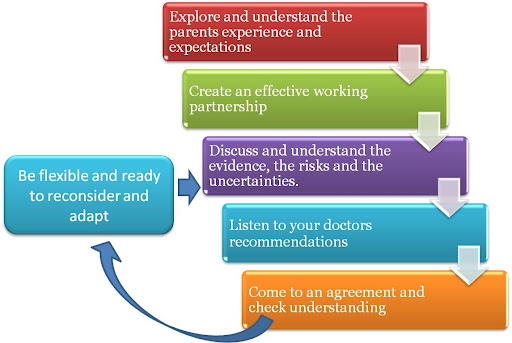
 In Dubai most of the large private hospitals are able to offer care to women who wish to try for a VBAC. All women should have the opportunity to discuss with their obstetrician how they would like to deliver. So take your time and discuss it with your doctor and formulate your birth plan.  This is my suggestion as to how you should approach your consultation / decision making;
1.   Your doctor should try and explore your previous experiences and understand your expectations. A lot of the decision making is coloured from what happened last time. Some mothers feel traumatised from a prolonged and unsuccessful labour and do not want to go through the same again. Others feel that they missed out on their opportunity for a vaginal birth and really want to try their best to achieve a vaginal delivery.

2.   One of the advantages of private care is the opportunity and the time  to build a working partnership between the parents and the doctor. So take full advantage of it and utilize it to help you make up your mind.
3.    Discuss the evidence and try to understand its strengths and its weaknesses. It is important to understand the uncertainties particularly when you try and tailor the available evidence to a certain case.
4.   Listen to your doctor’s recommendations. In addition to the widely accepted evidence they should reflect the local realities. It is good to read the evidence on the internet but implementing them at a local level is different and your doctor will be the best person to advise you on this.
5.    Come to an agreement  This includes checking that everybody fully understands what is decided.
6.   Always be flexible ready to reconsider and adapt. Pregnancy and in particular labour are dynamic developing scenarios. The main objective though remains the same ” a healthy mother and a healthy baby”. Parents need to be ready to reconsider and adapt as the situation changes.  Typical examples are; ” what do you do if while you decided for an elective CS you present to labour ward in advanced labour ? ” , ” what do you do if while you decided to go for a VBAC you labour you have 40 weeks and nothing happened ?”
In my experience the parents approach varies from one couple to another.  Some parents come with a clear plan while others may need time to come to formulate in their mind what they feel is best for them.
You might find helpful the following basic statistics.
·The overall chance of a successful VBAC is between 70-80%. This is an overall figure . Your doctor should be able to adjust this figure and give you an assessment tailored to you. There are a number of factors that increase or decrease your chance for a successful vaginal birth after cesaerean section.  Your past obstetric history (what happened in your last pregnancy), your medical history, the progress of the current pregnancy, how your labour starts are all factors that make a difference.
·Risks; whatever you decide to do you need to have a good idea of the risks for you and your baby.
Labor is a risky time of a woman’s and her baby’s life. Whichever mode of delivery you choose there are some risks. 
Elective cesarean section to deliver your baby after one previous Cesarean section;
·It is more likely that you will stay in hospital longer and will need a longer time for recovery. You have to recover from a major surgical procedure.
·There is increased risk for surgical complications like injury of the bladder and the bowel. The more cesarean sections you have the more likely to run in these troubles. After every operation during the healing process you create adhesion (organs and tissues sticking together). This makes future operation in the same site (like a repeat CS ) more risky.
·There is increased risk to have problems in future pregnancies. These mainly have to do with the location of placenta and the risk for it to become very adherent to the womb (placenta accreta).
·Your delivery is more likely to be by CS next time as well.
Vaginal birth after one previous Cesarean section – successful
·There is a risk for uterine rupture. The chance for this happening is small (0.5%) it can lead to serious problems for both mother and baby.
·There is a risk for complications during the labour. Sometimes these can be serious. The risk for perinatal death or hypoxic encephalopathy (brain damage) is almost 0.5/1000.
·With every vaginal delivery there is a risk of vaginal tear and significant perineal (this is the area between the vagina and the back passage) trauma.
Unsuccessful trail of labour after one previous Cesarean section
The worst of both worlds suffer those who try for a vaginal birth but fail and end up with and emergency CS.
·Every operation performed in and emergency setting is more risky that an elective -scheduled one. As a result of that all the risks mentioned for the elective CS are increased in this scenario.
·Furthermore it is more likely to have a large bleed that requires transfusion, or ends up to a hysterectomy.
·More likely to have an infection.
·More likely to have to stay in hospital for longer and take longer time to recover.
I hope you find this info useful
Dr George Michailidis
FURTHER READING

ACOG patient education leaflet; Vaginal birth after Cesarean Section

Dr George Michailidis, Obstetrician and Gynecologist 
Fetal and Maternal Medicine Consultant 

2 Comments

No need to delay pregnancy after a miscarriage

How long should a mother wait before trying to conceive after a miscarriage?
A study of more than 30,000 women in Scotland suggested that women who suffered a miscarriage have the best chance for a healthy pregnancy when they conceive within the six months.
This is a very interesting publication at the recent BMJ issue ( Effect of interpregnancy interval on outcomes of pregnancy after miscarriage: retrospective analysis of hospital episode statistics in Scotland — Love et al. 341: c3967 — BMJ that sparked a lot of media attention as it contradicts current international guidelines.

The length of inter-pregnancy interval has long been debated in the literature. The current WHO recommendations are for parents to wait for 6 months before trying for another pregnancy after a miscarriage. However the scientific / research basis for such a recommendation is very weak
There is good data suggesting that women should allow 6 -12 months after having their baby before they try for the next pregnancy. The evidence is ample that pregnancy complications are more common when the mother conceives shortly after having her baby. The higher rate of problems has been attributed to the fact that the mother’s stores of macro and micronutrients (like folic acid) are depleted after a full term pregnancy and need time to recover. 
This is the first large scale study that deals specifically with the issue of pregnancy after a miscarriage and not a full term pregnancy. The results were that women who conceived within 6 months from their miscarriage had the best pregnancy results. This was maintained even after controlling for factors like maternal age and socio-economic status. 
The strength of this research is the large number of patients (30000) and the good quality of primary data. 
The weakness is that it is a retrospective (meaning looking back at old records) study. Hospital records do have their weaknesses and seldom looking at the paper record you get a full picture for the patient (common problem in epidemiologic studies). 
The significance however of this research is that it provides for the first times good quality evidence to help doctors advise their patients about when they should try for a pregnancy after a miscarriage.
It is a fact that in developed countries many women push back having children for the sake of education/ professional career. This is particularly true for the expat women of Dubai. A large number of women are over 35 when they start their families. Many are in their forties and have not yet completed their family. Waiting for long period of time after a miscarriage may have a negative overall effect to the woman’s chance for a successful pregnancy.
The final decision as to when a couple should try for a pregnancy after a miscarriage lies of course with the couple itself. In particularly the mother needs to be not only physically but psychologically ready to try for the next pregnancy after her miscarriage.
Your Doctor should be able to offer you the support and counselling you may need to carry on and help you focus on positive issues.
In preparation for the next pregnancy it essential to try and offer advice to help both parents optimize their health before and during the pregnancy. General preconception advice (like taking folic acid, stop smoking) as well as specific interventions tailored to the mother’s needs should be instituted to give the couple the best chance for a healthy pregnancy.

Dr George Michailidis, Obstetrician and Gynecologist 
Fetal and Maternal Medicine Consultant 
Links to news headlines 


4 Comments

What is a screening test? what is the difference from a diagnostic test?

(The following is an extract from our Fetal Medicine information sheet for Downs Syndrome.) 

Screening tests give as a result a risk estimate, in other words how likely it is for a person to have a certain condition. This is usually expressed as a numerical value for example 1:100. Many times for simplicity if the risk is higher than a certain value the test is reported as “high risk” or “low risk” if it is lower than the threshold selected. 

Screening tests do not confirm or exclude a condition. For example a screening test does not say that a baby “has” or “has not” Down’s syndrome.
They do however, provide valuable information to help the parents decide if they want to proceed with diagnostic tests.

Diagnostic tests are those that confirm or exclude a condition.
If the screening tests do not tell us “yes or no” why don’t we just have the diagnostic tests ?
Today the available diagnostic tests for Down’s syndrome are
1.Chorionic villus sampling CVS
2. Amniocentesis
Both tests carry a small risk of causing a miscarriage (0.5-1%).
For this reason many parents would opt to have first a screening test and use the results to help them decide if they would proceed to a diagnostic test.
What are the recommended screening tests?
In the past the main screening test for Down’s syndrome was the mother’s age. Unfortunately this was proven to be neither very sensitive (picked up about 60% of babies with T21) nor very specific (too many women had to have unnecessary invasive procedures).
 At the American Hospital Dubai we recommend;
1.First trimester combined test. This test combines the results of first trimester ultrasound scanning (Nuchal translucency, fetal heart rate) with biochemical markers (bHCG, PAPP A). The test is done at 11-13 weeks at the Fetal Medicine Unit of the American Hospital Dubai. The test detection rate is approximately 90%
2.Second trimester biochemistry. For those mothers who have booked late (after 13weeks and 6 days) we recommend the quadruple biochemistry test. This is a blood test for the mother. The detection rate is approximately 75%.
What is considered to be a high risk result?
The result of the test is considered to be “positive” if the risk estimate is higher than  1/300. For a example 1/240 is considered a “positive” or “high risk” result while 1/310 is considered a “negative” or “low risk” result.
It is always challenging for the parents to appreciate the magnitude of risk. 
Please take time to discuss the results with your Doctor as finally a good result is a result the parents are content with.

Dr George Michailidis, Obstetrician and Gynecologist 
Fetal and Maternal Medicine Consultant 

1 Comment

What are the questions a couple / mother in Dubai should think before embarking in testing for Down’s syndrome?

In pregnancy mothers undergo a large number of tests, many times without actually fully appreciating what each test is about. In particular screening and diagnostic tests for Downs syndrome T21 can end up causing a lot of anxiety. 
It would worth thinking and discussing with your partner and your doctor the following questions;

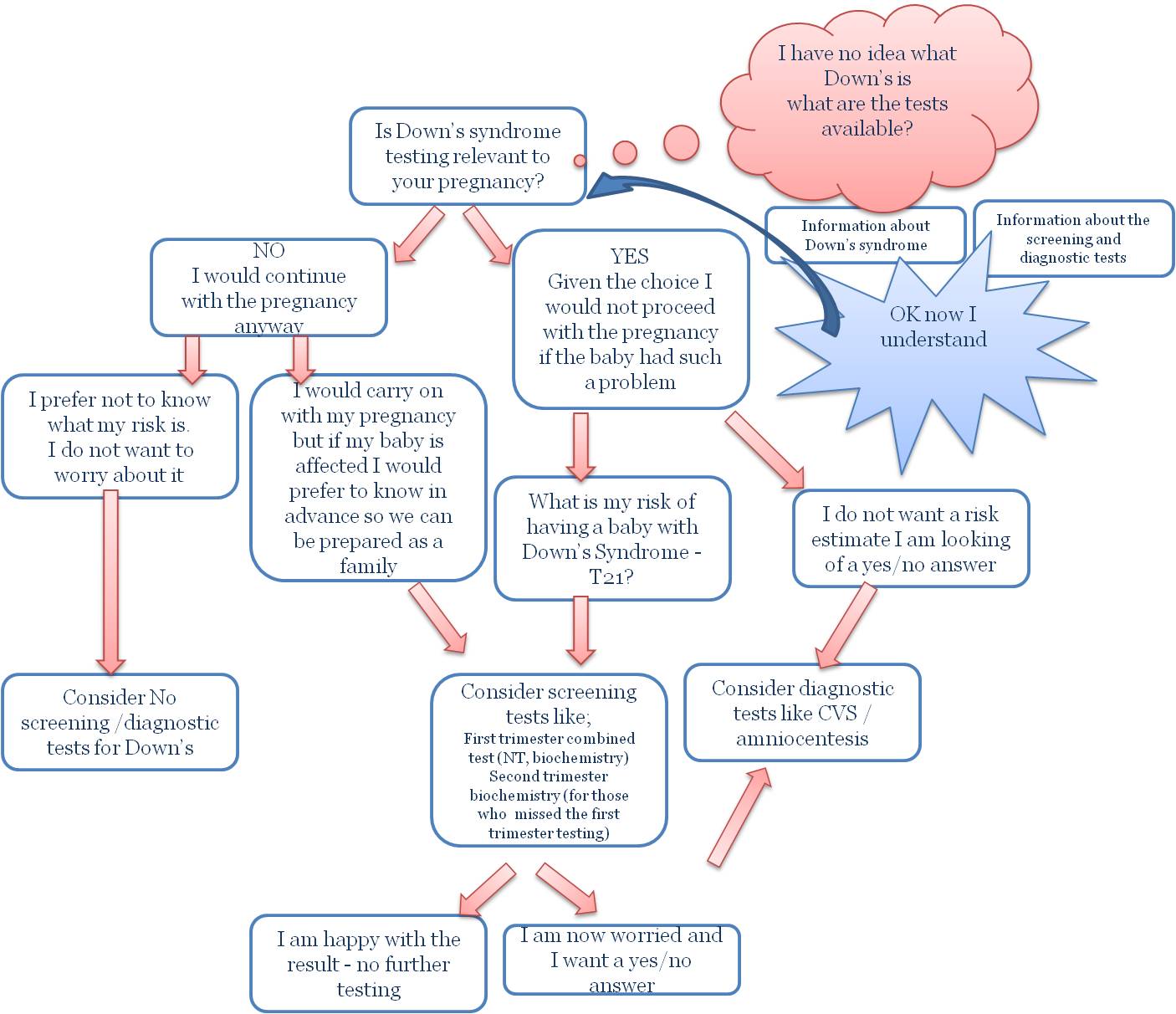
  1. Is this a relevant test?  In other words would it change the way you view this pregnancy?
  Usually parents do come in 3 big groups;
      Those for whom whether the baby has or not Downs make no difference what so ever. These parents would not consider termination and they would look after the baby the same way as any other baby would come their way.

       Those parents who believe that given the choice they would not bring to life a baby  with such a problem. 

       Those that say “Doctor I have no idea what I would do. Lets discuss what are the chances of this happening to help us make up our mind how will go forward”


For the first group testing for Downs may not be appropriate. It may result in extreme anxiety if the results are not reassuring without any real benefit for the overall pregnancy management.
I should point out here that although the majority of parents in this group would prefer not to know and worry, a small number would opt to undergo testing as they would like to be prepared (psychologically, making appropriate family arrangement etc..)


In the second group usually we see a number of parents that are looking for absolute certainty. They do not want a risk estimate but a “yes or no” answer to help them early make arrangement for the pregnancy management. For these parents  diagnostic tests like a CVS or an amniocentesis should be considered.


The third group contains the majority of parents and they should try and think the following;

  1. Is there a risk level that will make you feel content and secure?
    Unfortunately the results of screening tests give a risk estimate. The cut off points are usually set anywhere between a risk of 1/250 to 1/300. So a result 1/299 – abnormal – high risk result is statistically not different from the 1/301 – normal- low risk result. Dealing with the results of the test is challenging for everybody and you should spend some time with your doctor  discussing these issues.
  2. Avoid the question “doctor what would you do in my case?“. Each family has a unique setting. Even within the same family the circumstances change over a period of time. The role of you doctor in most of the cases should not be to tell you what to do but to give the information you need to help you make up your mind what is right for your family.   

The following flow chart is summarising the decision making process
Dr G Michailidis 
Make sure you have some quality time with your doctor and discuss the issues above. 

Remember for most of these questions there are no universally “right” answers. The correct plan is the one that is appropriately tailored to you and your family.

Dr George Michailidis, Obstetrician and Gynecologist 
Fetal and Maternal Medicine Consultant 


3 Comments

Down’s syndrome

 In Dubai  there is a larger than average number of women in the age group 35-40. This is due to the large number of expatriates who usually will reach Dubai at  the mid or later stage of their professional carrier. 
Screening and diagnostic tests for Down’s syndrome are usually offered to most mothers at some time during the first or second trimester of their pregnancy. I will try in the next few posts to explain some of the basic principles of screening. But first of all in a brief post i will deal with what Down’s syndrome is. 
Down’s syndrome (Trisomy 21) is a genetic disorder. Humans normally have 46 chromosomes. The chromosomes are structures where our cells pack all the (genetic) information needed to create a fully functional human being. Individuals with Down Syndrome have an extra copy of chromosome 21 and thus 47 rather than 46 chromosomes. This additional genetic material results in the characteristic features of Down Syndrome.
People with Trisomy 21 look different.
They have a rather flat face, large protruding tongue and eyes that slant upwards.
Many have problems with their heart (40%), eyes and ears. They tend to be more sensitive to infections.
All those with Down’s Syndrome have some degree of learning disability/ mental retardation. This can vary from moderate to severe.
The average life expectancy has improved with recent medical advances and it expected to be about 50 years of age. This varies from country to country. The most common reason for death for those that reach this age is Alzheimer’s which is like dementia.
Why should you consider screening for Down’s syndrome? Trisomy 21 is one of the common genetic disorders. It affects approximately 1/800 live births. 
How likely it is for a mother to have a baby with Down syndrome increases with her age.
Age
Risk for T21
25
1/1300
30
1/900
35
1/350
40
1/100
45
1/40
However as more babies are born by young women about 80%
of babies with T21  born by younger women.
Due to the high frequency of this genetic condition and its significant consequences, in most developed countries today the parents are offered the option of screening and diagnostic tests.

Dr George Michailidis, Obstetrician and Gynecologist 
Fetal and Maternal Medicine Consultant 


1 Comment

Car seats

We have all witnessed with terror children running from the front to the back of a car unstrapped, babies been  held at the lap of their parents behind the wheel.  

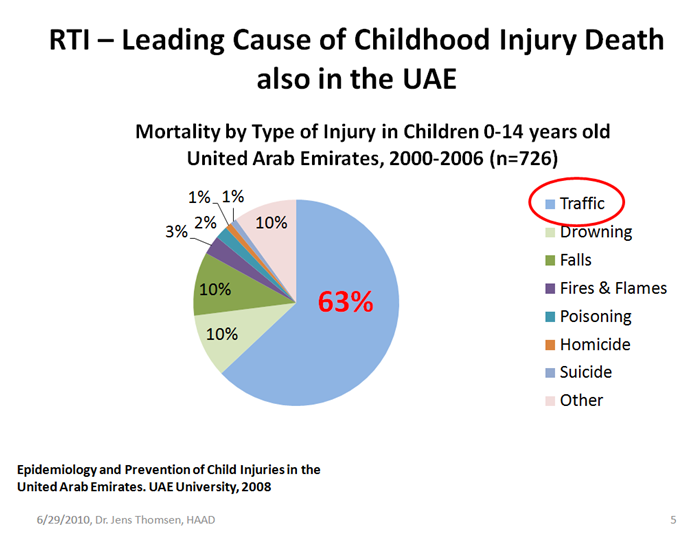
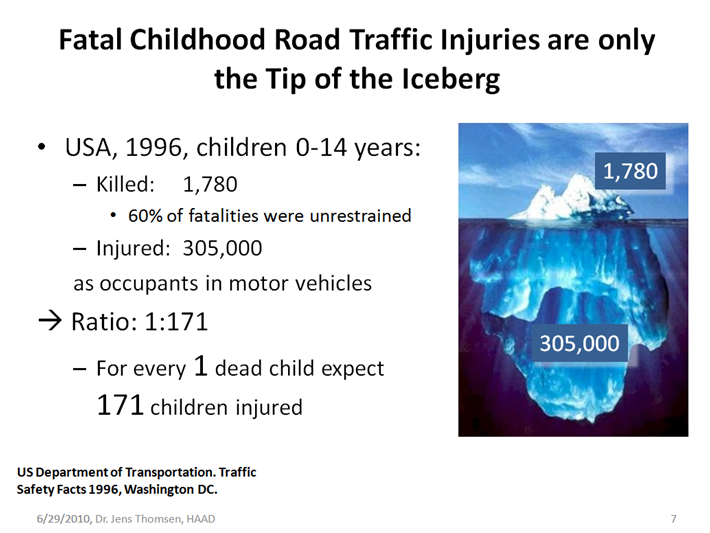
I have attached a couple of slides from Dr Jens Thomsen recent presentation that beautifully illustrates the magnitude of the problem in UAE 

This is very easy to imagine for one child that has died many more are injured.

It is great to see a large private unit to try and actively pursue initiatives that will increase public awareness of simple safety measures that can really make a difference.
During antenatal consultations we spend a lot of time with parents trying to tackle relatively small risks for pregnancy problems. We discuss about vitamins and nutrition and their effect to their offspring development. In my previous post we were discussing the effect of “cosmic radiation” to the pregnancy. 
Well all those these are just a drop in the ocean compared to the effect that the right use of a car seat would have to the child’s health.
There is no point trying to ignore it,  this is a very real issue, in particular in UAE.  Being strict and ensuring that our little darlings are safely strapped while travelling in a car is vital – life saving! 
It is a matter of education. It takes  time and unfortunately a number of lost lives for people to change their attitudes. 
But it is a target that we have to achieve and it is just a matter of time until we manage this.


Dr George Michailidis, Obstetrician and Gynecologist 
Fetal and Maternal Medicine Consultant 


Leave a comment

Air travel and pregnancy

This is a rather odd start for the “Pregnant in Dubai” Blog but flying out of Dubai for the summer holidays is the main theme the last few weeks. 

A lot of pregnant women are worried how air travel can affect their pregnancy. 

The main message is that air travel is safe and is not expected to cause any troubles to the pregnancy for most women. 

There are however a number of important things that you should consider;


 I will start with the bureaucratic part.  

1. Gestation (how far you are in your pregnancy); most airlines will allow you to fly up to 34 weeks. This vary with individual airlines and the trip you are planning (short V long haul flights). Emirates for most cases will allow you to fly up to 34 weeks while some will go up to 36. Make sure you know how far you are, what is the rule the airline your are flying with and that you have some documentation to prove it if questioned. 

2. Doctor’s certificate. You will certainly need this if your are over 27 weeks. My advice is to ask for one at your last doctors appointment anyway. You do not want to try and prove to an inquisitive clerk that you are less than 28 weeks and you just look “bigger”. 
2.a Please do not forget that you have to come back! So if you are not planning to deliver abroad make sure your return is before the 34 weeks (or whatever limit your airline has) and you are able to obtain  a travel certificate for your return trip ( this might be needed if for example you going for a long summer holiday). 

3. Remember to take with you your antenatal notes. A copy of your last scan report is also very useful as it would normally have your expected day of delivery, the size and the presentation of your baby as well as the site of the placenta.

4. Remember your travel insurance and check that it covers your pregnancy. 

On the medical part now. 

a. What about the cosmic radiation? Is it safe for the pregnancy? The advice is that the levels of radiation for most of us, occasional flyers, are very safe. Flight attendants and very frequent flyers can on occasions be exposed to higher levels but this is out of the scope of this blog.

b. There is no evidence to suggest that there is increased risk for an early miscarriage if you travel by air.

c. DVT and pregnancy ( deep vein thrombosis – clots in the legs).
The main risk for a pregnant women has for centuries been the risk of bleeding at the time of labour. “Mother nature” in an effort to protect women made sure that during the pregnancy the clotting system  (what makes our blood clot and stops the bleeding) switches on. This puts pregnant women at a higher risk for having clots in their legs. What is not widely appreciated is that these changes do happen from very early in the pregnancy (first few weeks) and last for at least six weeks after delivering the baby. So what should you do?

Ensure you remain well hydrated by drinking plenty of water during the flight. 

Compression stockings do help to reduce the swelling and venous stasis. Please be careful to wear them properly as they can sometimes act like tourniquets causing more harm than good. 
Make sure you do the leg exercises and mobilise during the flight ensuring good circulation to your legs.

Some would advice aspirin for the travel. The evidence is not very conclusive and i would recommend discussing this with your physician. 

Think; do you have any additional risk factors? Obese, previous venous thrombosis, family history of thrombosis, pregnancy complications like pre – eclampsia. In these cases you should have a good discussion with your physician to make a plan whether you need additional measures like low molecular heparin.  

Be alert for DVT symptoms after the flight; swollen and painful calf particularly if one of the legs is affected. Difficult breathing, chest pain should get you to seek medical advice.

d Reduced oxygen tension in the aeroplane cabin. Usually the cabin is pressurised as if you are at a height of 5000-8000ft. This varies with type of aircraft and the actual height of flight but it does not exceed the  8200ft. Without getting in too much technical detail in practice this means the air has less oxygen than that at ground level. For most the difference is very small and has no significance. 

There are a small number of mothers with pre-existing medical conditions that can be affected by these changes. These are typically women with cardiac disease, respiratory problems. Other groups that can be affected are those with sickle disease or thalassemia/sickle who can get into a crisis in mild hypoxic conditions. Finally severely growth restricted babies can on occasions get in to trouble but it is uncommon for these mothers to decide to go on a holiday trip. 
In summary the reduced oxygen tension for most healthy mothers is not an issue while for those with medical conditions careful discussion with your Doctor should be able to inform decitions to travel. 

e Trauma and seat belts; Well we usually do not think a lot about it but over the years there have been a number of cases of trauma with sudden  loss of height. The advice for this is the same as for the rest of the passengers to “remember to put on the belt whenever you resting at your seat”. 


Well this is a summary of the do’s and don’ts for pregnancy and air-travel. One last comment before I close this post; choosing your seat, if you are do not have the luxury to fly business make sure that you have an isle seat as particularly if you follow the remain well hydrated advice you will be a frequent visitor to the toilet.

Enjoy your holidays 

Dr George Michailidis, Obstetrician and Gynecologist 
Fetal and Maternal Medicine Consultant 


Leave a comment

Introduction

Hithe purpose of this Blog is to provide answers to common pregnancy questions in a simple but at the same time informative manner.
I will try and tackle questions that mothers ask mostly in their antenatal visits as well as questions that they don’t ask but they should certainly consider discussing with their Doctors.The aim is not to substitute your Doctor’s advice, but to give general information that can subsequently be discussed if needed with your Physician and formulate a plan tailored to your needs.


Dr George Michailidis, Obstetrician and Gynecologist 
Fetal and Maternal Medicine Consultant